Tatev Monastery: Spiritual Citadel and Medieval Beacon of Syunik
At the Origins of a Sacred Promontory
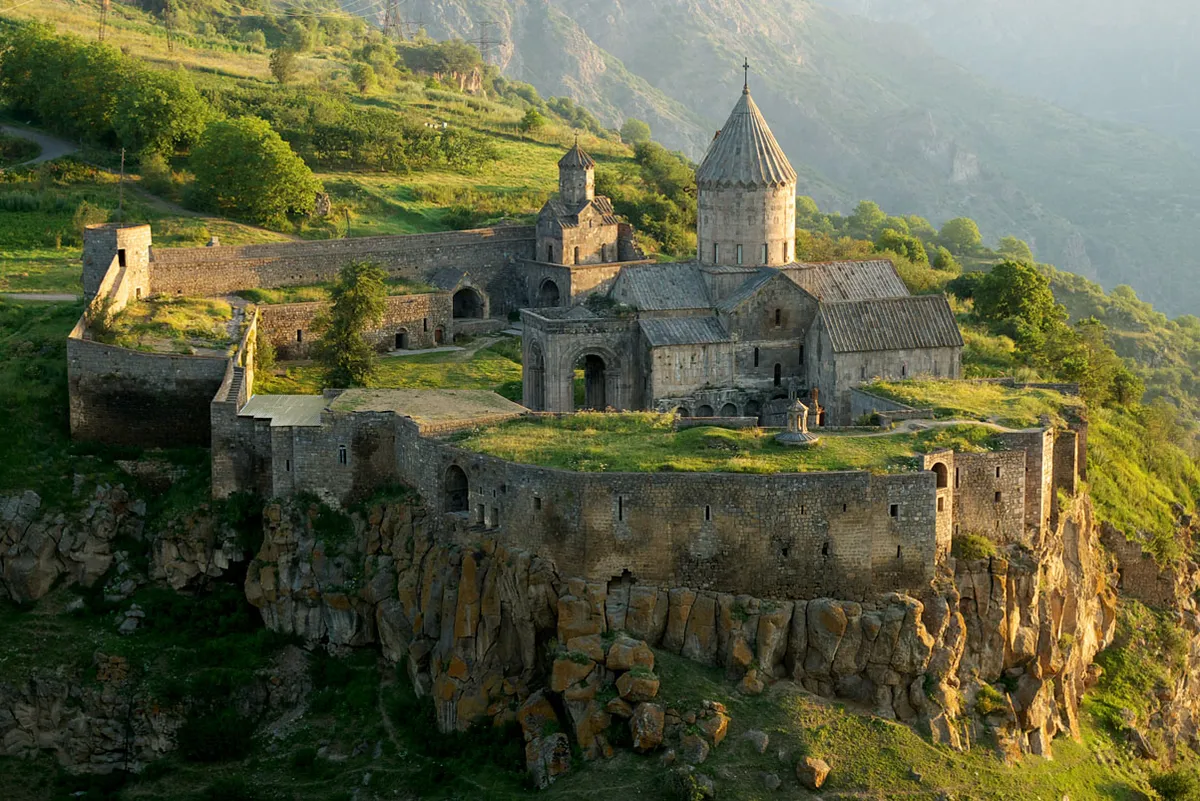
Located in southeastern Armenia, in the heart of the Syunik Province and about twenty kilometers from Goris, Tatev Monastery stands on a vast basalt plateau overlooking the deep canyon of the Vorotan River. Placed on Armenia's tentative list for UNESCO World Heritage status in 1995, this major sanctuary of the Armenian Apostolic Church perpetuates a thousand-year-old memory. Long before the establishment of the great monastic structures, the plateau was home to a pagan sanctuary, which was replaced by a modest church following the Christianization of Armenia in the 4th century.
Tradition offers two explanations for the origin of the site's name. One links it to Saint Eustathius (Eustateus), a disciple of the Apostle Saint Thaddaeus who came to preach and died a martyr in this region, over whose tomb an initial sanctuary was blessed by Saint Gregory the Illuminator. The other explanation, rooted in popular tradition, recalls the words allegedly spoken by the master builder at the edge of the abyss once the dome was completed: “Togh astvats indz ta-tev” (“May God give me wings”). Having become the seat of the bishopric of Syunik in the 9th century, Tatev established itself as a vital center—spiritual, political, and cultural alike.
An Exceptional Architectural Ensemble
The fortified monastic complex is distinguished by its major edifices and its technical ingenuity. The main church, dedicated to the holy apostles Peter and Paul (Sourp Poghos-Petros), was built between 895 and 906 at the initiative of Bishop Hovhannes, with financial support from the sovereign prince Ashot of Syunik, his wife Princess Shoushan, as well as Princes Grigor Soupan and Dzagik. At its consecration in 906, prominent figures of the kingdom were in attendance, including King Smbat I Bagratuni and Catholicos Hovhannes V Draskhanakerttsi. This domed basilica features niches on its eastern facade decorated with bas-relief portraits of Ashot and Shoushan, accompanied by carved protective figures. In 930, Bishop Hakob Dvinetsi had the interior walls adorned with frescoes executed by local artists alongside painters from Constantinople, depicting in particular the Last Judgment and Christ enthroned among the saints.
South of the cathedral stands the Church of Saint Gregory the Illuminator (Sourp Grigor Lousavoritch). Initially built around 848 by Prince Philip of Syunik, it was destroyed by an earthquake in 1138 and completely rebuilt in 1295 at the instigation of Metropolitan Bishop Stepanos Orbelian. Along the northern fortifications stands the Church of the Holy Mother of God (Sourp Astvatsatsin), built in 1087 above the entrance mausoleum.
The site also preserves a unique monument: the Gavazan. Erected around 904–906 south of the cathedral and dedicated to the Holy Trinity, this eight-to-nine-meter-high octagonal pillar rests on an articulated base and is crowned with a khachkar. Designed to sway without toppling and return to its vertical position, it served notably to alert the monastic community to seismic tremors.
The Intellectual Influence of the Medieval University
Beyond its religious role, Tatev distinguished itself as one of the most renowned centers of learning in the Armenian world. In the wake of the decline of Gladzor University, the great scholar Hovhan Vorotnetsi settled in the region under the protection of the Orbelian princes and founded the University of Tatev in the last quarter of the 14th century. After his death in 1388, his disciple Gregory of Tatev (Grigor Tatevatsi) took over leadership of the school and brought its prestige to its zenith.
Instruction was structured into three main departments: the study of the Holy Scriptures and the humanities (philosophy, theology, grammar, rhetoric, history, and science), scriptorium arts (calligraphy, illumination, and miniature painting), and sacred music. The university trained theologians, copyists, and master teachers. The scholars of Tatev mounted strong doctrinal resistance, in particular against the Dominican proselytizers known as the Unity Brothers (Fratres Unitores). They also played a decisive role in the efforts that culminated, in 1441, in the historic transfer of the supreme Catholicosal See from Sis to the monastery of Etchmiadzin. The tomb of Gregory of Tatev, covered by a mausoleum built in 1787, still rests against the western flank of the Church of Saint Gregory.
From Centuries of Hardship to Modern Revival
Owner of vast agricultural estates and collecting revenues from hundreds of settlements, the monastery was the stage for fierce feudal tensions, marked by uprisings of villagers in Tsuraberd during the 10th century. Tatev subsequently endured multiple devastations: the Seljuk invasions in 1170, during which approximately ten thousand manuscripts were burned; the destructive campaigns of Tamerlane between 1381 and 1387; and the incursion of Shah Rukh in 1434. Despite this destruction, the complex revived in the 17th and 18th centuries through successive renovations and the addition of economic buildings, such as the oil mill (Dzit Han).
The monastery also played a pivotal role in the contemporary history of Zangezur. During the self-defense battles led by Garegin Nzhdeh, a congress held at Tatev proclaimed the Republic of Mountainous Armenia on April 26, 1921. Ten years later, the devastating earthquake of 1931 severely shook the site, bringing down the bell tower and the dome of Saints Peter and Paul Church.
Following an initial restoration phase begun in 1974, the site became the focus of a major revitalization effort starting in 2008 through the “Tatev Revival” program, initiated by Ruben Vardanyan. This project led to the restoration of the oil mill in 2010, the northern entrance, the monastic spring in 2016, and the Church of the Holy Mother of God in 2018. In October 2010, the launch of the “Wings of Tatev” aerial tramway, spanning 5,750 meters above the Vorotan to link Halidzor with the monastery, transformed access to this architectural gem of Syunik, fully restoring its place at the heart of Armenia's living heritage.
Sources
- Tatev (Wikipedia fr)
- Tatev Monastery (Wikipedia en)
- Տաթևի վանք (Wikipedia hy)
- Татев (монастырь) (Wikipedia ru)
- Tatev Monastery (PeopleOfAr)
Texts from Wikipedia (CC BY-SA 4.0) and Wikisource (CC BY-SA 3.0), used as sources.
Written with an AI tool from the sources cited and checked by our editors; translated automatically from the reviewed French text.
Read next
 Aram Khachaturian: The Lyrical Breath and Symphonic Soul of ArmeniaA major 20th-century figure, Aram Khachaturian brought Armenian musical heritage to the world through his ballets, concertos, and symphonies.
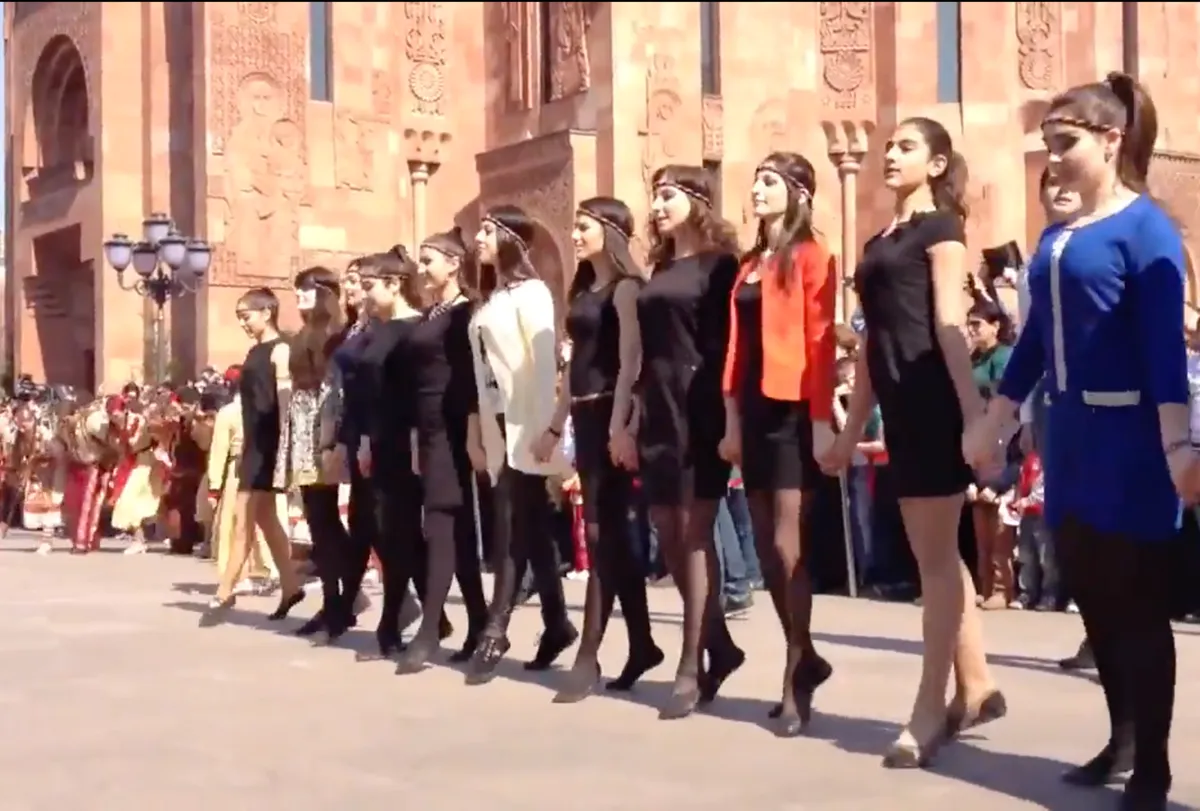 Kochari: History, Steps, and Memory of an Emblematic DanceDiscover Kochari, a circle dance born in the Armenian highlands, from its unique movements to its inscription on UNESCO's cultural heritage list.
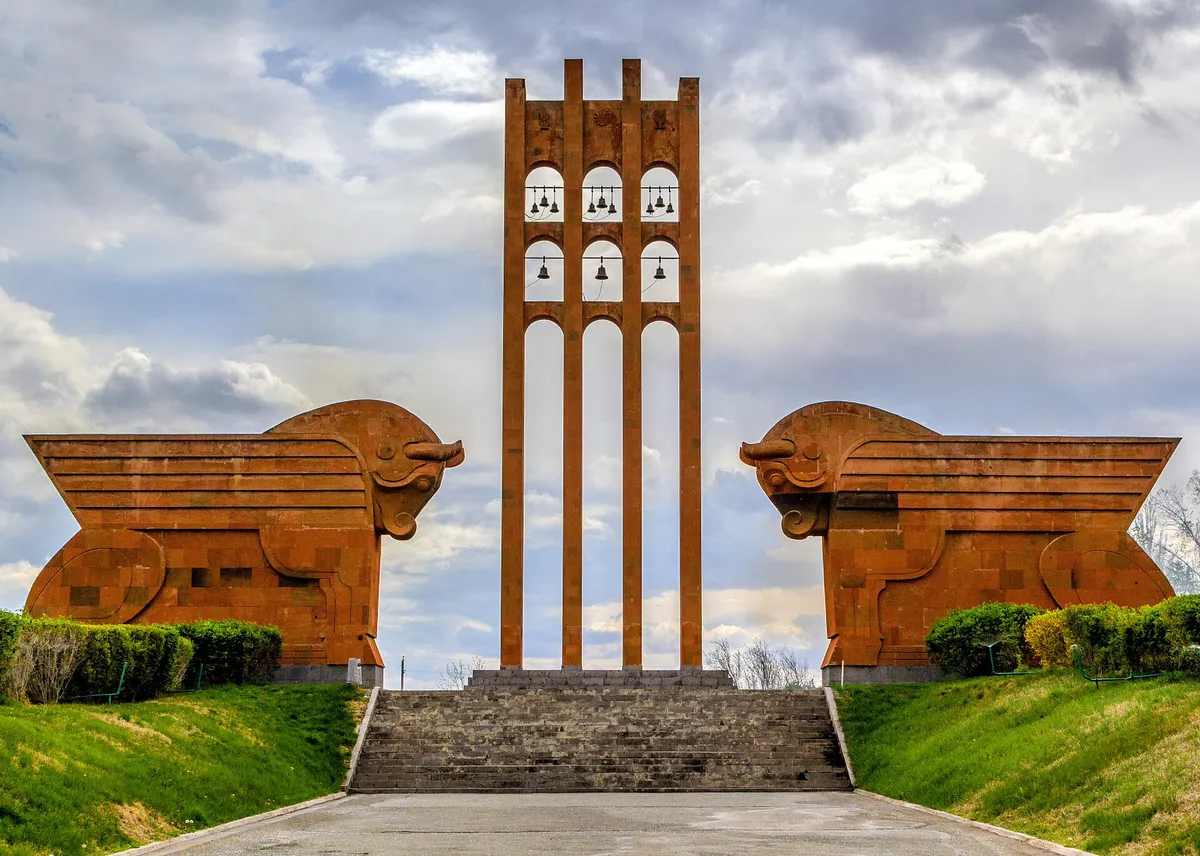 The Battle of Sardarapat: The Heroic Stand of May 1918Fought in May 1918, the Battle of Sardarapat halted the Ottoman invasion and enabled the declaration of the First Republic of Armenia.