Sergei Parajanov: The Sovereign Master of Poetic Cinema
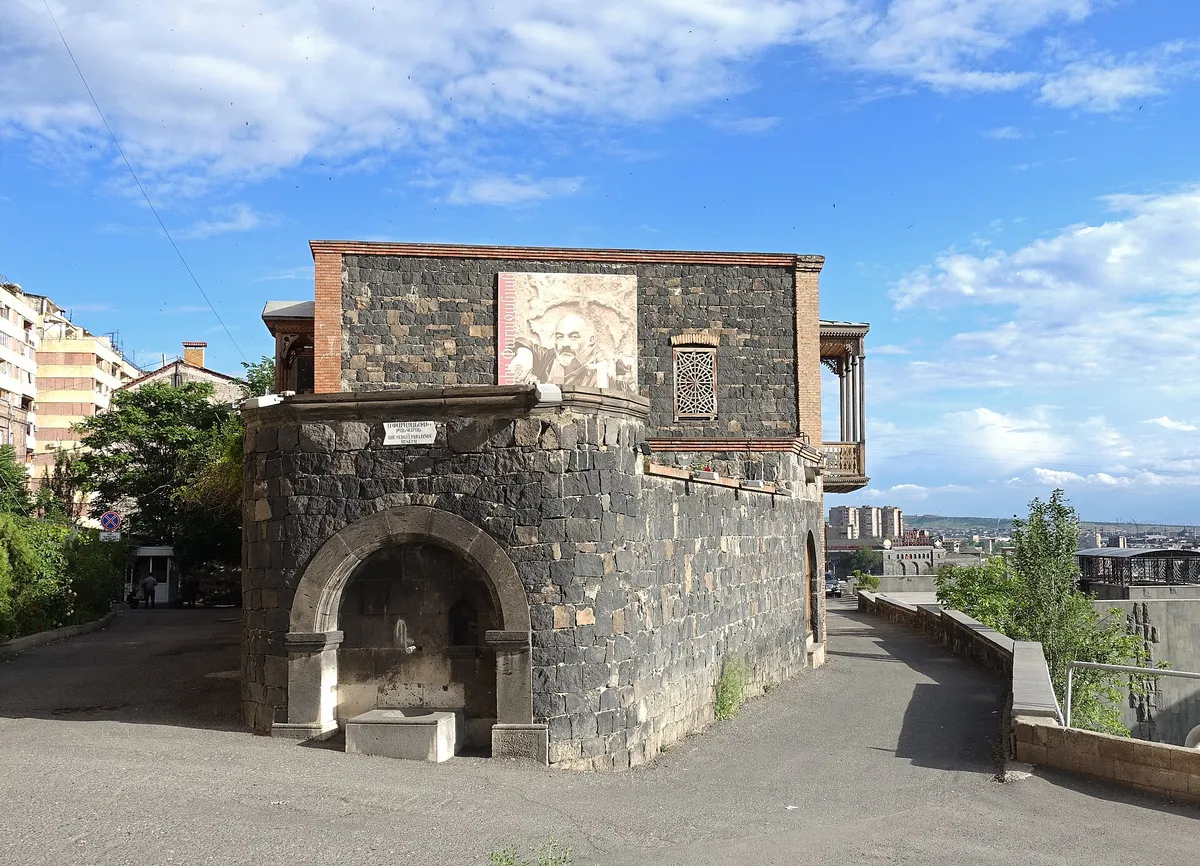
Born on January 9, 1924, in Tbilisi under the name Sarkis Hovsepi Paradjanyan, Sergei Iosifovich Parajanov remains one of the most fascinating and unique figures in cinema history. Raised within an Armenian family by his father Iosif, a renowned antique dealer in the Georgian capital, and his mother Siranush Bejanova, the young boy grew up surrounded by art objects, antique fabrics, and curiosities. This baroque and precious world forever shaped his visual sensibility. Conscious of his distinctive identity at the crossroads of cultures, he declared in 1988: "Everyone knows that I have three motherlands. I was born in Georgia, worked in Ukraine, and I am going to die in Armenia."
Demanding Training and the Quest for a Unique Voice
After a brief period at the Tbilisi Institute of Railway Transport Engineers, Parajanov resolutely chose the arts. He entered the Tbilisi State Conservatory to study vocal performance, took dance classes at the city's opera theatre, and in 1945 joined the Moscow Conservatory in the class of singer Nina Dorliak. In 1946, he turned toward film directing at the prestigious State Institute of Cinematography (VGIK), where he trained under Ukrainian masters Igor Savchenko and later Alexander Dovzhenko.
Graduating in 1951 with his short film Andriesh, adapted from a Moldavian fairy tale by Emilian Bukov, he settled in Kyiv at the Dovzhenko Film Studios. His personal life was then struck by the tragic loss of his first wife, Nigyar Kerimova, who was murdered by her own family following her conversion to Eastern Orthodox Christianity. In 1956, he married Svetlana Shcherbatyuk, with whom he had a son, Suren, born in 1958. During his early years in Kyiv, Parajanov directed documentaries (Dumka, Natalia Uzhviy, Golden Hands) and feature films (The First Lad, Ukrainian Rhapsody, Flower on the Stone) that were still constrained by the conventions of socialist realism—a period he would later reject in order to forge his creative independence.
Stylistic Breakthrough and the Emergence of an Armenian Masterpiece
The year 1964 marked a decisive turning point with Shadows of Forgotten Ancestors, based on the literary work by Mykhailo Kotsiubynsky. Filmed in the Carpathians in the Hutsul dialect without Russian dubbing, the film revolutionized cinematic grammar through its lyricism, visual experimentation, and pictorial power. The work achieved international triumph and earned numerous awards, notably at the Rome and Mar del Plata film festivals, introducing a visionary creator to the world.
However, it was by traveling to Armenia that Parajanov achieved his supreme aesthetic revolution. In 1966, he directed the documentary Hakob Hovnatanian about the celebrated painter, and then undertook the portrayal of the life of the poet and troubadour Sayat-Nova for Armenfilm studios. Released under the title The Color of Pomegranates (1968), the film rejected conventional linear narrative in favor of tableaux vivants of hieratic beauty. Parajanov orchestrated a series of visual allegories inspired by traditional miniatures and Armenian legends. Baffled by its formal audacity and refusal of official dogma, the authorities imposed significant cuts and tasked filmmaker Sergei Yutkevich with reediting the film. Despite the censorship, the work instantly established itself among creators worldwide as an insurmountable pinnacle of poetic cinema.
The Trials of Soviet Repression
Parajanov's libertarian spirit and his courageous stands against the persecution of the Ukrainian intelligentsia quickly drew the hostility of the KGB. In December 1973, while traveling to Kyiv, the director was arrested. Accused of homosexuality and sexual assault in a fabricated trial, he was sentenced in April 1974 to five years of hard labor in a strict-regime prison camp.
Imprisoned under harrowing conditions that severely damaged his health, suffering from diabetes and serious lung complications, the director nevertheless never ceased creating. Deprived of a camera, he compensated for the lack of resources through immense plastic inventiveness: he produced hundreds of drawings, sculpted small dolls, and crafted striking collages from recycled materials, even etching medallions onto kefir bottle caps with a nail. In the West, an unprecedented mobilization gathered major intellectuals and filmmakers around his name, including Federico Fellini, Andrei Tarkovsky, Jean-Luc Godard, François Truffaut, and Yves Saint Laurent. French writer Louis Aragon personally intervened with Soviet leader Leonid Brezhnev, securing his early release at the end of December 1977.
Confined to house arrest in Tbilisi and banned from filmmaking, Parajanov suffered another incarceration in 1982 on the pretext of a bribery charge, following critical remarks made at the Taganka Theatre in Moscow. He was released later that year after the intervention of poet Bella Akhmadulina.
Artistic Rebirth and Perpetual Consecration
In the mid-1980s, the political thaw finally allowed Parajanov to return to film sets. With his collaborator Dodo Abashidze, he co-directed The Legend of Suram Fortress (1985), based on Daniel Chonkadze's work, and then Ashik Kerib (1988), adapted from a tale by Mikhail Lermontov and dedicated to his faithful friend Andrei Tarkovsky. His late creations confirmed the mastery of his aesthetic vision, characterized by frontal static shots and an undiminished figurative fervor.
As he embarked on his autobiographical project The Confession, illness struck him down. Hospitalized in Moscow and then in Paris, he chose to return to the land of his ancestors and died of lung cancer on July 20, 1990, in Yerevan, at the age of 66. He now rests in the Pantheon of the Armenian capital. The filmed scenes of his final unfinished screenplay were preserved in 1992 by his close companion Mikhail Vartanov in the documentary Parajanov: The Last Spring.
Named a People's Artist of the Armenian SSR in 1990, Parajanov left an indelible mark. Opened in 1991 in Yerevan, the Sergei Parajanov Museum houses his drawings, installations, and magical collages, preserving the living memory of an indomitable creator whose radiant work continues to illuminate the Armenian soul and world cinema.
Sources
- Sergueï Paradjanov (Wikipedia fr)
- Sergei Parajanov (Wikipedia en)
- Սերգեյ Փարաջանով (Wikipedia hy)
- Параджанов, Сергей Иосифович (Wikipedia ru)
Texts from Wikipedia (CC BY-SA 4.0) and Wikisource (CC BY-SA 3.0), used as sources.
Written with an AI tool from the sources cited and checked by our editors; translated automatically from the reviewed French text.
Read next
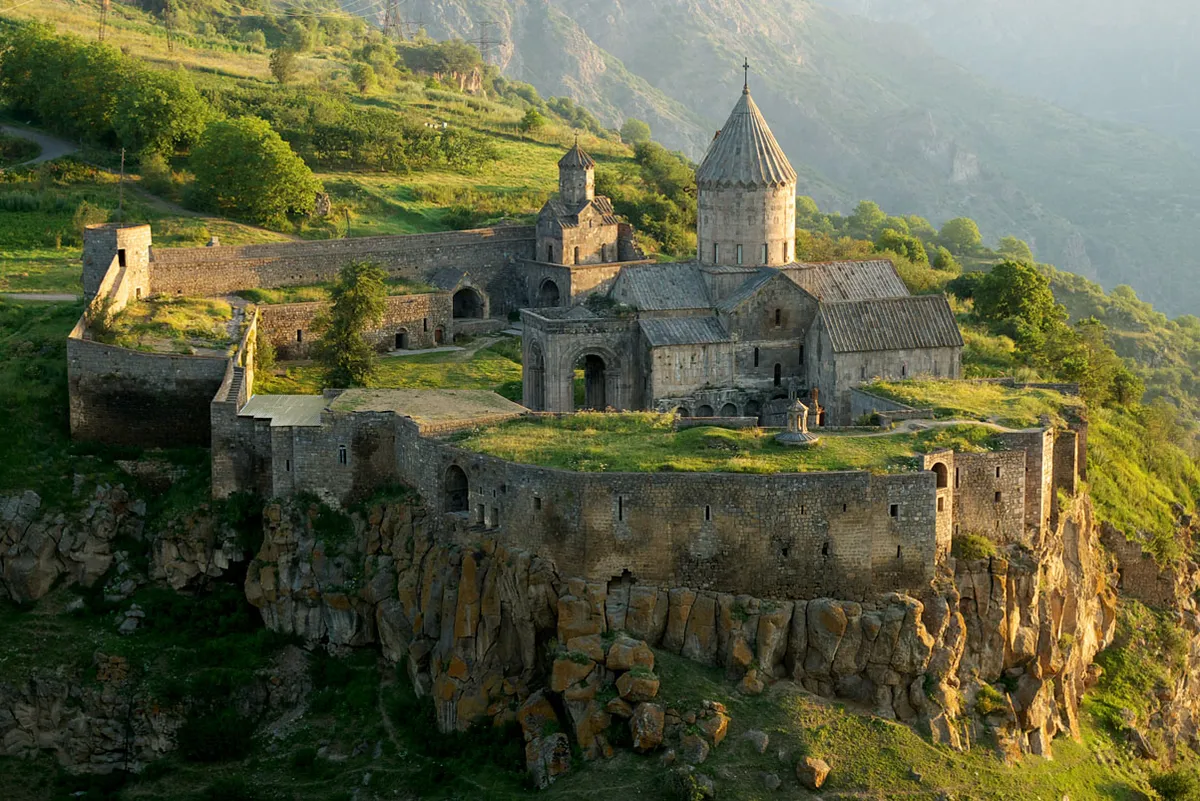 Tatev Monastery: Spiritual Citadel and Medieval Beacon of SyunikPerched above the Vorotan Gorge, Tatev Monastery is one of Armenia's most illustrious spiritual, architectural, and university centers.
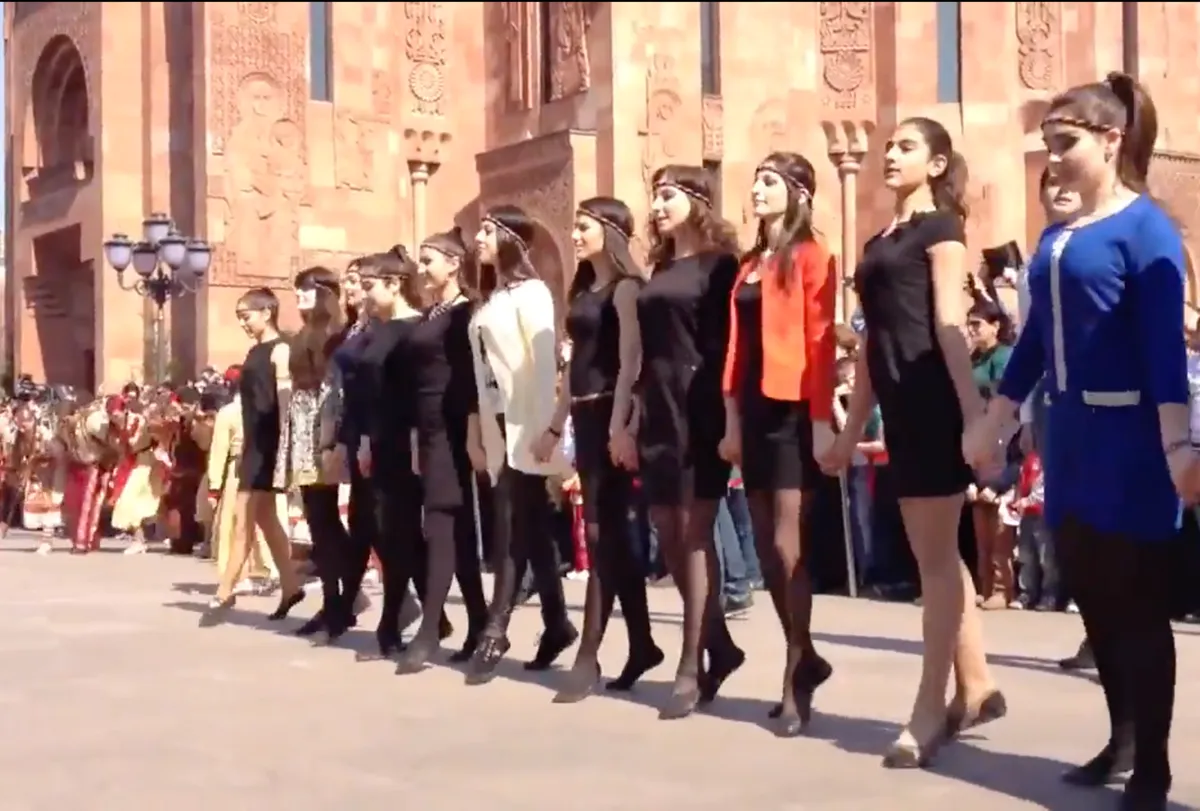 Kochari: History, Steps, and Memory of an Emblematic DanceDiscover Kochari, a circle dance born in the Armenian highlands, from its unique movements to its inscription on UNESCO's cultural heritage list.
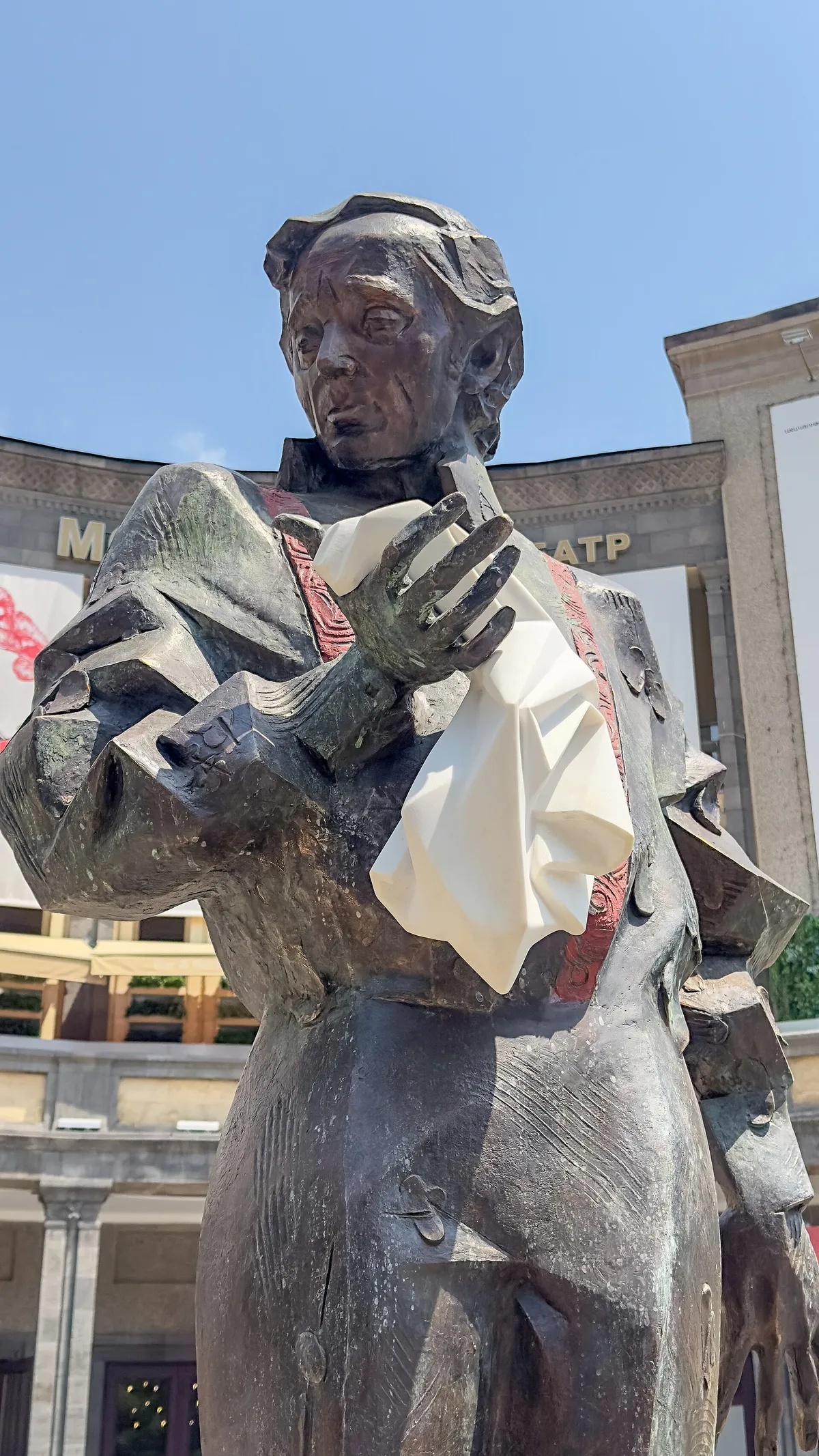 Charles Aznavour: The Voice of a People, the Destiny of a GiantA look back at the life and work of Charles Aznavour, a universal French-Armenian artist, from his Parisian debut to his steadfast devotion to Armenia.