Aram Khachaturian: The Lyrical Breath and Symphonic Soul of Armenia
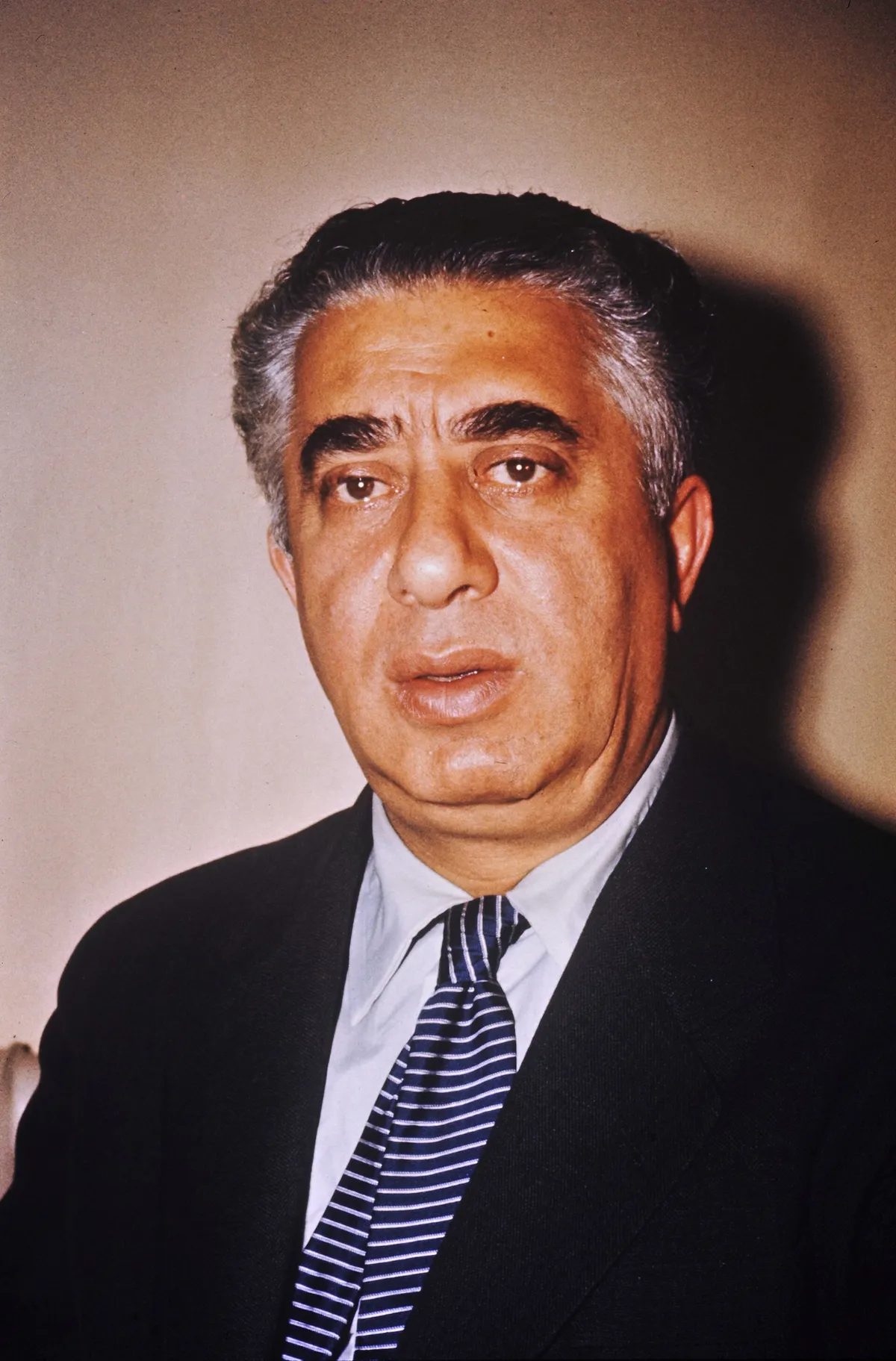
Born on May 24, 1903, in Tiflis and passed away on May 1, 1978, in Moscow, Aram Khachaturian remains one of the greatest figures in Armenian and Soviet musical history. Creator of Armenia's first symphony, first concerto, first ballet, and first sound film score, he built a masterful bridge between the treasures of Eastern folklore and the rigor of the symphonic tradition.
From the Alleys of Tiflis to the Discovery of Music
Aram Khachaturian grew up in a family originally from the Goghtn region, a historic cradle of singers and musicians once praised by Moses of Chorene. His father, Yeghia, a bookbinder from the village of Upper Aza near Ordubad in Nakhchivan, settled in the 1870s in Tiflis, then a cultural crossroads of the Caucasus. His mother, Kumash Sarkisovna, hailed from Lower Aza. The youngest of four brothers and one sister, young Aram was immersed from childhood in the folk songs hummed at home, neighborhood celebrations, and the tunes played by street musicians and traditional bards.
During his schooling at the Argutinskaya-Dolgorukova boarding school and then at the Tiflis Commercial School, Khachaturian taught himself piano, horn, and tuba in his school band, without yet considering an artistic career. In 1915, fleeing the threat of Ottoman armies, the family briefly took refuge in Yekaterinodar with Aram's eldest brother before returning to Tiflis. It was only in 1921 that his destiny shifted: he joined his brother Suren, then a stage director at the Moscow Art Theatre, in Moscow. Although he only learned to read music at the age of 19, he was admitted to the Gnessin Musical Institute to study cello under Sergei Bychkov and later Andrei Borysiak, while also studying biology at Moscow State University. In 1925, he joined Mikhail Gnessin's composition class, then continued his studies at the Moscow Conservatory under the guidance of Nikolai Myaskovsky, Reinhold Glière, and Sergei Vasilenko.
Rootedness in Armenian Heritage
For Khachaturian, art music found its essence in the songs of the people. The legacy of musicologist Komitas, whom he regarded as his greatest master, along with the example of Alexander Spendiaryan and Romanos Melikian, formed the foundations of his approach. From his very first published work, the Dance for Violin and Piano in 1926, Armenian inflections asserted themselves in his writing. His First Symphony (1934–1935), written as his diploma work at the Conservatory to commemorate the fifteenth anniversary of the republic, drew the admiration of Dmitri Shostakovich.
In 1935, he composed the soundtrack for Pepo, the first Armenian sound film, directed by Hamo Bek-Nazarov, beginning a prolific output for cinema and theatre. In the summer of 1939, Khachaturian spent six months in Armenia to conduct an in-depth study of national dances and musical folklore. This immersion served as the matrix for composing his first ballet, Happiness, whose libretto by Gevorg Hovhannisyan depicted Armenian rural life. This material would be reworked during World War II to give birth to his choreographic masterpiece, the ballet Gayane.
From Stage Triumphs to Ideological Turmoil
Premiered on December 9, 1942, in Perm by the evacuated company of the Kirov Theatre while Leningrad was under siege, Gayane achieved immediate triumph and earned the composer the first-degree Stalin Prize in 1943. Khachaturian donated the monetary award to help build a tank for the Red Army. The famous Sabre Dance, taken from this ballet, achieved worldwide renown. In 1944, he composed the music for the official anthem of the Armenian Soviet Socialist Republic.
Alongside his ballets, his concertos form a remarkable instrumental cycle: the Piano Concerto (1936, dedicated to Lev Oborin), the virtuosic Violin Concerto (1940, premiered by David Oistrakh), and the Cello Concerto (1946, premiered by Sviatoslav Knushevitsky). He also wrote incidental music for Lope de Vega's The Valencian Widow (1940) and Mikhail Lermontov's Masquerade (1941), whose celebrated Waltz entered the international repertoire.
Despite his status within the Union of Soviet Composers, Khachaturian was severely affected in January 1948 by the Central Committee resolution spearheaded by Andrei Zhdanov. Singled out for "formalism" alongside Sergei Prokofiev and Dmitri Shostakovich—particularly because of his Third Symphony—he was temporarily censured and forced into retreat in Armenia, before being rehabilitated at the end of 1948 thanks to his score for a film dedicated to Lenin.
In 1954, he completed the monumental score for the ballet Spartacus, premiered in 1956 at the Kirov Theatre, which would be awarded the Lenin Prize in 1959. The Adagio of Spartacus and Phrygia remains one of the pinnacles of emotion and dramatic fervor in the art of ballet.
An Educator and a Living Memory
Beginning in 1950, Khachaturian took up conducting and traveled to around forty countries to conduct his works. A professor at the Gnessin Institute and the Moscow Conservatory, he passed on his devotion to national expression to numerous students, including Armenians Edgar Hovhannisyan and Mikael Tariverdiev. His fertile influence left a lasting mark on contemporaries such as Arno Babajanian, Alexander Arutiunian, and Edvard Mirzoyan.
Decorated with the Order of Lenin, named a Hero of Socialist Labour in 1973, and appointed Commander of the Ordre des Arts et des Lettres in France in 1974, Aram Khachaturian passed away in Moscow in 1978. His remains rest in Yerevan, at the Komitas Pantheon, alongside masters of Armenian culture such as Martiros Saryan and Avetik Isahakian. In 1985, a bust sculpted by Levon Tokmakdjian was unveiled at the Marseille Conservatory by Gaston Defferre in the presence of Edvard Mirzoyan. In Yerevan, his legacy lives on through the museum dedicated to him on Zarobyan Street, the prestigious concert hall bearing his name, and the international competition established to foster emerging talent.
Sources
- Aram Khatchatourian (Wikipedia fr)
- Aram Khachaturian (Wikipedia en)
- Արամ Խաչատրյան (Wikipedia hy)
- Хачатурян, Арам Ильич (Wikipedia ru)
- Documentary about one of the leading composers of the 20th century; Aram Khachaturian (PeopleOfAr)
Texts from Wikipedia (CC BY-SA 4.0) and Wikisource (CC BY-SA 3.0), used as sources.
Written with an AI tool from the sources cited and checked by our editors; translated automatically from the reviewed French text.
Read next
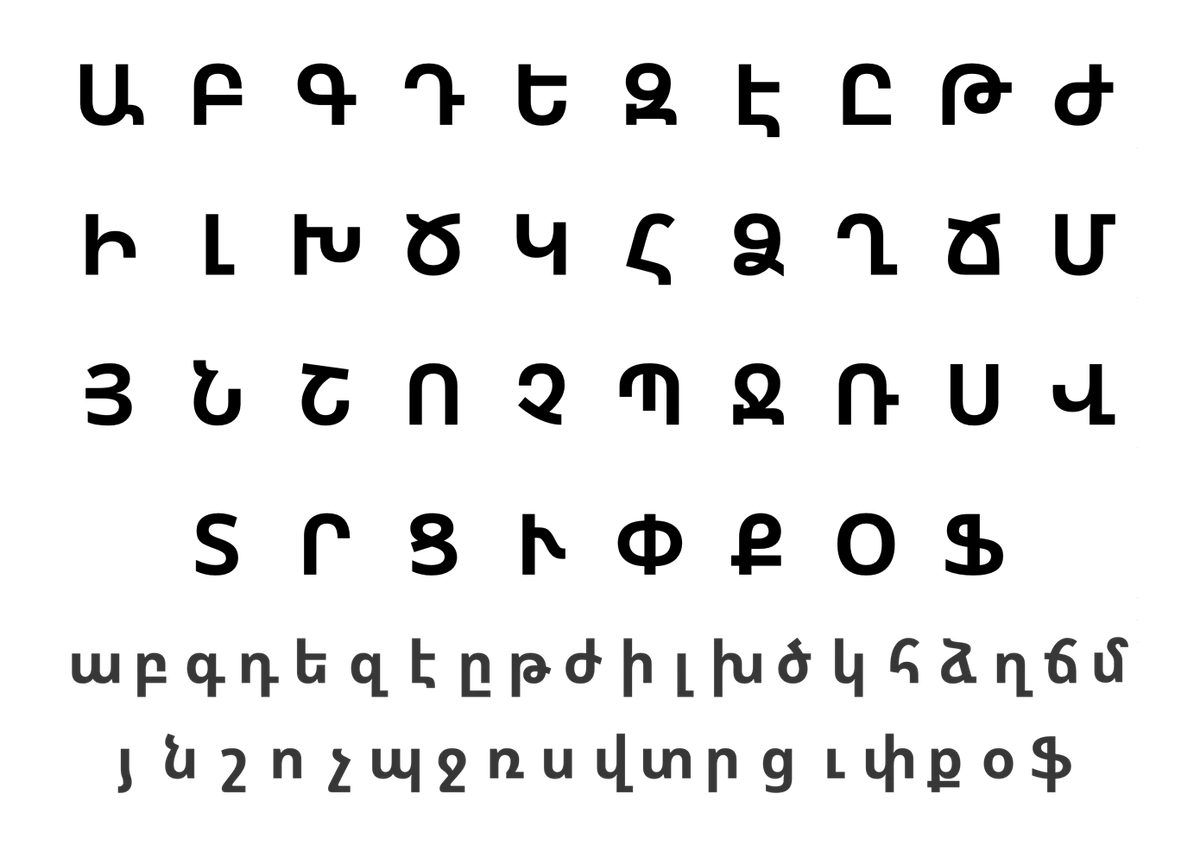 The Alphabet of Mesrop Mashtots: The Graphic Genius of Armenian CultureCreated in 405 by Saint Mesrop Mashtots, the Armenian alphabet gave the language its written form, shaping an age-old literary and calligraphic tradition.
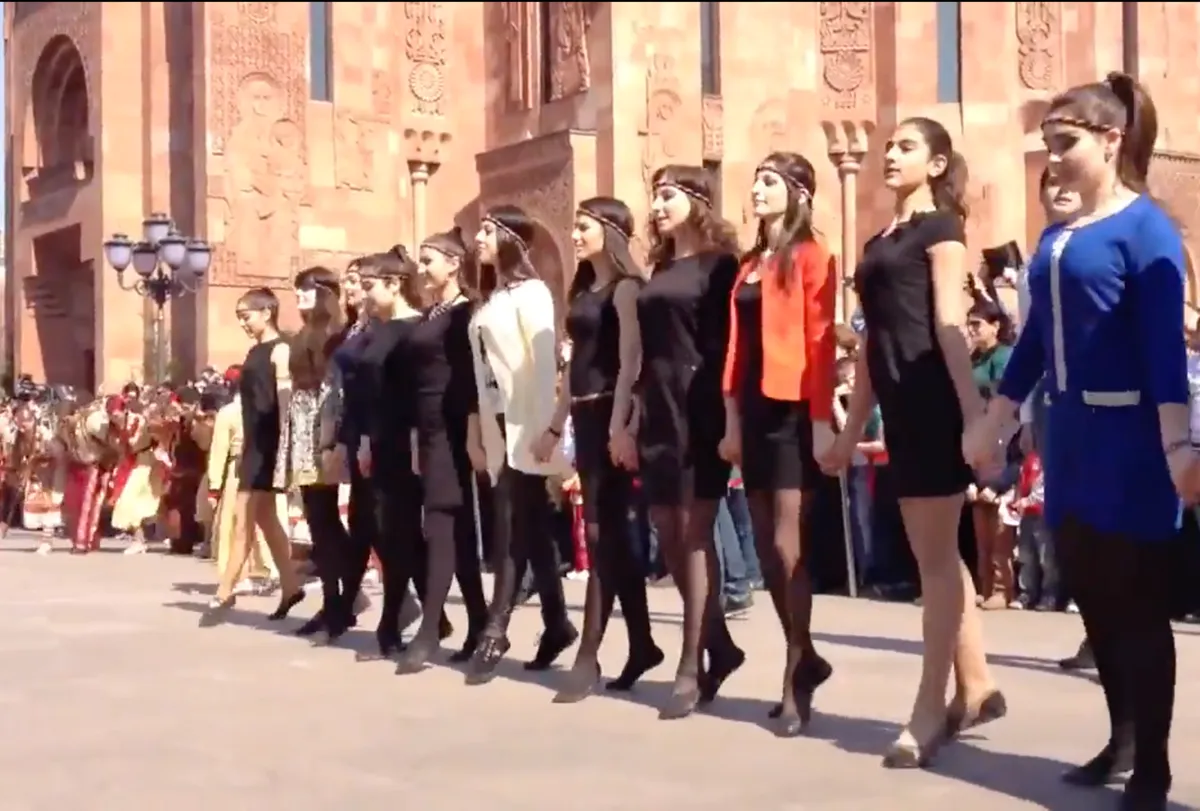 Kochari: History, Steps, and Memory of an Emblematic DanceDiscover Kochari, a circle dance born in the Armenian highlands, from its unique movements to its inscription on UNESCO's cultural heritage list.
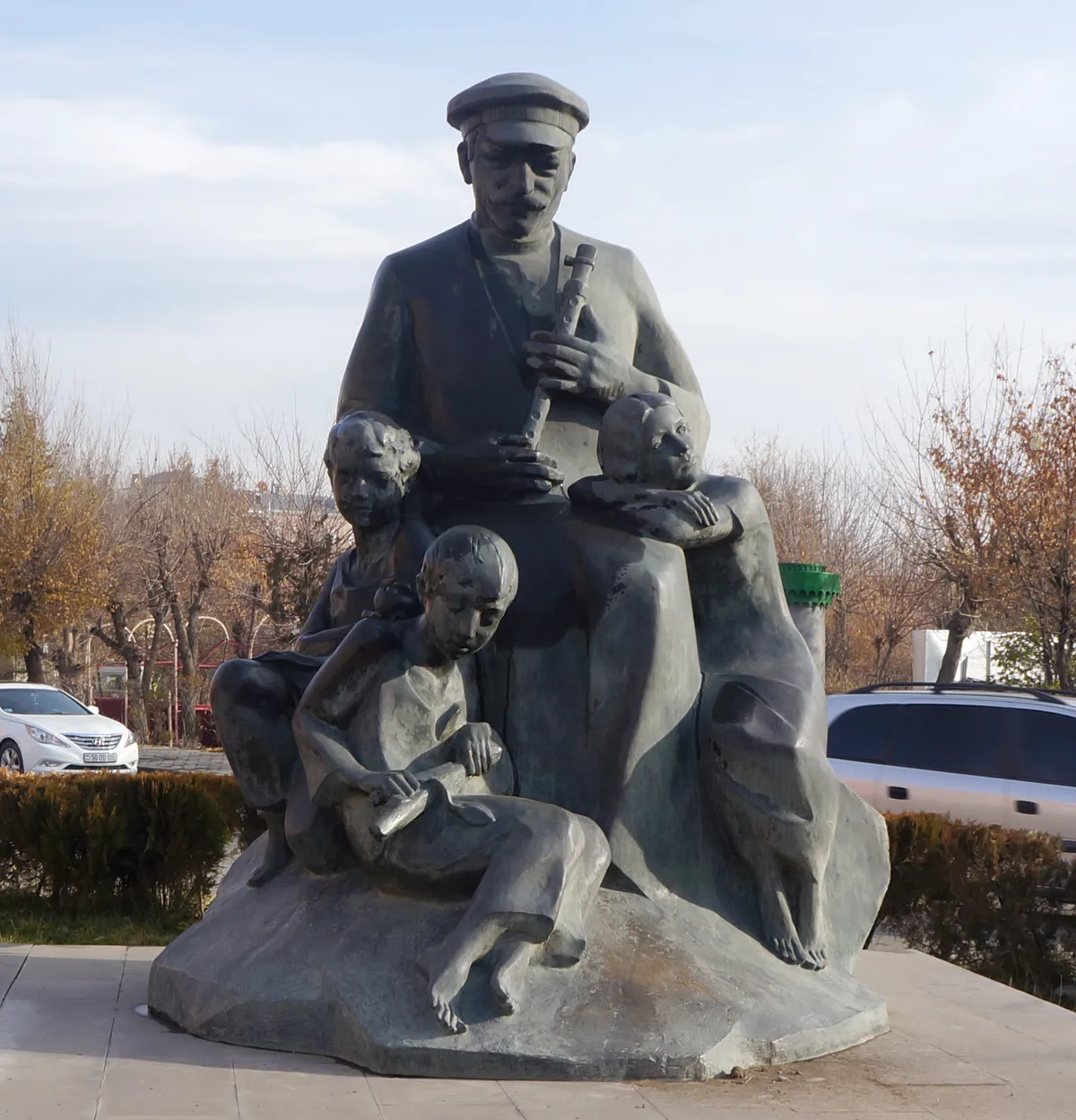 The Duduk, Armenia's Millenary Voice and Apricot Wood SoulDiscover the history, apricot wood craftsmanship, and global reach of the duduk, an iconic instrument of Armenian culture and music.