Charles Aznavour: The Voice of a People, the Destiny of a Giant
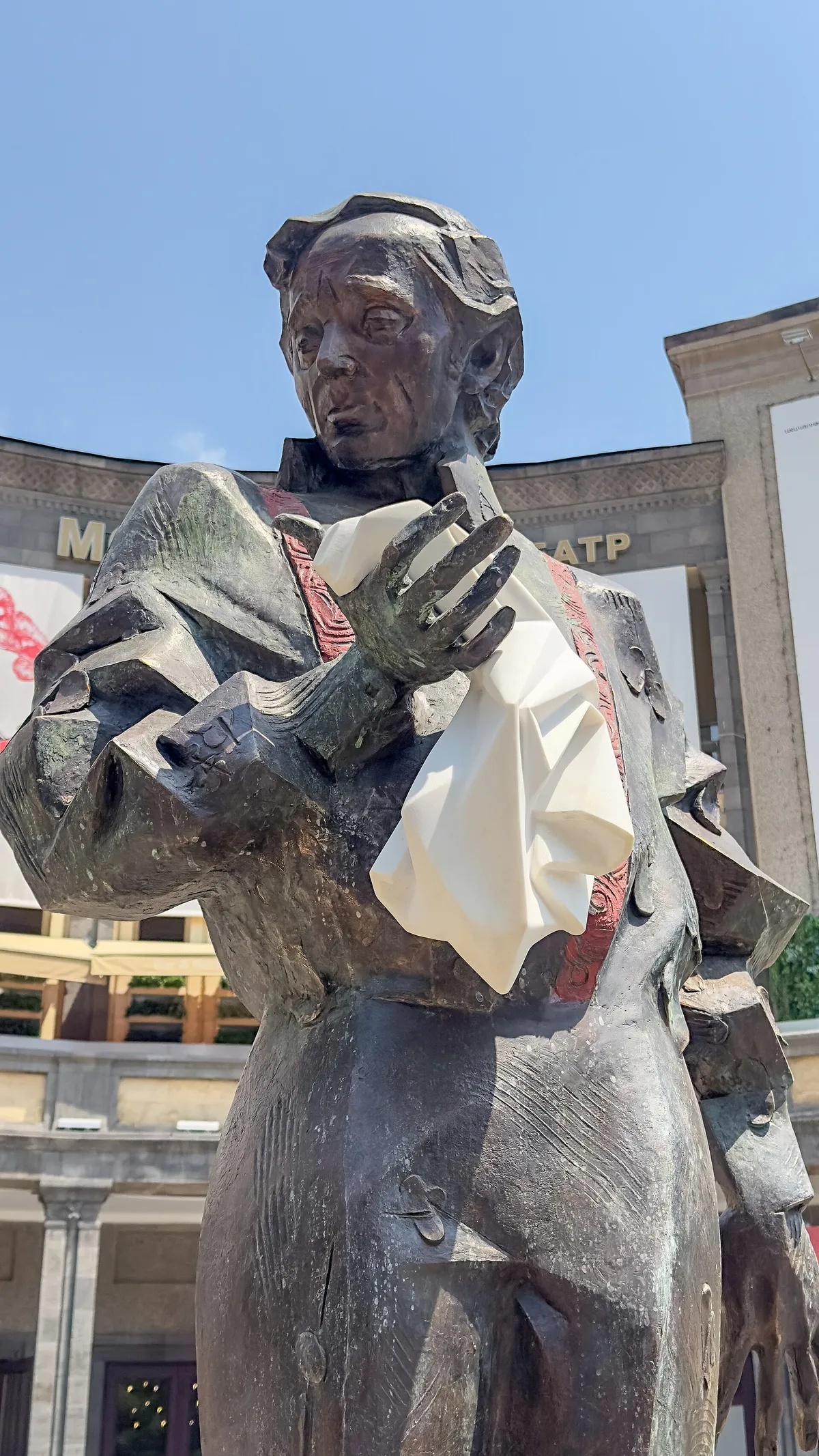
Born Shahnour Vaghinak Aznavourian on May 22, 1924, at the Tarnier Clinic at 89 Rue d'Assas in Paris, Charles Aznavour spanned nearly a century of artistic history. A French-Armenian singer, songwriter, actor, and writer, he left behind a monumental repertoire: more than a thousand songs written or co-written and nearly thirteen hundred tracks recorded in multiple languages, including French, English, Italian, Spanish, Russian, and Armenian.
From the Shores of Exile to the Heart of Paris
The story of Charles Aznavour is rooted in the memory and exodus of the Armenian people. His father, Mamigon (known as Micha) Aznavourian, born on May 26, 1897, in Akhaltsikhe, was the son of a cook to the governor of Tiflis. His mother, Knar Baghdassarian, a survivor of the Armenian genocide, belonged to a family of merchants from Adapazarı. The couple met in Constantinople, where Micha sang as a baritone and Knar wrote articles dedicated to theatrical performances. Fleeing persecution, they made a stop in Salonica, where their eldest daughter Aïda was born on January 13, 1923, before arriving in Paris while awaiting a visa for the United States. The family ultimately decided to settle there.
In Paris, the Aznavourians lived on Rue Monsieur-le-Prince, and Micha later opened the restaurant Le Caucase at 23 Rue de la Huchette, where he performed songs from Central and Eastern Europe. The children grew up in this artistic home. From the age of 9, Charles adopted the stage name Aznavour, attended the École des Enfants du Spectacle, and took to the stage at the Théâtre du Petit-Monde. During World War II, the Aznavour family demonstrated exemplary courage by hiding Jews and Armenians in their apartment, including the resistance fighters Mélinée and Missak Manouchian. This commitment earned Charles and his sister Aïda the Raoul Wallenberg Medal in 2017.
From Adversity to the Alhambra: The Conquest of a Voice
In 1941, Aznavour met the pianist Pierre Roche, with whom he formed a duo. In 1944, he wrote his first song, J'ai bu. Noticed in 1946 by Édith Piaf, the duo went on tour with her and Les Compagnons de la chanson. After spending three days in detention at Ellis Island due to a visa issue, Aznavour achieved notable success with Roche in Quebec, particularly at the Montreal cabaret Au Faisan Doré. Encouraged by Piaf, for whom he became stage manager, secretary, and confidant, he embarked on a solo career.
The beginnings were harsh. Critics attacked his 160 cm frame and his vocal timbre, veiled by a paralyzed vocal cord and mockingly described as “laryngitis.” Yet his perseverance ultimately triumphed. Following triumphant performances in Morocco in 1953 and at the Olympia in 1955 with the song Sur ma vie, the turning point arrived on December 12, 1960, at the Alhambra: by singing Je m’voyais déjà with his back to the audience, he won over an initially frigid auditorium and triggered a resounding triumph at the age of 36.
The following decades saw the birth of worldwide classics: Tu t’laisses aller, Il faut savoir, La Mamma, Hier encore, La Bohème (1965), and Emmenez-moi (1967). In 1972, he broke a taboo with Comme ils disent, which addressed homosexuality without mockery. Two years later, his English-language track She climbed to the top of the UK charts. His talent also resonated at Carnegie Hall in New York and on stages across five continents.
An Unwavering Commitment to Armenia
Throughout his life, Charles Aznavour maintained a vibrant connection with his homeland of origin. In 1975, for the sixtieth anniversary of the Armenian genocide, he composed the song Ils sont tombés with his brother-in-law and collaborator Georges Garvarentz. He also performed the song Ashkharoums by the poet Sayat-Nova alongside his daughter Seda.
Following the catastrophic 1988 earthquake that struck northern Armenia, Aznavour founded the organization Aznavour pour l’Arménie alongside his impresario Lévon Sayan. The charity song Pour toi Arménie (1989), recorded with dozens of artists, topped the charts. In gratitude, the Armenian nation erected a statue of him in Gyumri, named a square after him on Abovyan Street in Yerevan, and awarded him the title of National Hero of Armenia in 2004.
On December 26, 2008, President Serzh Sargsyan granted him Armenian citizenship. Aznavour fully embraced his diplomatic responsibilities: permanent ambassador to UNESCO from 1995, he became Armenia's ambassador to Switzerland and permanent representative to the UN in Geneva in 2009. Together with his son Nicolas, he created the Aznavour Foundation to sustain cultural, educational, and social initiatives.
An Artist of Many Horizons
Alongside music, Charles Aznavour led a remarkable film career, appearing in more than sixty feature films. He left an indelible mark under the direction of François Truffaut in Shoot the Piano Player (1960), playing the pianist Édouard Saroyan, and later in Volker Schlöndorff’s The Tin Drum (1979). In 2002, he starred in Atom Egoyan’s Ararat, a work dedicated to the 1915 genocide. The author of memoirs and collections such as Mon père, ce géant (2007) and À voix basse (2009), he was also awarded a star on the Hollywood Walk of Fame in August 2017.
Charles Aznavour passed away on October 1, 2018, in Mouriès at the age of 94. A national tribute was paid to him on October 5 at Les Invalides in the presence of French and Armenian presidents Emmanuel Macron and Armen Sarkissian, as well as Armenian Prime Minister Nikol Pashinyan and Catholicos Karekin II. Following a religious service at the Saint John the Baptist Armenian Cathedral in Paris, he was laid to rest in the family vault in Montfort-l'Amaury, leaving an indelible mark on world heritage.
Sources
- Charles Aznavour (Wikipedia fr)
- Charles Aznavour (Wikipedia en)
- Շառլ Ազնավուր (Wikipedia hy)
- Азнавур, Шарль (Wikipedia ru)
Texts from Wikipedia (CC BY-SA 4.0) and Wikisource (CC BY-SA 3.0), used as sources.
Written with an AI tool from the sources cited and checked by our editors; translated automatically from the reviewed French text.
Read next
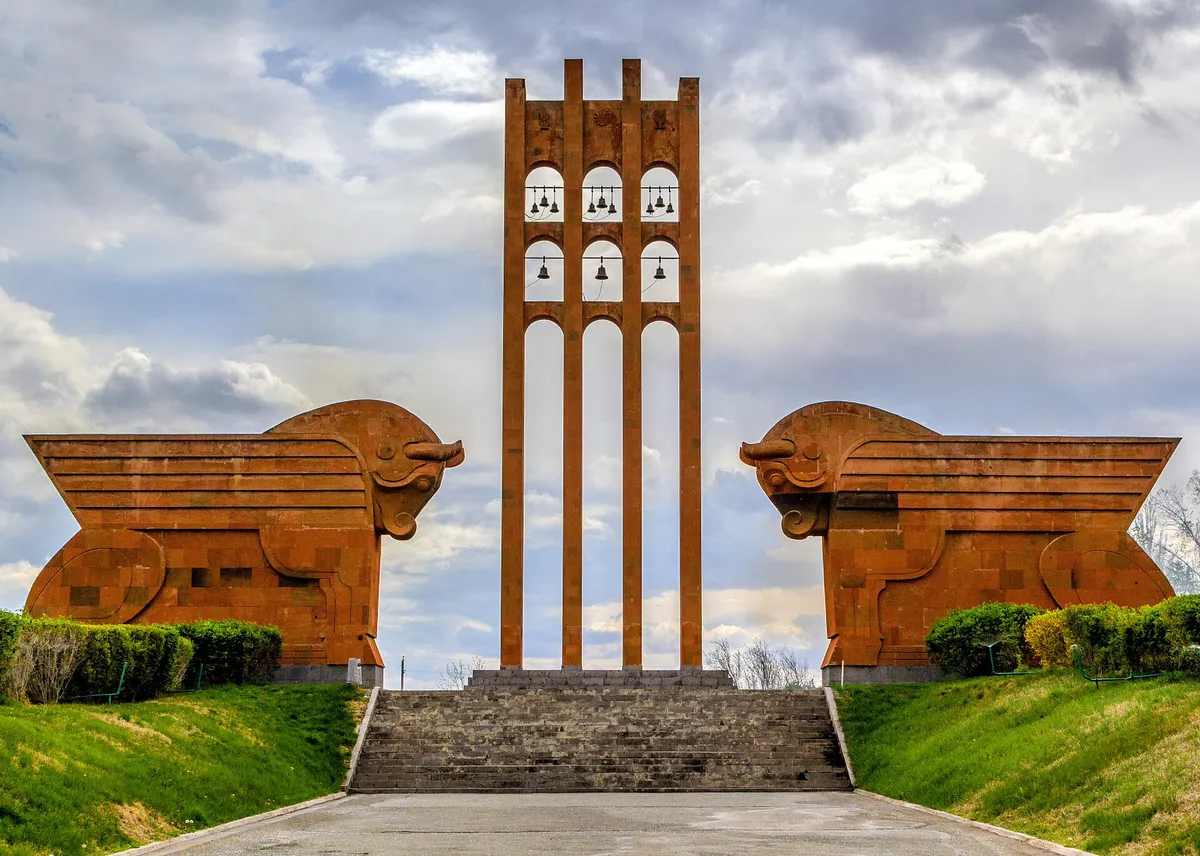 The Battle of Sardarapat: The Heroic Stand of May 1918Fought in May 1918, the Battle of Sardarapat halted the Ottoman invasion and enabled the declaration of the First Republic of Armenia.
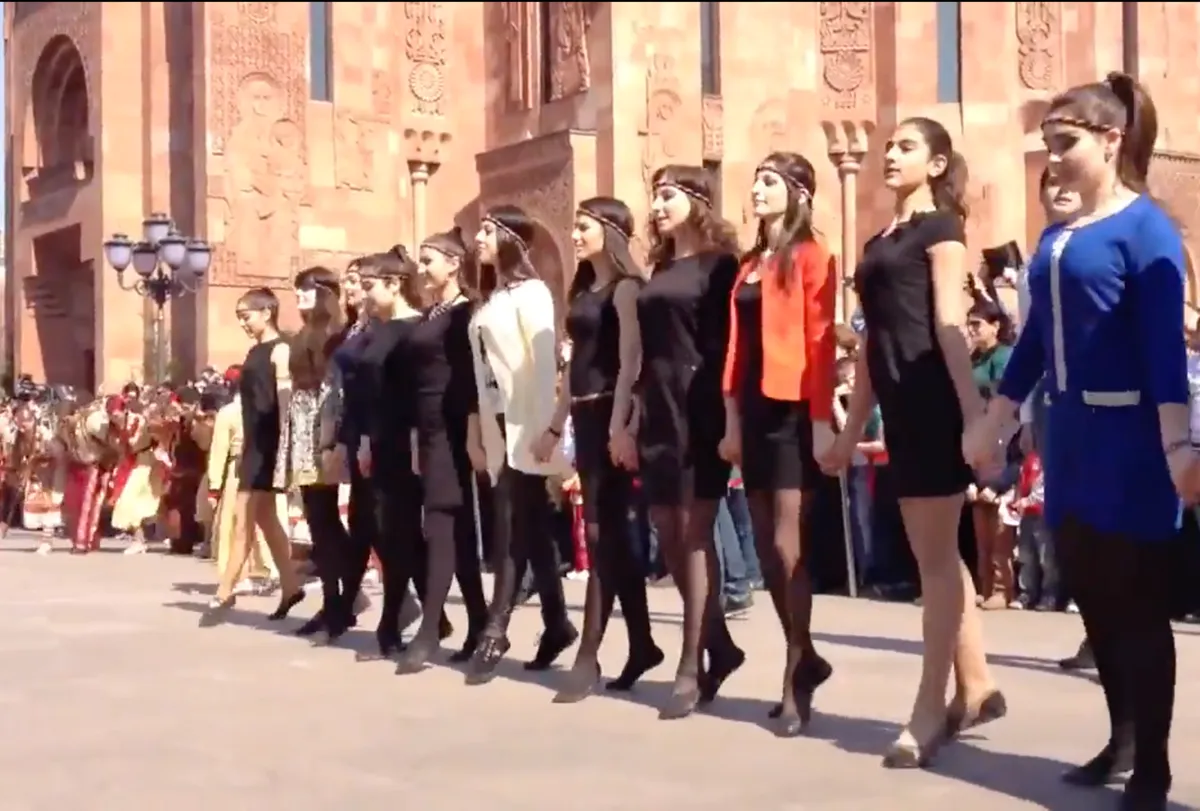 Kochari: History, Steps, and Memory of an Emblematic DanceDiscover Kochari, a circle dance born in the Armenian highlands, from its unique movements to its inscription on UNESCO's cultural heritage list.
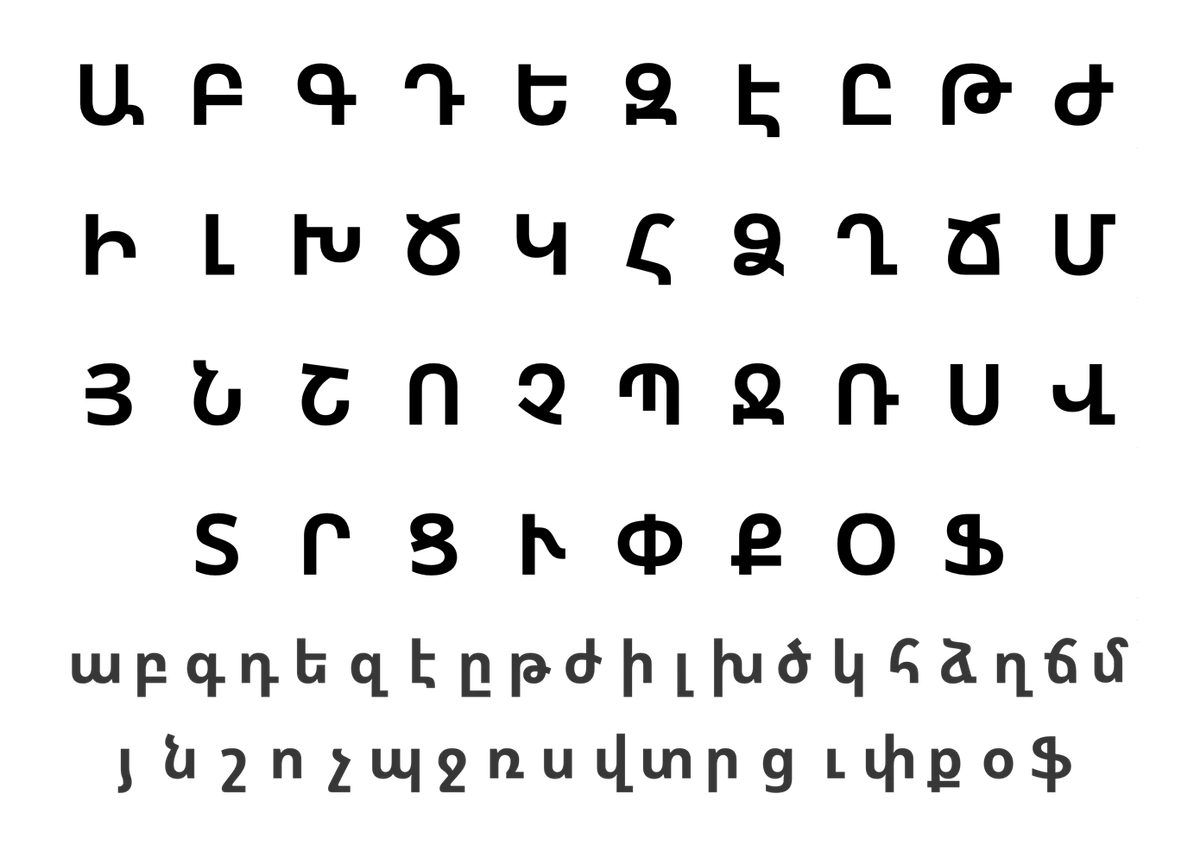 The Alphabet of Mesrop Mashtots: The Graphic Genius of Armenian CultureCreated in 405 by Saint Mesrop Mashtots, the Armenian alphabet gave the language its written form, shaping an age-old literary and calligraphic tradition.