Khorovats, the Beating Heart of Armenian Tables and Traditions
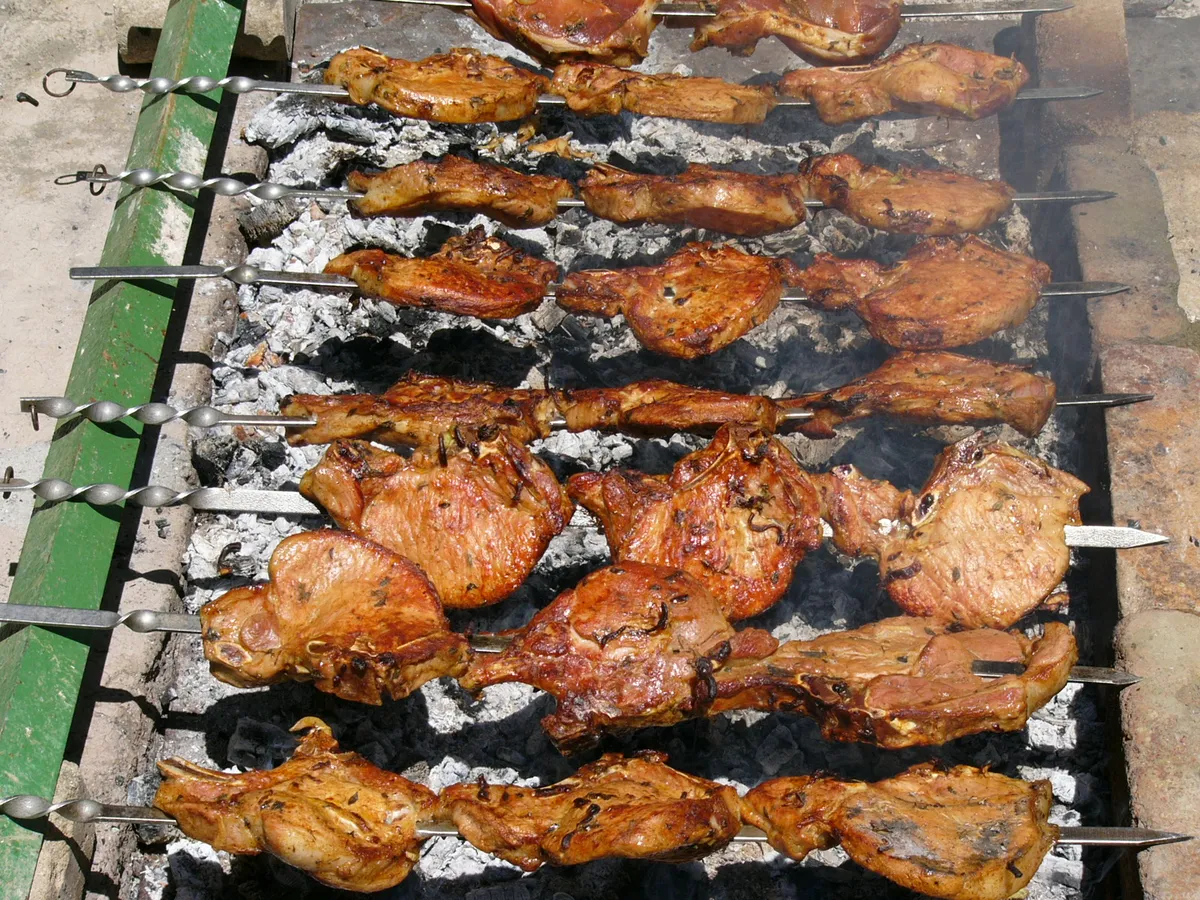
In Armenian culinary culture, no family celebration or public feast can truly be imagined without the presence of khorovats (խորոված). This iconic grilled meat dish, omnipresent in restaurants as well as at family gatherings both in Armenia and across the diaspora, goes beyond mere cooking to establish itself as a true ritual of sharing and celebration.
A Centuries-Old Tradition Recorded in Texts and History
Etymologically, the term khorovats directly means "grilled" in Armenian and comes from the verb khorovel (խորովել, "to grill"), which derives from the Indo-European root qor, meaning to burn. The antiquity of this practice is attested as early as the Early Middle Ages by the historian Movses Khorenatsi, who already mentioned the iron spit used to roast meat (shampoor). In the 17th century, the poet Andreas Artsketsi also mentioned khorovats in his poem Song of Feast and Rejoicing.
During the same period, the French traveler Jean Chardin provided a detailed account in his Travels of Sir John Chardin into Persia and Other Places of the East. He described a rustic method observed among the Armenians, which consisted of sewing the mutton or lamb back into its own skin before placing it beneath the embers overnight, like roasted chestnuts. This ancient practice recalls the pastoral tradition of hovvi khorovats (the shepherd's barbecue), in which the animal's meat, wrapped in its fleece, is buried in a pit about fifty centimeters deep and covered with earth, upon which a fire is maintained.
The Art of the Shampoor and the Rules of Cooking
Although it is traditionally prepared with pork (khoz), lamb (gar), or beef (tavar), khorovats welcomes a wide variety of meats according to taste: chicken (hav), more rarely veal (hort), as well as goat, rabbit, game, birds, or fish. In Armenia, the selected cuts very often retain the bone, as is the case with chops.
The preparation relies on meticulous cutting and careful marinating. The pieces are mixed with an abundant amount of thinly sliced or hand-crushed onions, seasoned with salt and herbs such as purple basil (rehan) or savory (tsitron). This maceration generally lasts from 2 to 12 hours, and can extend to one or two days according to the process known as basturmayatsum. Armenia is notable for rejecting vinegar, with cooks sometimes favoring the addition of mineral water, vegetable oil, fruit juice, or wine.
The pieces of meat are then threaded onto metal or wooden skewers, the shampoor (շամփուր), to be roasted over a brazier (mangal) or suspended inside a tonir. The reference work Armenian Food: Fact, Fiction & Folklore (2006) records three fundamental technical tips: - Maintain a distance of 12 to 15 centimeters between the coals and the skewers; - Systematically place the largest pieces in the center, where the heat is most intense; - Pack the shampoors closely together to concentrate and preserve the heat of the fire.
Variations, Vegetables, and Accompaniments
The repertoire of khorovats includes several recognized variations. Kars khorovats is historically characterized by very large pieces of meat that can weigh up to 500 grams, traditionally cut from the loin or kidney area of lamb, accompanied by tomatoes and marinated in wine or cognac. There is also khazani-khorovats, a variation where the meat, whether marinated or not, is seared in a cauldron (kazan) or a pan without using a mangal or tonir.
The meal is inevitably accompanied by roasted vegetables. During the summer, tomatoes, eggplants, and bell peppers are skewered whole on the shampoors, cooked over the embers, then cut into a bowl and seasoned with salt and crushed garlic. Potatoes can also be grilled. On the table, the traditional lavash bread is essential. Other common side dishes include green vegetables, such as asparagus or green beans, which are sautéed in a pan before being bound with beaten eggs.
Urban Conviviality, Cinema, and Festivities
In the Armenian capital, the dish's renown has even shaped urban geography: in Yerevan, Proshyan Street has been dubbed "Barbecue Street" by visitors due to its high concentration of specialized establishments.
This grilling culture left its mark on popular memory through Soviet cinema. In the 1976 film When September Comes, actor Armen Dzhigarkhanyan, playing the character of Levon, improvises the preparation of a khorovats with his grandson on the balcony of a Moscow apartment. The thick smoke alerts the neighbors, who call the fire department; the incident ends in a joyful gathering where the whole building comes together in his home to share the meal.
To perpetuate and celebrate this art of living together, the town of Akhtala, located in northern Armenia, has hosted an annual khorovats festival since 2009. This culinary event attracts considerable crowds: in 2012, the United States Ambassador to Armenia, John A. Heffern, was among the approximately 15,000 attendees gathered around the smoking skewers.
Sources
- Khorovats (Wikipedia fr)
- Khorovats (Wikipedia en)
- Հայկական խորոված (Wikipedia hy)
- Хоровац (Wikipedia ru)
Texts from Wikipedia (CC BY-SA 4.0) and Wikisource (CC BY-SA 3.0), used as sources.
Written with an AI tool from the sources cited and checked by our editors; translated automatically from the reviewed French text.
Read next
 Vardavar: The Great Armenian Festival of Waters and LightDiscover the history and rituals of Vardavar, an iconic Armenian festival blending pagan traditions, water worship, and the Feast of the Transfiguration.
 Kochari: History, Steps, and Memory of an Emblematic DanceDiscover Kochari, a circle dance born in the Armenian highlands, from its unique movements to its inscription on UNESCO's cultural heritage list.
 The Areni-1 Winery: At the Millennia-Old Roots of Wine in ArmeniaDiscover Areni-1, the world's oldest winemaking facility, unearthed in the Vayots Dzor region in the heart of Armenia.