The Areni-1 Winery: At the Millennia-Old Roots of Wine in Armenia
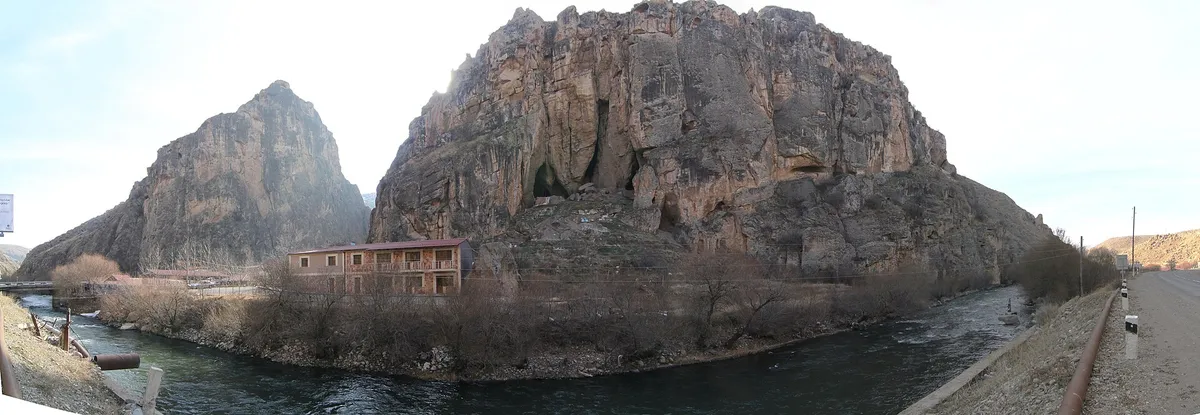
In southern Armenia, nestled within the rock faces overlooking the left bank of the Arpa River, the Areni-1 cave—also known as the "Bird's Cave" (Trchuneri karandzav)—houses one of the country's most remarkable archaeological sites. Located near the village of Areni and 12 kilometers from the town of Yeghegnadzor in Vayots Dzor Province, this natural cavity perched at an elevation of about 1,080 meters bears witness to the antiquity of Armenian craft and agricultural traditions. As early as the 5th century, the historian Elishe already mentioned this place under the name of the fortress or settlement of Arpanyal, a fortified crossroads that controlled the pass connecting the Sharur Plain to Vayots Dzor. Since 2007, a series of excavation campaigns has unearthed exceptionally well-preserved treasures there, including the oldest known winery on Earth.
A Cave Complex in the Heart of Vayots Dzor
The Areni-1 cave belongs to the category of clastokarst caves, formed over the ages within limestone conglomerates. Composed of three main chambers and several interior galleries branching into the rock, its area is estimated between 400 and 600 square meters. Beneath vaults darkened by a shadowy film, the floor conceals a rich stratigraphic sequence at least four meters deep, in which researchers have identified several Chalcolithic occupation layers, primarily dated between 4300 and 3500 BCE.
These excavations brought together an international scientific team led by Boris Gasparyan, a researcher at the Institute of Archaeology and Ethnography of the National Academy of Sciences of Armenia, alongside Gregory Areshian of the Cotsen Institute at the University of California, Los Angeles, and Ron Pinhasi of University College Cork in Ireland, in partnership with universities in Connecticut, Haifa, and Tel Aviv. The exceedingly rare preservation of organic materials at Areni-1 stems from an internal microclimate characterized by extreme dryness and stable temperatures, reinforced by a thick carbonate crust sealing the sedimentary layers.
The World's Oldest Winemaking Facility
In January 2011, the discovery within the cave of the oldest winemaking facility ever found was formally announced, dating back 6,100 years to the 4th millennium BCE. The first traces of this activity had been identified as early as the 2007 campaigns, when Boris Gasparyan and his team uncovered a rudimentary clay press.
The structure of this ancient winery reflects a thorough understanding of the pressing process: grapes were crushed on an inclined surface, allowing the juice to drain directly into a large collection vat dug into the ground. All around this press and the massive storage jars (karas) buried in the earth, archaeologists recovered numerous grape seeds, desiccated vine fragments, pressed grape residues, and fruit skins, as well as hollow reed stems that could have been used to draw or taste the beverage. The presence of ceramic vessels, a cup, and a drinking bowl confirms the fully operational nature of this winery. Researchers also noted that wine consumption was not merely a secular practice, but held ritual significance during ceremonial gatherings.
Millennia-Old Clothing and Refined Craftsmanship
Beyond its winemaking complex, Areni-1 has yielded artifacts of priceless value for the history of material culture. In September 2008, Armenian archaeologist and doctoral student Diana Zardaryan discovered a 5,500-year-old leather shoe in a carefully arranged circular pit beneath a protective layer of animal dung. Cut from a single piece of cowhide, fastened with laces, and stuffed with straw and grass to preserve its shape, this right-foot shoe (size 37) predates the one found on the Alpine mummy Ötzi.
In addition to this shoe, other clothing items were uncovered, notably a woven reed skirt dated to 3900 BCE and linen cloths. The patterns visible on the woven elements evoke the traditional ornamentation of Armenian carpets, demonstrating the vitality of textile arts in this early era. The cave also contained metal knives, a palm-sized dagger, ropes, and seeds from more than thirty fruit species, including dried plums and apricot pits, attesting to a highly diversified agricultural economy.
Rituals, Burials, and Genetic Data
At the back of the cave, near the food storage containers, excavators uncovered human burials dating back 5,900 to 6,200 years before present. Children had been buried whole in clay jars, while adults displayed secondary burials or disarticulated bodies. Three skulls of adolescent girls aged 13 to 14 bore the fatal marks of club strikes delivered during sacrificial rituals. In 2009, one of these skulls yielded the oldest preserved human brain tissue, with superficial blood vessels still discernible.
Paleogenetic studies conducted on three Chalcolithic individuals from Areni-1 identified the Y-chromosome haplogroup L1a, as well as the mitochondrial lineages H, H2a1, K1a8, and U4a. One of the genetic profiles indicated an individual with red hair and blue eyes. Through the splendor of its winemaking installations and the rarity of its remains, Areni-1 stands as a fundamental milestone in the history and heritage of Armenia.
Sources
- Areni-1 (Wikipedia fr)
- Areni-1 cave (Wikipedia en)
- Արենի 1 քարանձավ (Wikipedia hy)
- Арени (пещера) (Wikipedia ru)
Texts from Wikipedia (CC BY-SA 4.0) and Wikisource (CC BY-SA 3.0), used as sources.
Written with an AI tool from the sources cited and checked by our editors; translated automatically from the reviewed French text.
Read next
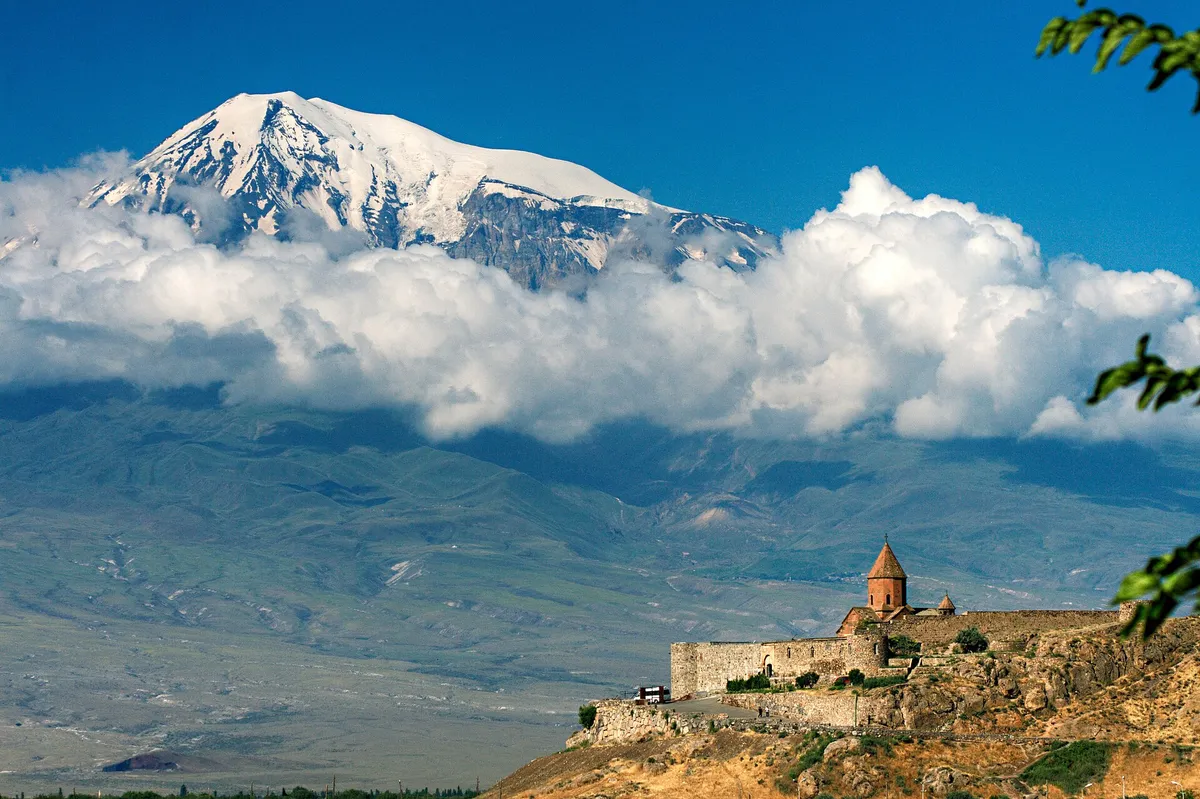 Khor Virap Monastery: Spiritual Sentinel Facing Mount AraratDiscover the history of Khor Virap, Armenia's major sanctuary where Gregory the Illuminator was imprisoned before the kingdom's conversion in 301.
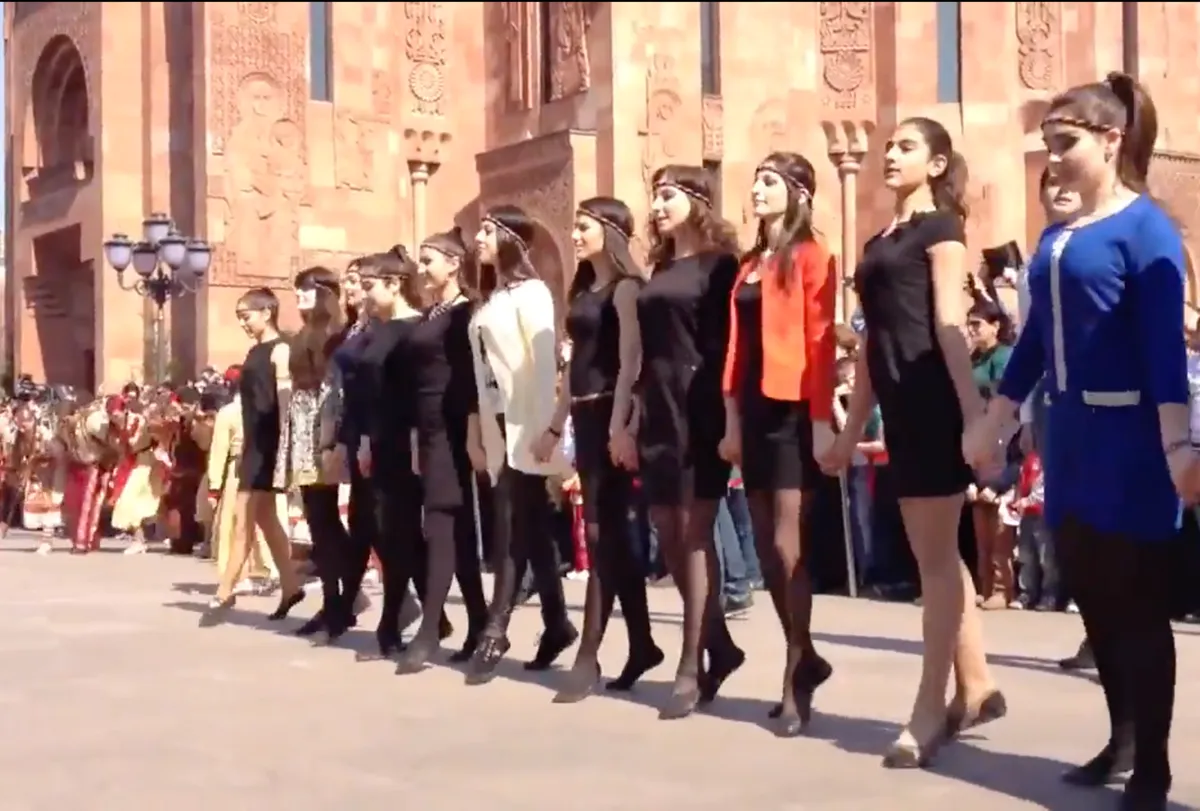 Kochari: History, Steps, and Memory of an Emblematic DanceDiscover Kochari, a circle dance born in the Armenian highlands, from its unique movements to its inscription on UNESCO's cultural heritage list.
 The Armenian Kingdom of Cilicia: Splendor and Destiny of a Mediterranean StateRetrace the history of the Armenian Kingdom of Cilicia (1080–1375), from feudal rise and high diplomacy to artistic splendor and commercial influence.