The Alphabet of Mesrop Mashtots: The Graphic Genius of Armenian Culture
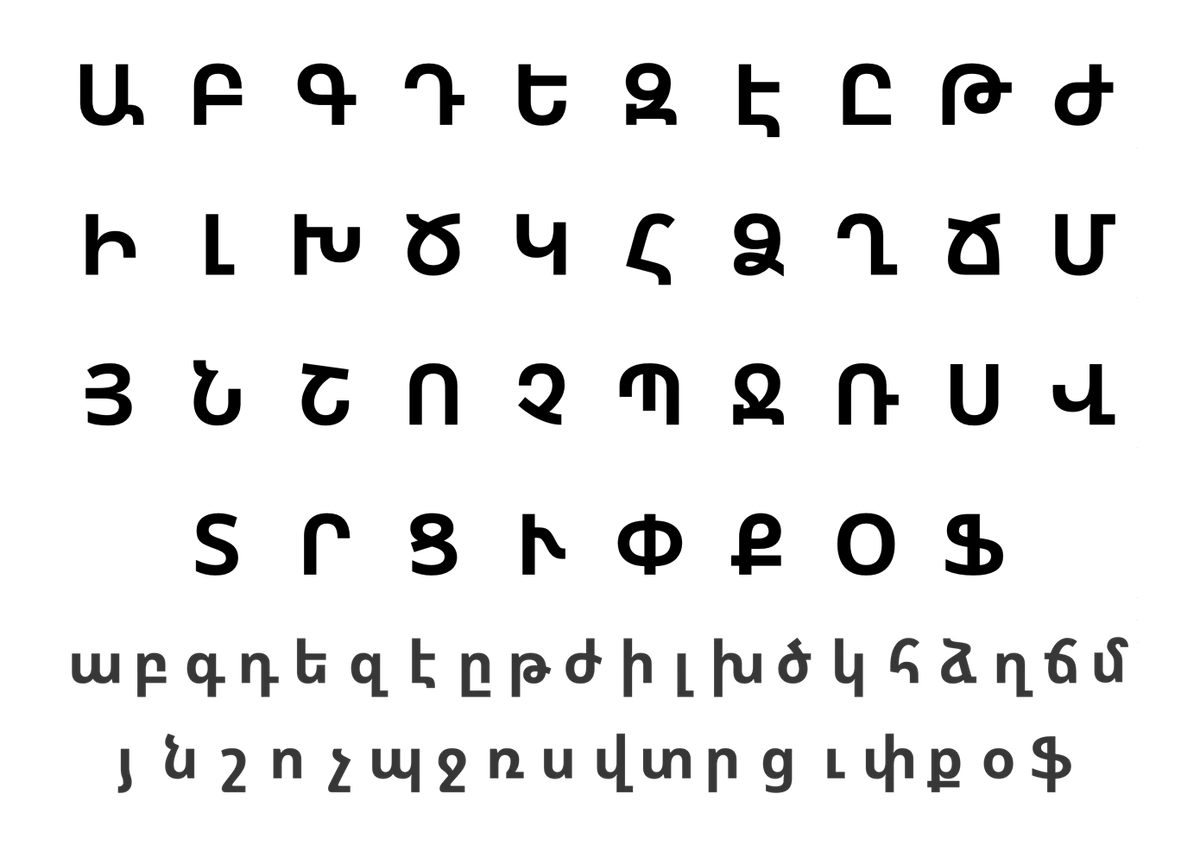
In the year 405 AD, the history of the Armenian language—a unique branch of the Indo-European family—took a decisive turn. Until then confined to oral tradition and the requirements of religious worship conducted in foreign tongues, the spoken Armenian word found its own visual reflection through the masterly work of Saint Mesrop Mashtots. This original writing system, a true cornerstone of identity preserved across more than sixteen centuries, continues to embody the living memory of the Armenian nation, from ancient parchments to the contemporary digital sphere.
A Spiritual and Intellectual Genesis
At the dawn of the 5th century, a century after the official adoption of Christianity in 301, the faith struggled to take deep root in certain provinces such as Goghtn. Religious ceremonies were then held in Greek or Syriac, two languages inaccessible to the majority of the people, who retained ancient practices. Faced with this reality, the monk and linguist Mesrop Mashtots agreed with Catholicos Sahak Partev on the imperative need to provide Armenian with its own script. Fervently supported by King Vramshapuh, this cultural and spiritual endeavor became the subject of a general council.
An initial attempt relied on the “Danielian script,” a writing system brought back by a Syrian bishop. Mashtots set out to teach them, but the experiment proved unsuccessful: these signs were incapable of accurately transcribing the language's rich phonetic range. Mashtots then set out with disciples for the intellectual centers of the era, Edessa and Samosata. In the chancelleries and manuscript repositories of Edessa, he scrutinized known alphabets. It was in Samosata that he finalized the design of the characters with the assistance of the Greek calligrapher Rufinus (Hrophanos).
It was also there that the very first sentence in the written Armenian language, Classical Armenian (grabar), was recorded, taken from the Book of Proverbs of Solomon: “To know wisdom and instruction, to perceive the words of understanding.” The Bible thus became the first major text to be fully translated into Armenian.
Phonetic Rigor and a Mathematical Model
The script designed by Mashtots originally consisted of thirty-six letters: seven vowels and twenty-nine consonants. Written horizontally from left to right, this bicameral script distinguishes between lowercase and uppercase letters. Mashtots drew partial inspiration from the Greek alphabet, adopting its general direction and orderly arrangement, while creating specific glyphs to represent consonants unique to Armenian, notably the three-way distinction between voiced, voiceless, and aspirated consonants.
Over the centuries, the graphic repertoire expanded: in the 11th and 13th centuries, the letters Օ (ō, derived from the diphthong aw) and Ֆ (f) were added to accommodate phonetic shifts and loanwords, bringing the total to thirty-eight characters. In the 1920s, the spelling reform implemented in Soviet Armenia introduced the ligature և (ev) as an independent letter, bringing the count to thirty-nine letters in the reformed orthography, while Western Diaspora communities and Iranian Armenians maintained classical orthography.
The Mashtotsian alphabet also served as a numeral system of remarkable precision, used until the 17th century. The thirty-six original letters were divided into four distinct groups: the first nine corresponded to units (from Ա to Թ), the next to tens (from Ժ to Ղ), the third tier to hundreds (from Ճ to Ջ), and the fourth to thousands (from Ռ to Ք). To denote a myriad (ten thousand) and its multiples up to ninety million, a sign called byur (^) was placed above the letters.
The system featured original punctuation in which intonation is marked within the word itself: the question mark (hartsakan nshan), the exclamation mark (batsaganchakan nshan), and the stress mark (shesht) are placed directly above the stressed vowel. Sentence punctuation uses the verjaket (։) for full stops and the mijaket (․) for medium pauses, while the pativ or badiv (՟), which translates as “honor,” served to indicate abbreviations in liturgical texts.
The Art of the Stroke: From Stone to Parchment
The art of Armenian writing materialized in several major styles forged during the Middle Ages: - Erkatagir (“iron letters”): a majestic uncial written with a stylus or iron gall ink, dominant from the 5th to the 13th century, favored for monumental stone inscriptions such as that of the Church of Saint Sarkis in Tekor dating to the 480s. - Bolorgir (“round letters”): a more compact script that appeared in the 10th century, gained dominance by the end of the 13th century, and became the principal font of Armenian printing from the 16th century onward. - Notrgir (“minuscule”): a rapid, cursive script that emerged toward the end of the Middle Ages, widely used across the diaspora from the 16th to the 18th century. - Cheghagir: a slanted script that inspired modern italic typography.
To this typographic richness is added the brilliance of ornamental illuminated initials, zardagir, developed in manuscript illumination workshops. Medieval scribes adorned chapter headings with trchnagir (letters formed of interlaced birds), tsaghkagir (floral motifs), vishapagir (mythical dragons), or mardagir (human figures).
A Preserved and Celebrated Treasure
Thanks to the enduring efforts of the Armenian Church and monastic scriptoria—from Vagharshapat to Sanahin, from the monastery of Tatev to Gladzor—more than 30,000 manuscript witnesses have survived through the ages, including 25,000 complete codices. The most prestigious collections are housed today at the Matenadaran in Yerevan and at the Mekhitarist monastery on the island of San Lazzaro in Venice.
The flexibility and precision of this script allowed it, over the centuries, to transcribe other languages of the East and Eastern Europe, such as Armeno-Kipchak in Podolia and Galicia, Kurdish in Soviet Armenia during the 1920s, and Ottoman Turkish, attested by more than 2,000 printed works. In December 2019, the recognition of this heritage reached a new historic milestone with the inscription of “Armenian letter art and its cultural expressions” on UNESCO’s Representative List of the Intangible Cultural Heritage of Humanity.
Sources
- Alphabet arménien (Wikipedia fr)
- Armenian alphabet (Wikipedia en)
- Հայերենի այբուբեն (Wikipedia hy)
- Армянский алфавит (Wikipedia ru)
- Armenian letter art and its cultural expressions (UNESCO)
Texts from Wikipedia (CC BY-SA 4.0) and Wikisource (CC BY-SA 3.0), used as sources.
Written with an AI tool from the sources cited and checked by our editors; translated automatically from the reviewed French text.
Read next
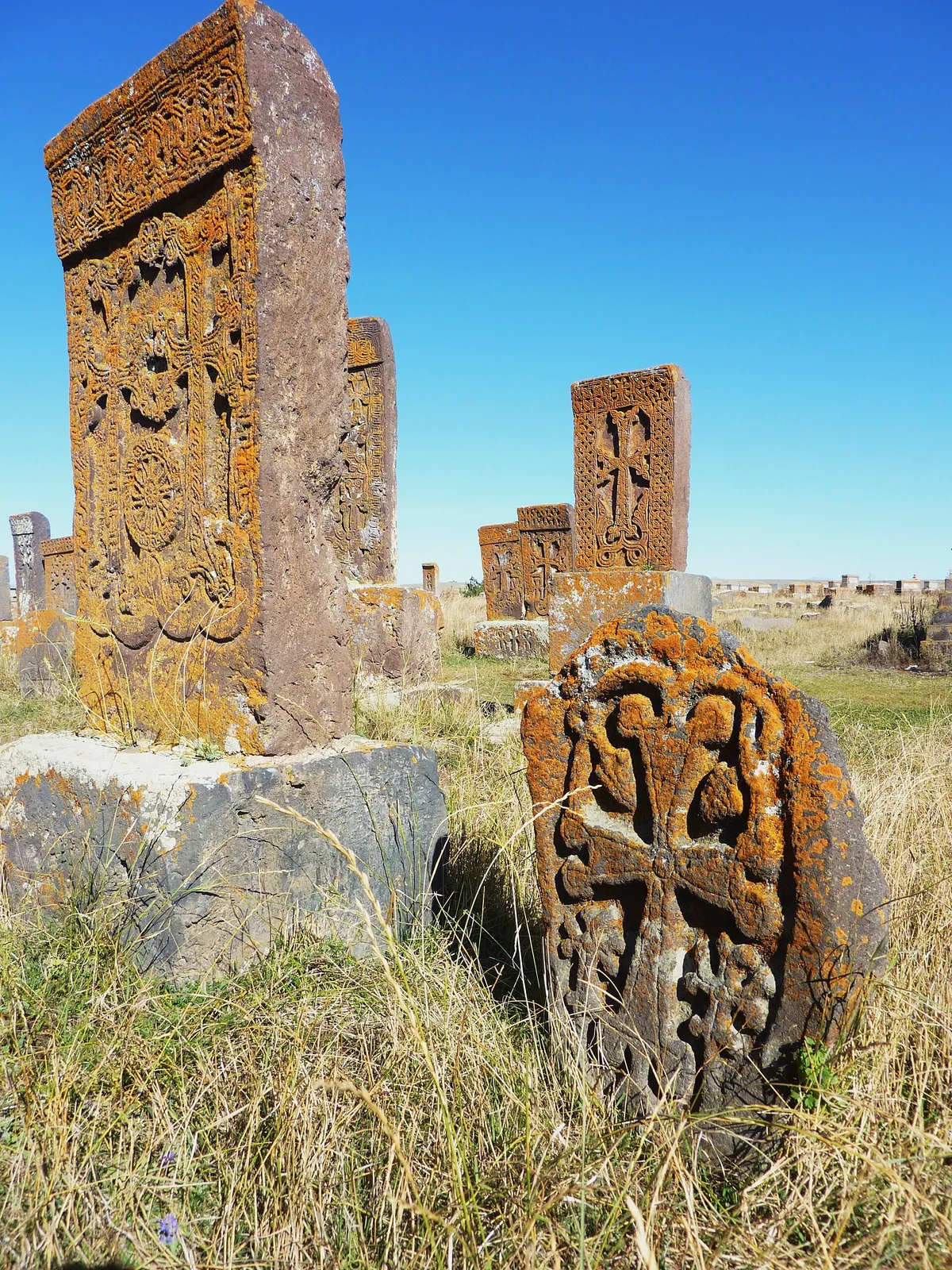 The Art of Khachkars: When Armenian Stone Becomes the Tree of LifeDiscover the history, symbolism, and destiny of khachkars, Armenian cross-stones whose art is inscribed on UNESCO's Intangible Cultural Heritage list.
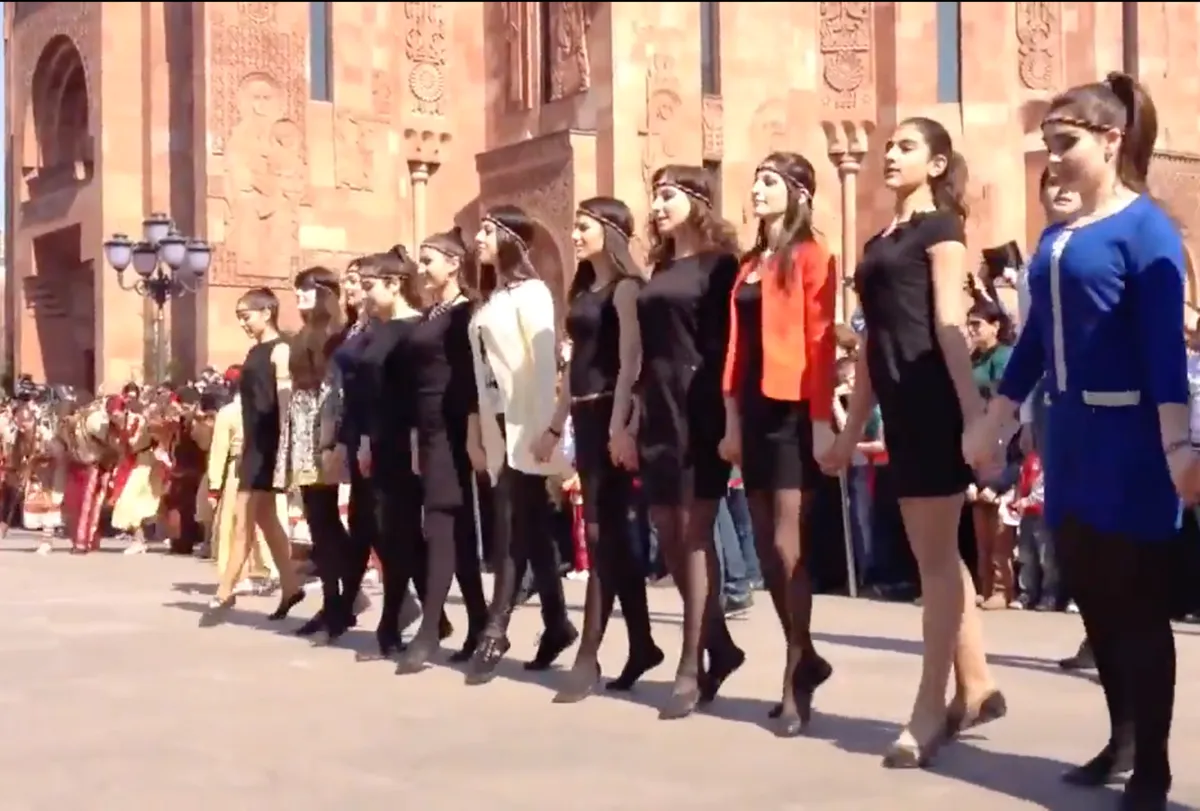 Kochari: History, Steps, and Memory of an Emblematic DanceDiscover Kochari, a circle dance born in the Armenian highlands, from its unique movements to its inscription on UNESCO's cultural heritage list.