The Art of the Armenian Carpet, a Millenary Heritage Woven with History
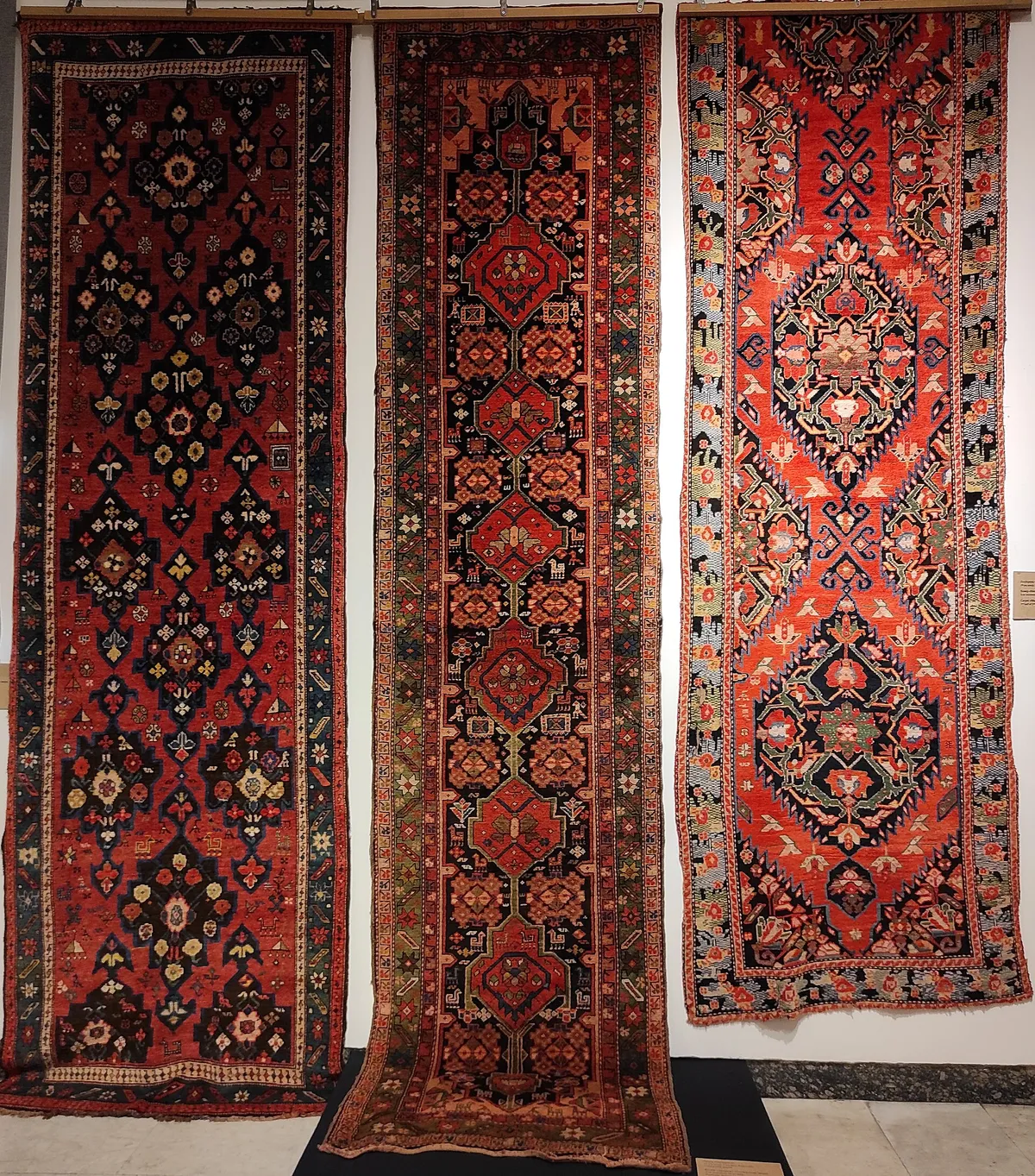
A Millennia-Old Tradition Rooted in the Armenian Highlands
In the Armenian Highlands, the art of weaving and knotting carpets dates back to deep antiquity. Archaeological excavations have unearthed weaving tools dating to the 3rd and 2nd millennia BC at sites such as Teghut, Shresh Blur, and Shengavit. Textile fragments discovered in the Areni-1 cave, as well as remnants dating back to the 13th and 7th centuries BC found in Artik, Karmir Blur, and Ani, bear witness to this antiquity. As early as the 5th century BC, the Greek historian Herodotus recorded that the inhabitants of the Caucasus dyed their wools using plant dyes whose brilliance was dulled neither by water nor by time.
The oldest pile-knotted carpet to survive intact to this day is the Pazyryk carpet, discovered in 1949 by archaeologist Sergei Rudenko in a frozen burial mound in Siberia and preserved at the Hermitage Museum in Saint Petersburg. Dated to between the 5th and 3rd centuries BC, this piece, crafted with the Armenian double knot, features threads dyed with Armenian cochineal, vordan karmir. Scholars of ancient textile art, such as Ulrich Schurmann and Volkmar Gantzhorn, recognize it as a work of Armenian origin, pointing out the similarity between the horse motifs of Pazyryk and the bas-reliefs of the Armenian delegation sculpted at Persepolis.
This craft initially served practical daily needs: in traditional stone and rock dwellings lacking wooden floors, carpets warmed the floors and adorned walls, divans, and beds. Produced primarily by women within households, it formed an indispensable part of a young woman's dowry, while also adorning churches, their altars, and their vestries.
Vocabulary, Techniques, and Iconic Motifs
The Armenian language traditionally uses two terms to refer to these textile works: the word gorg, which applies specifically to pile or knotted carpets, and the word karpet, reserved for flatweaves without pile. The term kapert, derived from the root kap meaning "knot", appears as early as the 5th century in the Armenian translation of the Gospels, notably in Matthew 9:16 and Mark 2:21. Meanwhile, the word gorg appears carved in an inscription from 1242–1243 on the walls of the Kaptavan church in Artsakh. In addition, medieval Arab authors such as Yaqut al-Hamawi and Abd al-Rashid al-Bakuvi note that the term kali or khali, used throughout the Muslim world to designate knotted carpets, derives from the name of the Armenian city of Karin (called Qaliqala by the Arabs).
Armenian craftsmanship is distinguished by a wide diversity of ornamental repertoires. The so-called vishapagorg (dragon carpets) are among the oldest and most remarkable: they combine the stylized dragon with the tree of life, the phoenix, and crenellated geometric forms. To this family are added the artsvagorg (eagle carpets) and the otsagorg (serpent carpets). Over the centuries, artisans developed a rich array of geometric, floral, and cruciform patterns, often structured around central polylobed or star-shaped medallions.
At the Heart of Medieval Trade and Global Influence
During the medieval period, Armenia exported its productions extensively. As early as the 8th century, under Abbasid rule, annual tributes sent to Baghdad included Armenian carpets. In the 10th century, Arab chroniclers Ibn Hawqal and al-Istakhri described the renown of the textile manufactories of Dvin and Artashat, famed for the quality of their wool and the brilliance of their dyes obtained from cochineal. In the 13th century, the historian Kirakos Gandzaketsi praised the textile craftsmanship of Princess Arzu-Khatun and her daughters in Artsakh, while Marco Polo described the pieces made by Armenian artisans as the finest in the world.
The carpet trade expanded to Western Europe thanks to Cilician merchants who exported their textiles from the ports of Ayas and Sis to Florence, a fact recorded by the Italian banker Francesco Balducci Pegolotti. Armenian merchant communities established in Egypt, Poland, Ukraine, Romania, and Russia subsequently disseminated these goods. In 1604, during the deportations ordered by the Shah of Iran, Abbas I, artisans from Julfa settled in New Julfa (Isfahan), boosting trade toward India and Russia. By the 18th century, Armenian merchants even had a dedicated section at the Royal Exchange in London, along Threadneedle Street.
Historical Trials, Memory, and Contemporary Revival
The massacres and the Armenian Genocide perpetrated between 1894 and 1923 disrupted this craft geography by destroying the weaving centers of Western Armenia and the Ottoman Empire. In the orphanages established in the Near East to take in survivors, weaving instruction made it possible to pass down the craft to the younger generations. In Ghazir, Lebanon, under the direction of Swiss missionary Jacob Künzler and the Near East Relief, four hundred orphan girls crafted a rug featuring four million knots between 1924 and 1925, depicting the Garden of Eden, which was later presented to the White House.
At the same time, the diaspora carried this heritage forward in the United States, where masters such as S. Tayryakyan and K. Taushadjyan developed the so-called "American Sarouk" style, while the A. & M. Karagheusian company opened its industrial mills in 1904. During the Soviet era, the establishment of cooperatives kept the tradition alive, with factories such as Arm Carpet in Yerevan in 1924, the Ijevan workshops in 1959, and those of Karmirgyugh in 1958.
Today, carpet weaving remains very much alive thanks to hand-weaving companies such as Tufenkian, established in Yerevan since 1994, Megerian Carpets since 2000, and the Artsakh Carpet factory founded in 2013 in Stepanakert, the same year a carpet museum also opened its doors in Shushi.
Sources
- Tapis arménien (Wikipedia fr)
- Armenian carpet (Wikipedia en)
- Հայկական գորգ (Wikipedia hy)
- Армянский ковёр (Wikipedia ru)
Texts from Wikipedia (CC BY-SA 4.0) and Wikisource (CC BY-SA 3.0), used as sources.
Written with an AI tool from the sources cited and checked by our editors; translated automatically from the reviewed French text.
Read next
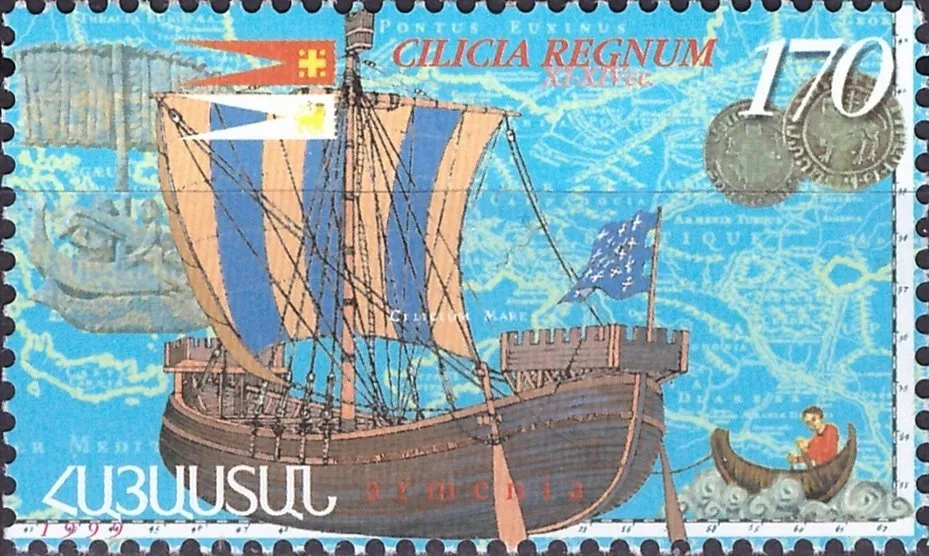 The Armenian Kingdom of Cilicia: Splendor and Destiny of a Mediterranean StateRetrace the history of the Armenian Kingdom of Cilicia (1080–1375), from feudal rise and high diplomacy to artistic splendor and commercial influence.
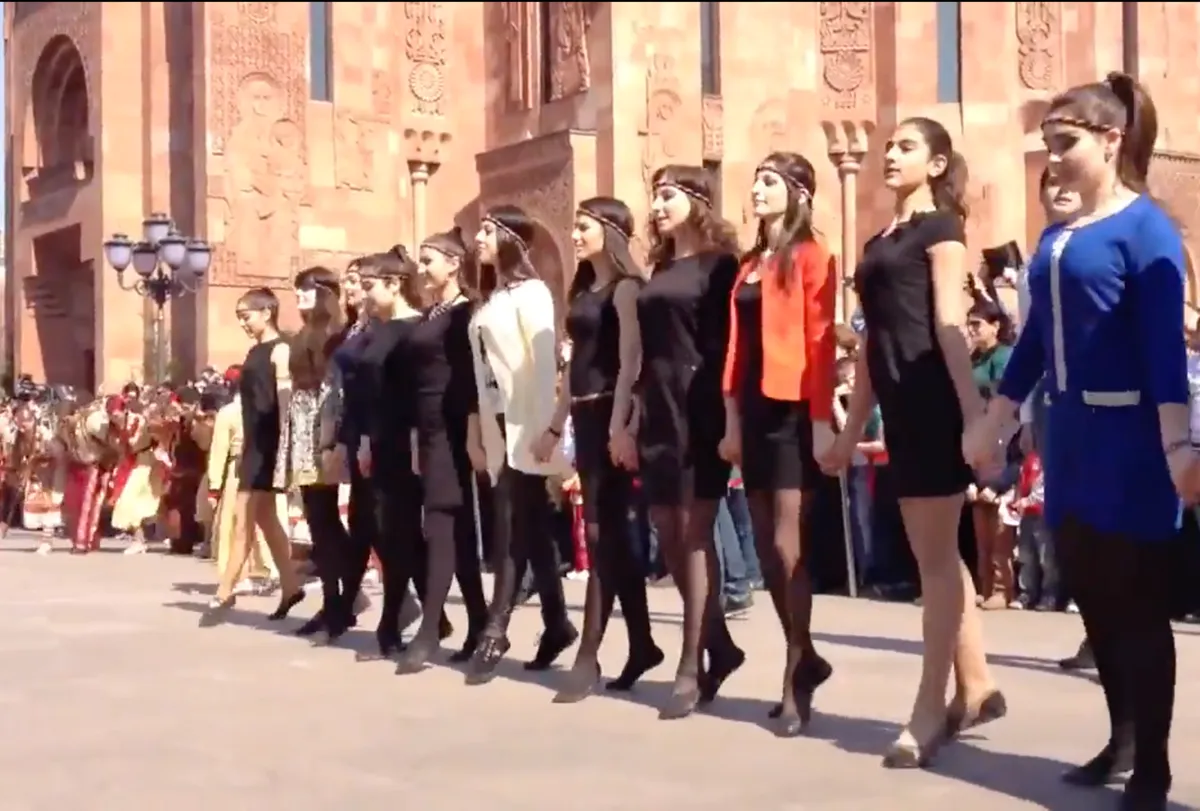 Kochari: History, Steps, and Memory of an Emblematic DanceDiscover Kochari, a circle dance born in the Armenian highlands, from its unique movements to its inscription on UNESCO's cultural heritage list.
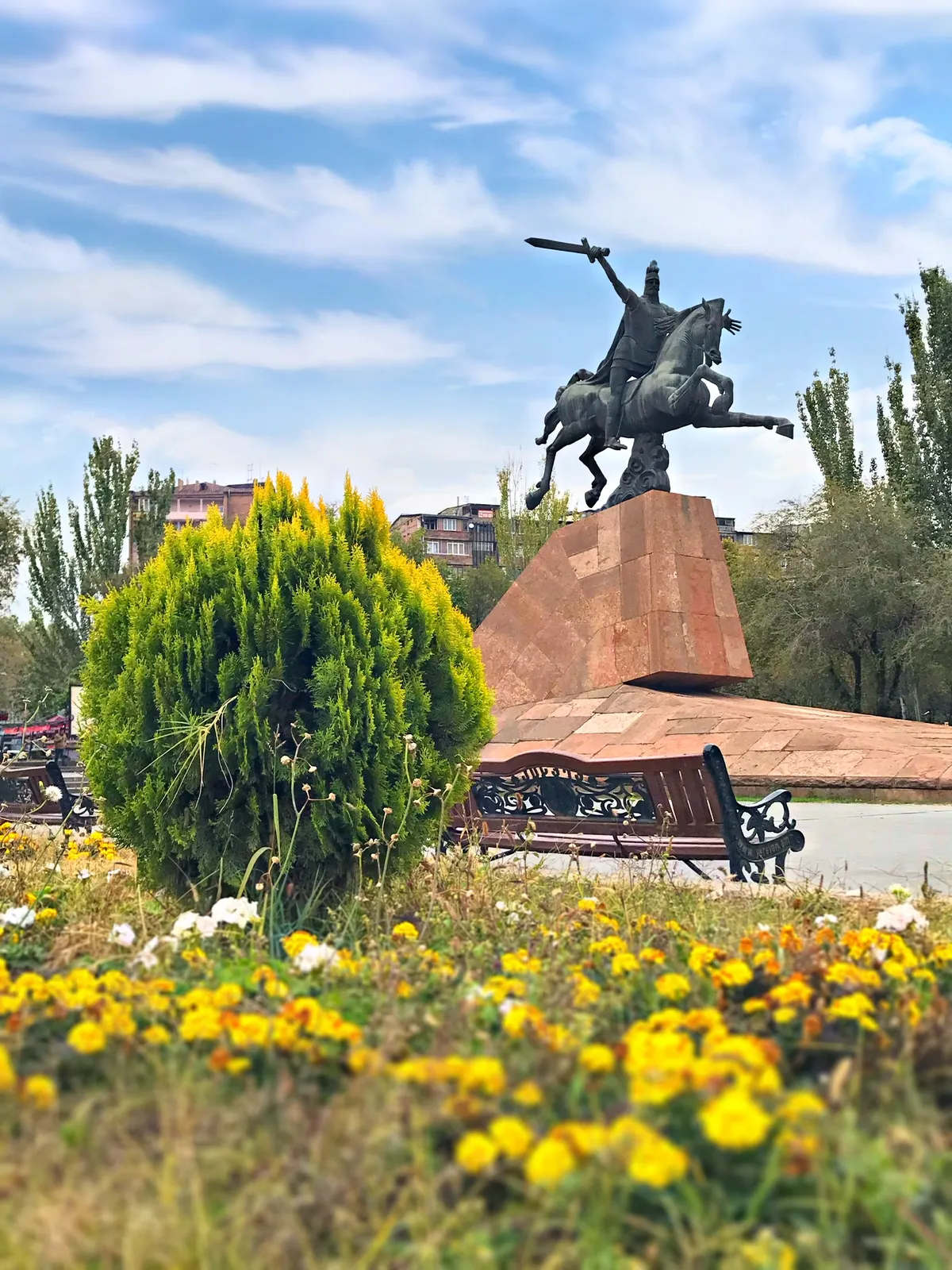 The Battle of Avarayr and Vardan Mamikonian: The Oath of Fidelity to the FaithOn May 26, 451, Vardan Mamikonian and his comrades fought the Battle of Avarayr, a decisive clash to preserve Armenia’s Christian faith.