The Matenadaran: Age-Old Guardian of the Armenian Word and Miniature
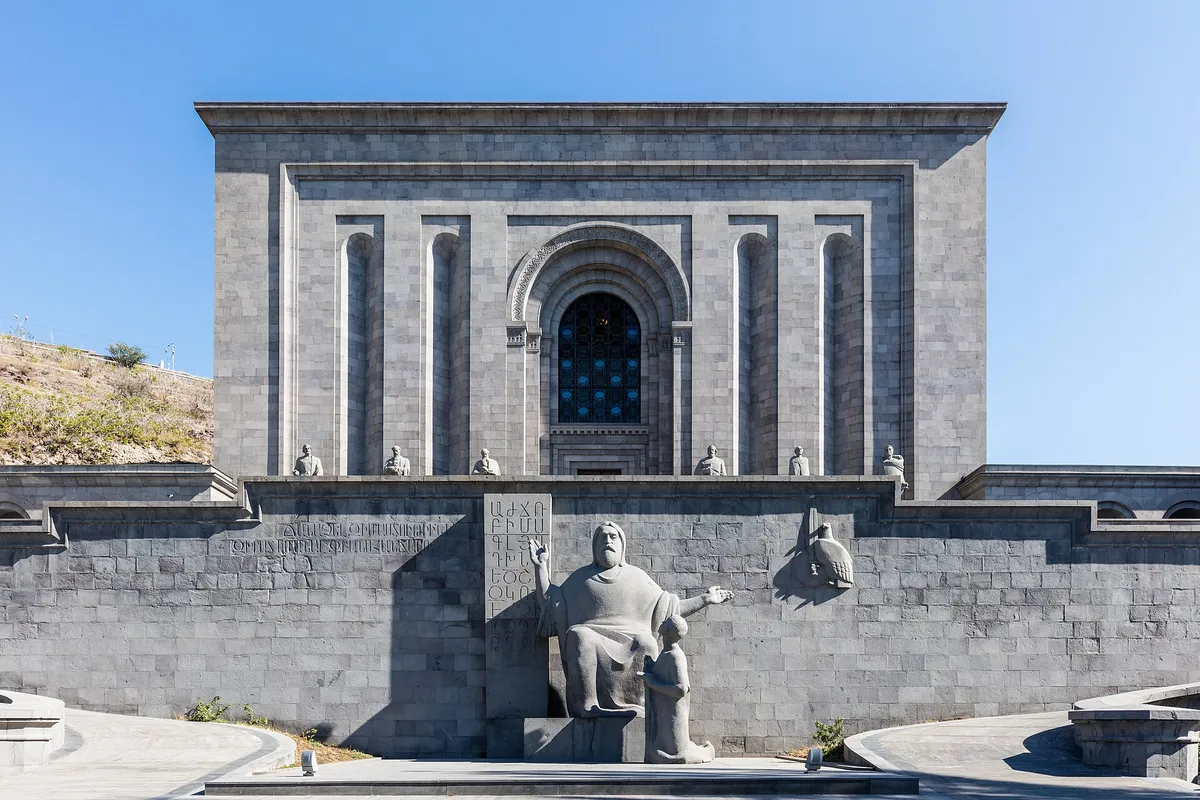
On the heights of Yerevan, at the end of the grand Mesrop Mashtots Avenue, stands an imposing building of blue-gray basalt. The Matenadaran, officially named the Mesrop Mashtots Institute of Ancient Manuscripts, is far more than an archival repository or a museum: it forms the beating heart of Armenian national memory. Its name, derived from the Classical Armenian terms combining matean (book or parchment) and daran (repository), historically designated the library and scriptorium of medieval Armenian monasteries, such as those of Haghpat or Sanahin. Inscribed on the UNESCO Memory of the World International Register since 1997, it houses an exceptional collection that bears witness to the intellectual and artistic vitality of Armenia throughout the ages.
A Millennial Journey of Hardship and Safeguarding
The history of the Matenadaran is rooted in the very origins of Armenian written culture. Tradition traces the first collection back to the 5th century and the creation of the alphabet by Mesrop Mashtots in 405. From that period onward, the historian Ghazar Parpetsi testified to the existence of a manuscript repository at the ecclesiastical seat of Etchmiadzin, where texts in Armenian and Greek were preserved.
Throughout the medieval centuries, preserving books remained a constant challenge. In 1170, as related by the historian Stepanos Orbelian, the burning of the fortress of Baghaberd by the Seljuk Turks led to the destruction of more than 10,000 manuscripts evacuated from Tatev and neighboring monasteries. The library's activity intensified following the return of the Catholicosate from Sis to Etchmiadzin in 1441, but plunder continued, the last taking place in 1804. The integration of Eastern Armenia into the Russian Empire in 1828 ushered in a period of stability conducive to cataloging: a first catalog prefaced by Marie-Félicité Brosset listed 312 manuscripts in 1840, a figure that grew to 2,340 in 1863 and reached 4,660 on the eve of the First World War.
The year 1915 marked a tragic turning point. While the Armenian Genocide perpetrated in the Ottoman Empire destroyed thousands of works, around 1,600 manuscripts were saved from destruction in Western Armenia, particularly in Vaspurakan (at the monasteries of Lim, Ktuts, and Varag), as well as in Taron and Erzurum. Facing threats from the front lines, the Etchmiadzin collection was evacuated to Moscow for safekeeping before returning to Armenia in 1922 on the orders of Alexander Miasnikian. In the meantime, on December 17, 1920, the Soviet government nationalized the Etchmiadzin repository, which was transferred to Yerevan in 1939. On March 3, 1959, the institution was officially established in its current premises as a scientific research institute.
A Stone Sanctuary at the Heart of the Capital
Designed by architect Mark Grigoryan in the 1940s and completed in 1957, the main building draws upon the canons of medieval Armenian architecture. Its rectangular facade is inspired by the porch (gavit) of the Church of the Holy Apostles in Ani, the former Bagratid capital. At the foot of the monumental staircase stands the basalt statue of Mesrop Mashtots guiding his disciple Koryun, sculpted by Ghukas Chubaryan. Six major figures of Armenian thought stand guard at the entrance: miniature master Toros Roslin, philosopher Gregory of Tatev, scholar Anania Shirakatsi, historian Movses Khorenatsi, jurist Mkhitar Gosh, and poet Frik.
Engraved above the majestic copper door is the first sentence translated into Armenian from the Book of Proverbs: “To know wisdom and instruction; to perceive the words of understanding…” Inside, the entrance hall draws inspiration from the architecture of Sanahin, while painter Van Khachatur adorned the space with a mosaic of the Battle of Avarayr (451) and monumental frescoes depicting Urartu, the Hellenistic period, and the Christian Middle Ages. To provide modern spaces for research, digitization, and restoration, a new building designed by architect Arthur Meschian was inaugurated on September 20, 2011.
Masterpieces of Illumination and Medieval Knowledge
The Matenadaran houses one of the most remarkable collections in the world, comprising over 17,000 manuscripts—including about 10,000 in the Armenian language—and some 300,000 archival documents. The volumes span every field of knowledge: theology, philosophy, law, history, geography, astronomy, and medicine. They also preserve translations of ancient works whose Greek originals have been lost, such as the Chronicle of Eusebius of Caesarea or the treatise On Nature by Zeno of Citium.
The art of illumination flourishes here in all its splendor. Nearly a third of the Armenian codices are adorned with paintings and polychrome decorations. Among the most revered treasures are the Echmiadzin Gospel of 989, renowned for its carved ivory binding and precious 6th-century miniatures, and the Lazarian Gospel of 887, one of the oldest surviving complete volumes. The Vehamor Gospel, attributed to the 7th century, is traditionally used for the swearing-in ceremony of presidents of the Republic of Armenia.
The collection also exhibits an astonishing variety of scales: the colossal Homiliary of Mush, copied between 1200 and 1202 at the Monastery of the Holy Apostles, measures 70.5 by 55 centimeters and weighs 27.5 kilograms, whereas a miniature liturgical calendar from 1434 weighs only 19 grams with leaves measuring 4 by 3 centimeters. The creations of Cilician miniaturists, particularly Toros Roslin in the 13th century and Sargis Pitsak in the 14th century, illustrate the refinement of an unparalleled visual tradition.
An Invitation to Explore Armenian Heritage
This textual and aesthetic wealth resonates far beyond the borders of Armenia with lovers of history and fine literature alike. To extend this immersion into Armenia's creative heritage, do not miss the cultural event “Discovering the Collections of the Museum of Art and Literature of Armenia,” organized on October 29, 2026, in the Auvergne-Rhône-Alpes region.
Don’t miss : À la découverte des collections du musée d’art et de littérature d’Arménie — Thursday, October 29, 2026, Auvergne-Rhône-Alpes
Sources
- Matenadaran (Wikipedia fr)
- Matenadaran (Wikipedia en)
- Մատենադարան (Wikipedia hy)
- Матенадаран (Wikipedia ru)
Texts from Wikipedia (CC BY-SA 4.0) and Wikisource (CC BY-SA 3.0), used as sources.
Written with an AI tool from the sources cited and checked by our editors; translated automatically from the reviewed French text.
Read next
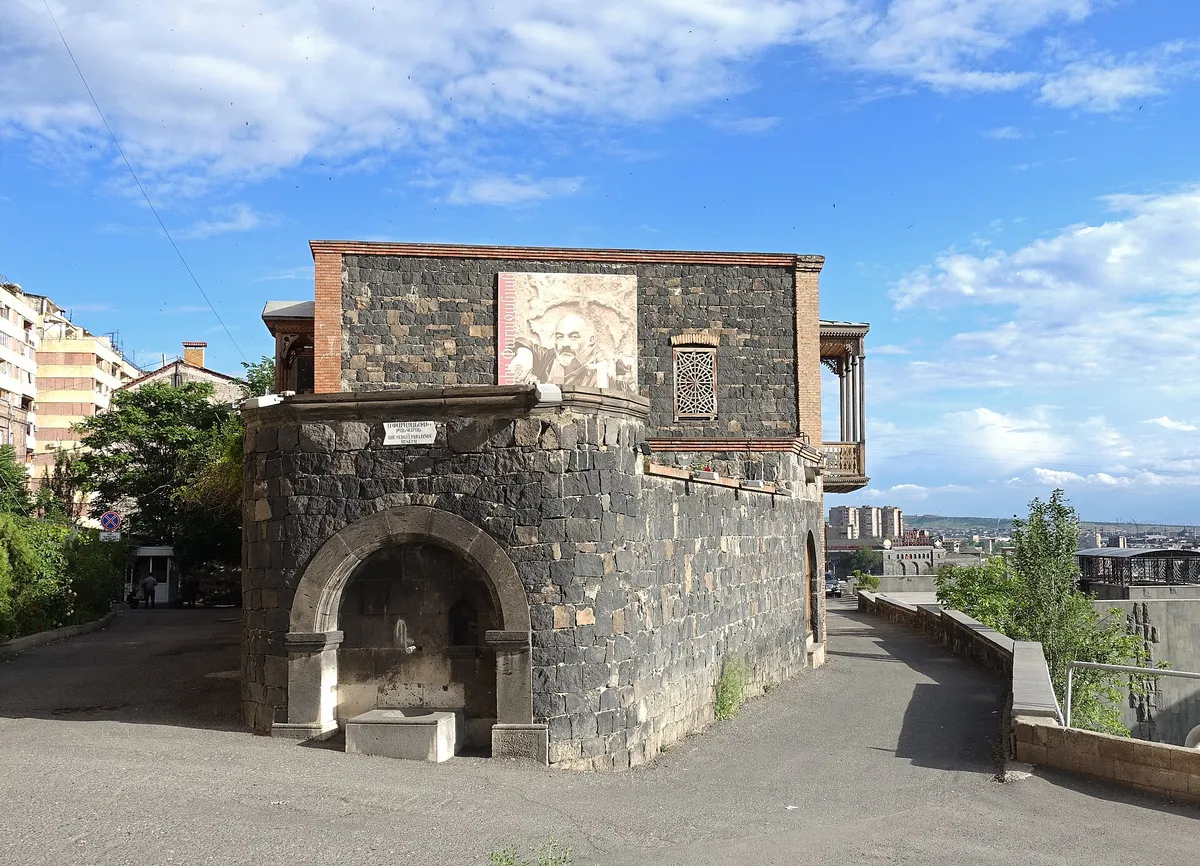 Sergei Parajanov: The Sovereign Master of Poetic CinemaA look back at the exceptional life of Sergei Parajanov, an indomitable artist who elevated Armenian genius to the heights of world cinema.
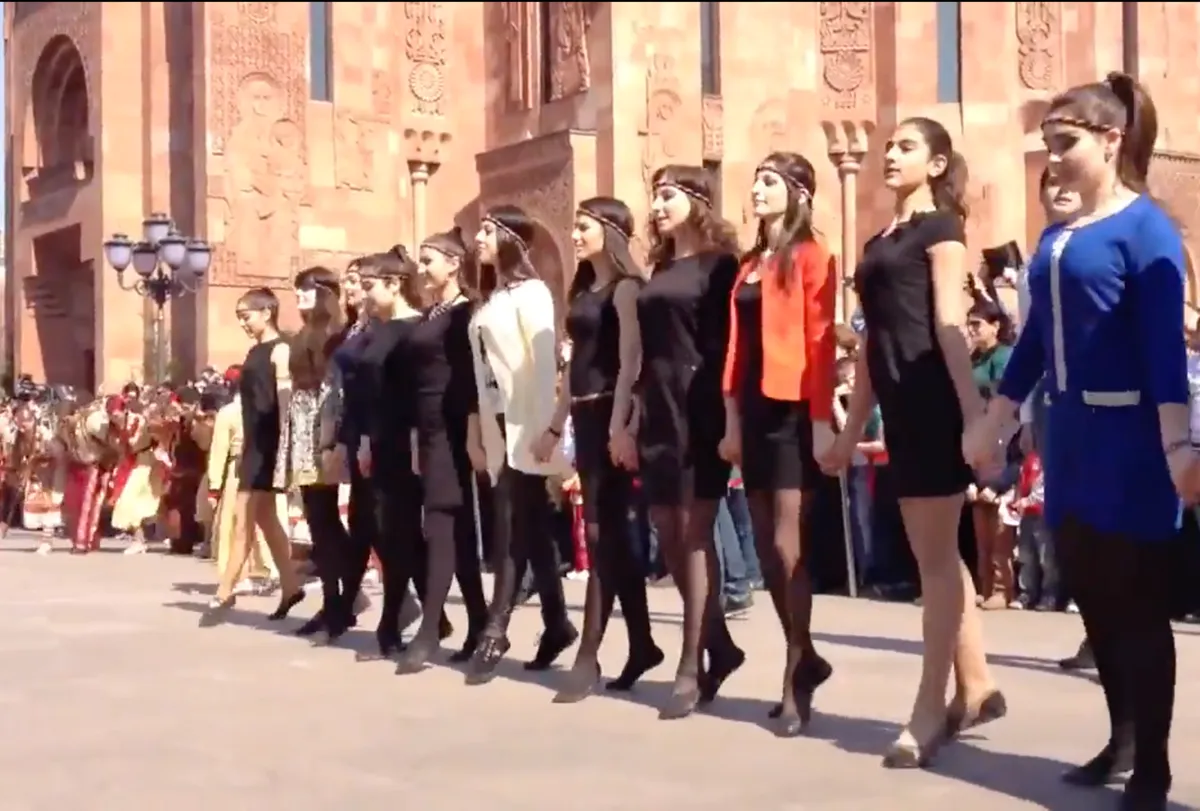 Kochari: History, Steps, and Memory of an Emblematic DanceDiscover Kochari, a circle dance born in the Armenian highlands, from its unique movements to its inscription on UNESCO's cultural heritage list.
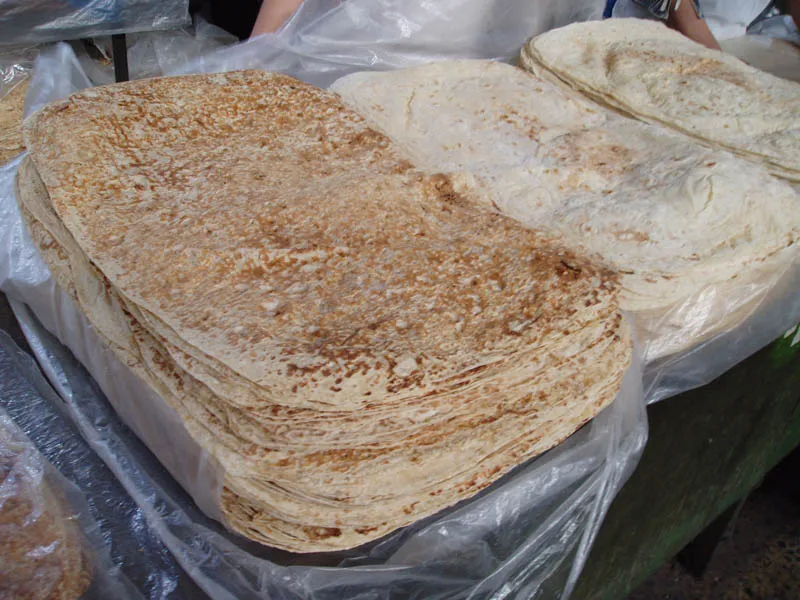 Lavash, Millennia-Old Breath and Emblem of the Armenian TableA traditional flatbread baked in a tonir, lavash embodies the history, conviviality, and age-old rituals of the Armenian people.