Ani, the City of 1,001 Churches: Glory and Resilience of the Ancient Armenian Capital
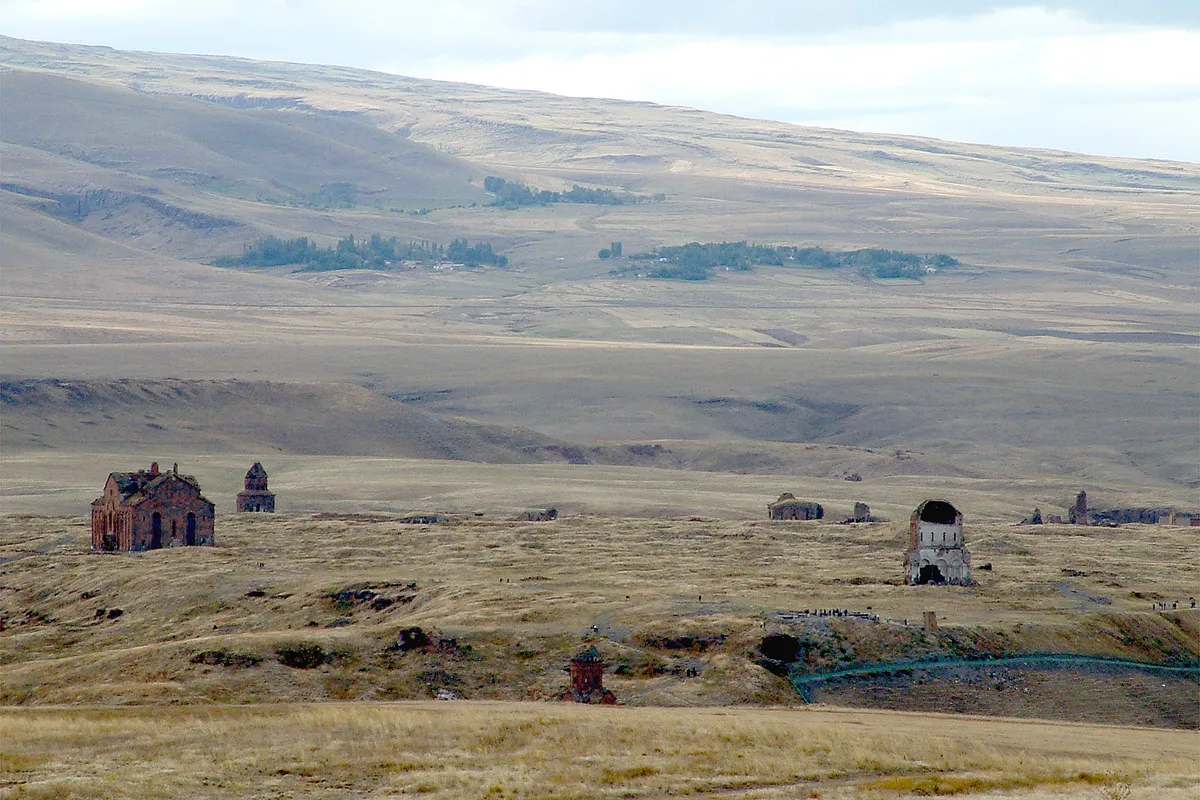
Perched on a triangular promontory bordered by the gorge of the Akhurian River and the Tsaghkotsadzor Valley, the medieval city of Ani stands at an altitude of approximately 1,340 meters, in the heart of the historical province of Shirak. Today situated in Kars Province, facing the Armenian villages of Kharkov, Norshen, and Aniavan, the former capital watches over a closed border. Nicknamed the “City of 1,001 Churches” and the “Capital of the Year 1000,” Ani remains for Armenians the most striking and tangible symbol of their past greatness. Despite the trials of time, its volcanic tuff monuments bear witness to an exceptional political, spiritual, and architectural influence.
From Kamsarakan Fortress to Bagratid Metropolis
Mentioned as early as the 5th century by Armenian historians Yeghishe and Ghazar Parpetsi, Ani was initially a formidable fortress belonging to the noble Kamsarakan dynasty. At the beginning of the 9th century, Prince Ashot Msaker acquired the cantons of Arsharunik and Shirak, bringing the stronghold into the Bagratid domain.
Ani's destiny truly transformed during the 10th century. In 961, King Ashot III chose to move his capital there from Kars. In 964, he began erecting a first ring of ramparts, known as the “Ashotashen” walls, as well as a grand palace on the citadel hill of Midjnaberd. The city grew rapidly: around 989, King Smbat II undertook the construction of a second fortified line, the imposing “Smbatashen” walls, 2,500 meters long and equipped with semicircular towers. In 992, the seat of the Armenian Catholicosate relocated to the city as well.
Under the reign of Gagik I (989–1020), the Bagratid capital reached the zenith of its power. Ideally situated along trade routes linking it to the Byzantine Empire, Persia, and the Arab world, Ani became a major economic crossroads with a cosmopolitan population, estimated by historians at around 100,000 inhabitants, and even up to 200,000 according to certain contemporary Armenian sources. Paved streets and squares, water distribution networks, markets, and artisan workshops wove the fabric of a great medieval metropolis.
The Masterpiece of the Architectural School of Ani
Ani established itself as the cradle of an innovative architectural school, brought to its highest level by the master builder Trdat (Tiridates). It is to this celebrated architect that we owe the city's great cathedral, dedicated to the Holy Mother of God (Surp Asdvadzadzin). Begun under Smbat II around 989 and completed in 1001 under Gagik I, the building is a model of a domed basilica. Its pointed arches, clustered piers, and engaged column shafts introduced structural solutions that Western Europe would only develop two centuries later with Gothic art. Between 1001 and 1010, Trdat also designed the Church of Saint Gregory of Gagkashen, a vast three-tiered rotunda built on the model of Zvartnots.
While popular lore speaks of a thousand and one churches, archaeologists have uncovered about fifty major churches, along with numerous chapels. The Church of the Holy Savior, erected in 1036 at the initiative of Prince Aplgharid Pahlavuni to house a relic of the True Cross, features a remarkable octoconch plan. Not far away, the Church of Saint Gregory of the Abughamrents exhibits a hexaconch plan decorated with deep niches.
The city was also an intellectual center of the first order. Its religious academy, the vardapetaran, attracted eminent scholars such as Grigor Magistros Pahlavuni and Hovhannes Sarkavag, while workshops of copyists and illuminators enriched the Armenian manuscript tradition.
Hardships, Zakarid Renaissance, and Decline
Following the death of Gagik I, succession disputes weakened the kingdom. In 1045, the Byzantine Empire annexed the city, forcing the young king Gagik II into exile. Two decades later, on August 16, 1064, a vast Seljuk army led by Alp Arslan captured Ani after a twenty-five-day siege, subjecting the city to sack and slaughter, as recorded by the chronicler Sibt ibn al-Jawzi. In 1072, the city was ceded to the Kurdish Shaddadid dynasty.
The local population did not accept this domination and regularly appealed to the Christian Kingdom of Georgia for help. In 1199, the Armenian generals Zakare and Ivane Zakarian, supported by Queen Tamar of Georgia, definitively liberated Ani. Becoming the center of Zakarid Armenia, the city experienced a remarkable revival. It was during this period, in 1215, that a wealthy merchant named Tigran Honents financed the Church of Saint Gregory, a single-nave masterpiece adorned with magnificent frescoes illustrating the lives of Saint Gregory the Illuminator and Christ.
This new momentum was shattered in 1236 by the Mongol onslaught, which sacked the city. Struck by disastrous earthquakes—notably that of 1319, which brought down the cathedral's dome—and marginalized by the diversion of major regional trade routes, Ani gradually depopulated. Serving as a temporary capital for the Qara Qoyunlu in the 14th century before they favored Yerevan, the city saw the seat of the Armenian Catholicosate return to Holy Etchmiadzin in 1441. Reduced to a modest village under the Ottomans, it was completely deserted over the course of the 18th century.
Memory, Excavations, and Heritage Recognition
Annexed by the Russian Empire in 1878, the region of Ani opened up to modern archaeological research. In 1892, the orientalist Nicholas Marr began major excavation campaigns under the auspices of the Saint Petersburg Academy of Sciences, work pursued continuously from 1904 to 1917 to catalog, consolidate, and display the discovered treasures. In April 1918, in the face of the advancing Ottoman army, the archaeologist Ashkharbek Kalantar managed to evacuate nearly 6,000 artifacts from Ani. Brought together through the initiative of Joseph Orbeli, these precious remnants now reside in the History Museum of Armenia in Yerevan.
The buildings still sporadically used at the beginning of the 20th century were vandalized during the 1915 genocide. Following the retaking of the site by Turkey in 1920 and the establishment of the border by the Treaty of Kars in 1921, destruction affected Marr's excavation sites. In 1988, the Spitak earthquake destroyed the cathedral's northwest corner.
The universal stature of this exceptional heritage was solemnly recognized on July 15, 2016, during the 40th session of the World Heritage Committee, with the inscription of the Archaeological Site of Ani on the UNESCO World Heritage List. Evoked with nostalgia in Armenian poetry, notably by Hovhannes Shiraz, Ani remains an enduring source of pride and a masterful witness to Armenian architectural genius.
Sources
- Ani (Wikipedia fr)
- Ani (Wikipedia en)
- Անի (Wikipedia hy)
- Ани (город) (Wikipedia ru)
- ՀՍՀ/ԱՆԻ (ՀՍՀ, Wikisource)
Texts from Wikipedia (CC BY-SA 4.0) and Wikisource (CC BY-SA 3.0), used as sources.
Written with an AI tool from the sources cited and checked by our editors; translated automatically from the reviewed French text.
Read next
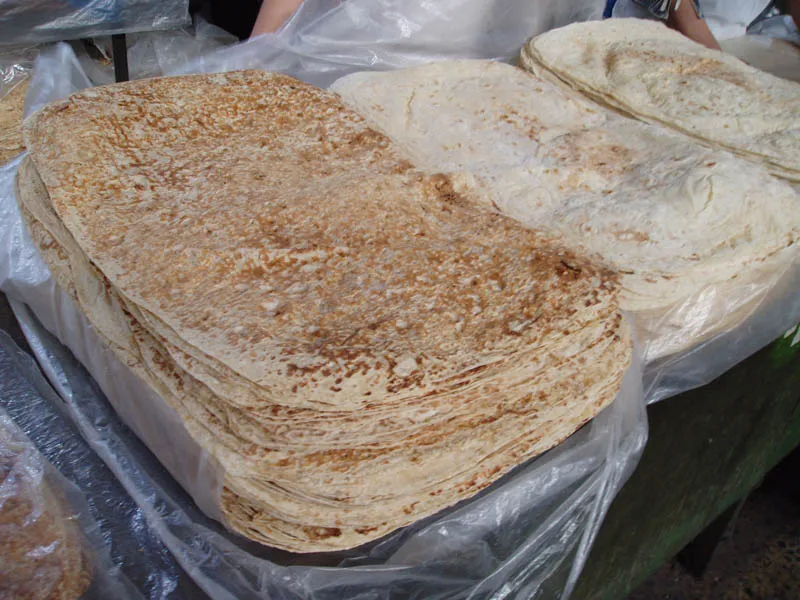 Lavash, Millennia-Old Breath and Emblem of the Armenian TableA traditional flatbread baked in a tonir, lavash embodies the history, conviviality, and age-old rituals of the Armenian people.
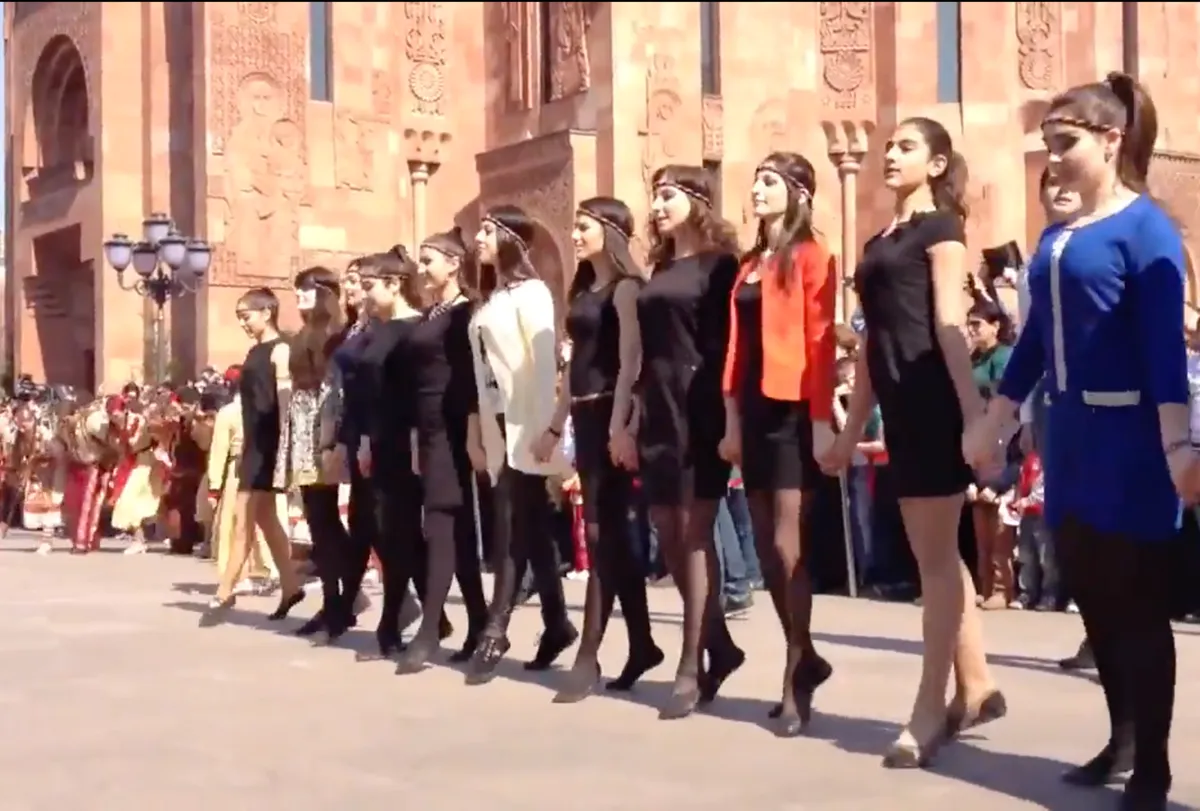 Kochari: History, Steps, and Memory of an Emblematic DanceDiscover Kochari, a circle dance born in the Armenian highlands, from its unique movements to its inscription on UNESCO's cultural heritage list.
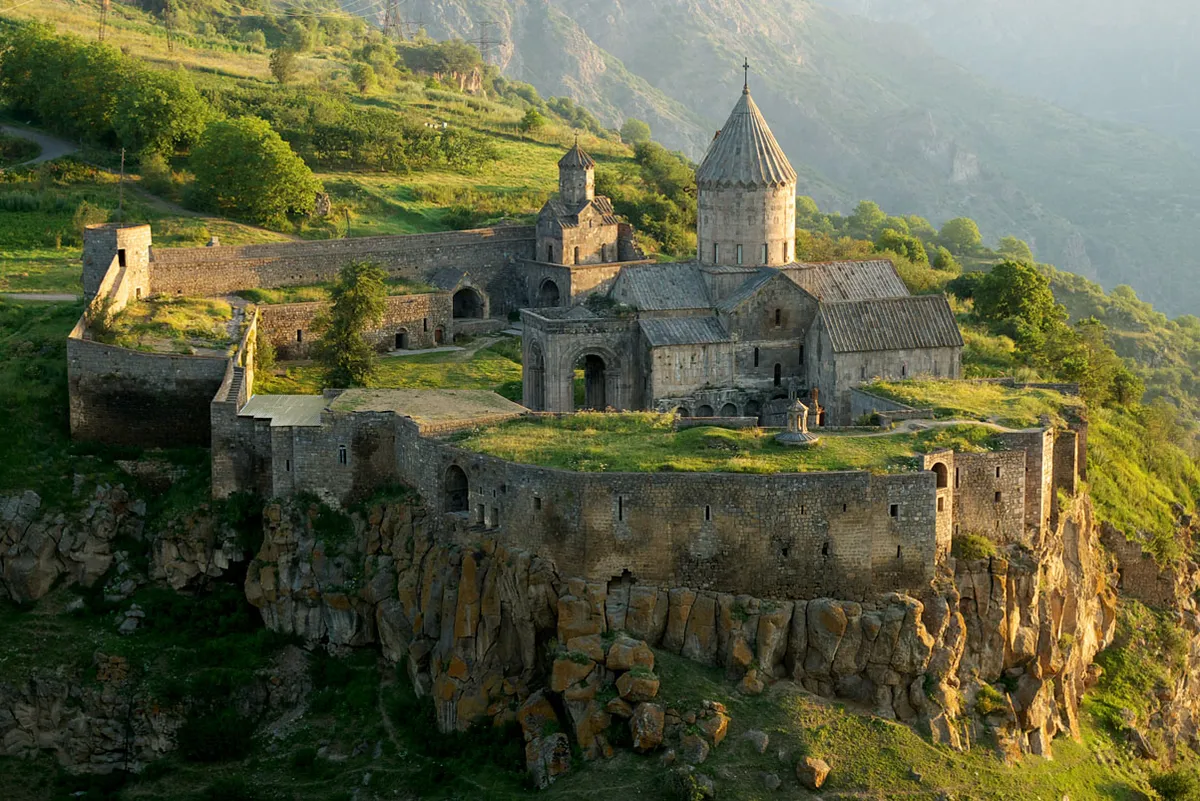 Tatev Monastery: Spiritual Citadel and Medieval Beacon of SyunikPerched above the Vorotan Gorge, Tatev Monastery is one of Armenia's most illustrious spiritual, architectural, and university centers.