Hovhannes Toumanian, the Fraternal and Immortal Voice of Armenian Letters
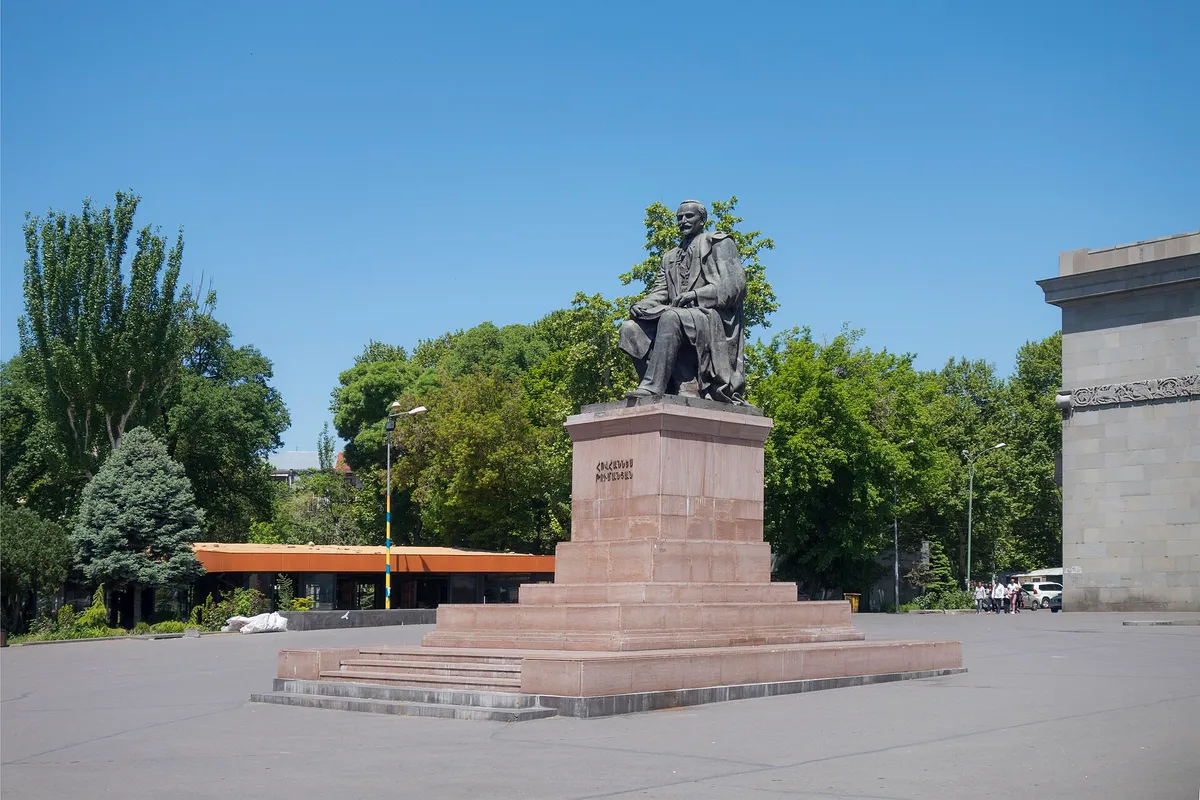
Born in the wild and majestic landscapes of the Lori province, Hovhannes Toumanian established himself as one of the most luminous figures in Armenian culture. Rightly regarded as the "Poet of All Armenians," this writer of genuine popular sensitivity translated into a pure language the rural dramas, immemorial tales, and historical ordeals experienced by his nation at the turn of the 20th century.
From the Mountains of Lori to the Effervescence of Tiflis
Hovhannes Toumanian was born on February 19, 1869, in the historic village of Dsegh, then located in the Tiflis Governorate of the Russian Empire. According to family tradition, the Toumanian lineage descended from a branch of the princely house of the Mamikonians, who settled in Lori in the 10th and 11th centuries after leaving their feudal domain of Taron. His father, Aslan (1839–1898), who became the community's priest under the name Ter-Tadevos, instilled in him a respect for faith and culture, while his mother, Sona (1842–1936), a passionate storyteller from the Kocharian clan, nurtured his childhood with traditional tales and fables. As the eldest of eight children, Hovhannes was steeped from his earliest years in the region's folk songs.
The young boy first studied at the parish school in Dsegh between 1877 and 1879, before attending Tigran Ter-Davtyan's coeducational school in Jalaloghly from 1879 to 1883. It was at this institution that he composed his very first poem at the age of twelve. In 1883, he moved to Tiflis, a major center of Armenian intellectual life under Tsarist rule, and attended the renowned Nersisyan School until 1887. Material constraints, however, forced him to leave his studies. He then worked at the Armenian ecclesiastical court and later at the Armenian Publishers' Union until 1893, while actively contributing to various literary periodicals such as Aghbyur, Murch, Hasker, and Horizon. In 1888, at the age of nineteen, he married Olga Matchkalyan; ten children would be born of their union.
The Vernatun Circle and Poetic Greatness
In 1899, Hovhannes Toumanian brought together the leading minds of his time by founding, in the attic of his home on Bebutov Street in Tiflis, the famous literary circle Vernatun ("the attic" in Armenian). This center of intellectual stimulation, active with a few interruptions until 1908, gathered prominent figures such as Avetik Isahakyan, Derenik Demirchian, Levon Shant, Ghazaros Aghayan, Perch Proshyan, Nikol Aghbalian, Alexander Shirvanzade, and Vahan Terian.
Toumanian's work is distinguished by a deeply human realism and a fluid language, often inspired by national folklore. Many of his verses and expressions have even entered everyday Armenian speech. From the publication of his first poetry collections between 1890 and 1892, he portrayed the harsh conditions of the countryside in major narrative poems such as Maro (1887), Lori Sako (1889), and Anush (1890). The latter work, published in its definitive version in the early 1900s, inspired composer Armen Tigranian's eponymous operatic masterpiece in 1912. Similarly, his heroic poem The Capture of Tmkabert (1902) served as the basis for Alexander Spendiaryan's opera Almast in 1930.
Toumanian mastered every literary register: the ballad with Akhtamar (1892) and Parvana (1903), striking satire with A Drop of Honey (1909), national epic with his adaptation of David of Sasun (1902), and moving prose with the novella Gikor (1895). He also enriched Armenian heritage with translations of Byron, Goethe, and Pushkin, while publishing remarkable lyrical and philosophical quatrains.
Civic Engagement and National Solidarity
Beyond his literary talent, Hovhannes Toumanian was a committed public figure and a tireless peacemaker. During the Armenian-Tatar massacres of 1905–1906, he worked to reconcile the warring communities, an effort that led to his arrest twice by Tsarist authorities. Later, in 1918, he strongly criticized the Armeno-Georgian War.
Elected head of the Caucasian Association of Armenian Writers in 1912, Toumanian devoted himself entirely to the plight of his compatriots. In October 1914, he joined the Committee for Assistance to War Victims and traveled to Etchmiadzin to assist refugees fleeing the Armenian Genocide. When ecclesiastical authorities sought to restrict access to certain premises, Toumanian demanded shelter for the survivors in the name of the "Poet of All Armenians," echoing the title of the Catholicos. In 1921, after founding the House of Armenian Art in Tiflis, he assumed the presidency of the Committee of Relief for Armenia. In the fall of that same year, he traveled to Constantinople to organize aid for refugees—an exhausting mission that severely damaged his health.
A Legacy Carried on in the Collective Memory
Afflicted by a serious illness and operated on in 1922, Hovhannes Toumanian was transferred to Moscow, where he passed away on March 23, 1923, at the age of 54. His remains rest in Tbilisi, at the Khojivank Pantheon of Armenians. The poet's personal life would be marked by the tragedies of his century: his son Artavazd died in 1918 during fighting on the Caucasian front, while three of his other sons—Musegh, Hamlik, and Areg—were executed during the Soviet purges of the 1930s.
Toumanian's legacy is immense. In September 1969, the centenary of his birth was celebrated with great fanfare in Yerevan and Dsegh. Two museums are dedicated to him in Armenia—in his native village and in the capital since 1953—not to mention the Tbilisi apartment restored as a cultural center in 2017. His name graces streets, a park, the Yerevan Puppet Theatre, and the town of Tumanyan in Lori. His fables and popular stories have inspired numerous films and animated shorts across the decades, forever engraving his work in the hearts of generations of Armenians.
Sources
- Hovhannès Toumanian (Wikipedia fr)
- Hovhannes Tumanyan (Wikipedia en)
- Հովհաննես Թումանյան (Wikipedia hy)
- Туманян, Ованес Тадевосович (Wikipedia ru)
Texts from Wikipedia (CC BY-SA 4.0) and Wikisource (CC BY-SA 3.0), used as sources.
Written with an AI tool from the sources cited and checked by our editors; translated automatically from the reviewed French text.
Read next
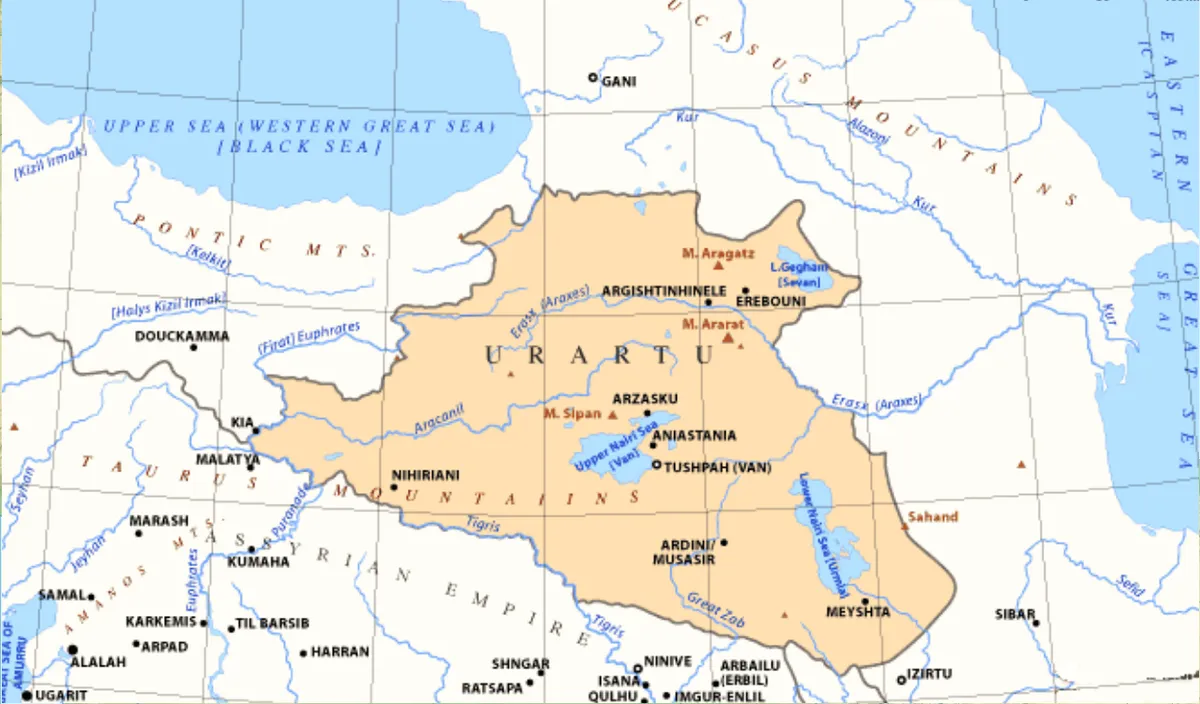 Urartu, Sovereign Power and Cradle of the Armenian HighlandsHistory, architecture, and influence of the Kingdom of Urartu, or Biaineli, a major Iron Age power centered around Lakes Van, Sevan, and Urmia.
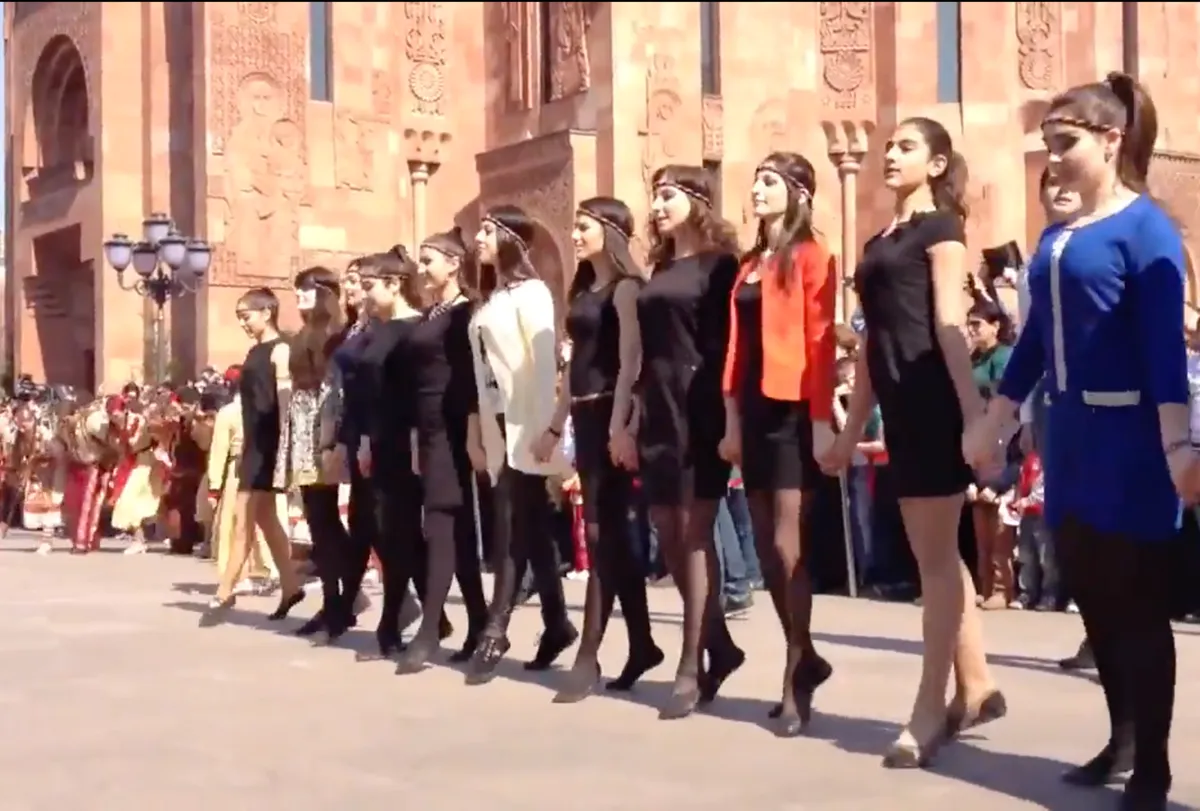 Kochari: History, Steps, and Memory of an Emblematic DanceDiscover Kochari, a circle dance born in the Armenian highlands, from its unique movements to its inscription on UNESCO's cultural heritage list.
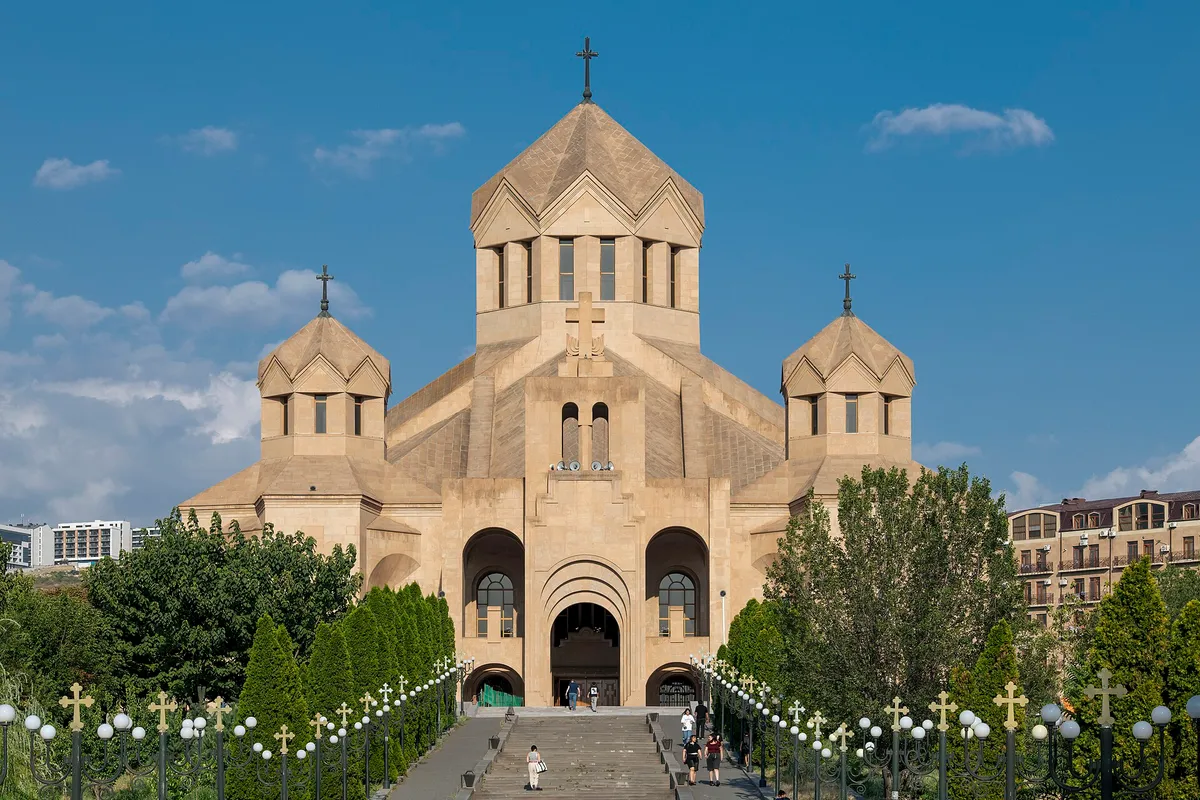 Gregory the Illuminator and the Christian Dawn of ArmeniaThe founding figure of the Armenian Church, Gregory the Illuminator led the nation to its baptism in 301. The chronicle of an unwavering faith.