Gregory the Illuminator and the Christian Dawn of Armenia
From the Land of Cappadocia to the Ordeal of Khor Virap
Born in the 3rd century into the Parthian nobility of Anak, the young Gregory narrowly escaped the destruction of his lineage thanks to his nurse Sophie and a nobleman named Euthalius. Brought to Caesarea in Cappadocia, he received a rigorous and thorough Christian education there, notably under Archbishop Firmilian. He joined in marriage with Mariam—referred to as Julitta in certain versions—the daughter of a Christian named David. From this union were born two sons, Aristakes and Vrtanes, who were also destined to guide the Armenian Church.
Driven by the desire to serve the Arsacid sovereign Tiridates III, Gregory joined the Armenian court. However, the servant's loyalty clashed head-on with the religious demands of royalty. When Tiridates organized a solemn celebration at Eriza to honor the goddess Anahit, Gregory publicly refused to take part in the pagan sacrifices. The historian Agathangelos reports that the confessor endured twelve distinct tortures, which the medieval theologian Gregory of Tatev would later compare to the trials of the twelve apostles. Learning furthermore of Gregory's lineage, linked to the murder of his father Khosrov II, the monarch ordered that he be cast into the dark pit of Khor Virap, near Artaxata. Renowned for being infested with scorpions and snakes, this subterranean dungeon became the miraculous refuge of the saint for thirteen to fourteen years, where he was fed clandestinely with a daily loaf of bread provided by a pious widow.
The Healing of the King and the Sovereign Choice of 301
History took a dramatic turn after the martyrdom of Saint Hripsime, her superior Gayane, and their Christian companions, who had come from the West to flee the persecutions of Diocletian. Tiridates, overcome by remorse and torment, fell into a tragic madness that tradition portrays as an animal metamorphosis, the king wandering in the reed beds like a wild boar. Neither his physicians nor his diviners managed to restore his sanity.
It was then that Princess Khosrovidukht, the king's sister, received a heavenly vision five times revealing to her that only the prayer of the recluse of Khor Virap could deliver the court. Dispatched to the site, Oda Amatuni brought Gregory up from the abyss. After piously burying the bodies of the holy martyrs and imposing a preparatory fast upon the people, the saint miraculously cured the sovereign. Gratefully, Tiridates III embraced the faith of Christ along with his court and his army. Armenia officially adopted Christianity as its state religion as early as 301, thus preceding all the empires of the ancient world.
The Vision of Etchmiadzin and the Foundation of the Church
Accompanied by a delegation of Armenian princes, Gregory traveled to Caesarea in Cappadocia, where he was consecrated a bishop by Leontius. Returning to his native land, he baptized King Tiridates, the army, and the people in the waters of the Euphrates, at Bagavan. He also brought back the precious relics of Saint John the Baptist and the martyr Athenogenes to consecrate the first Armenian sanctuaries, notably at Ashtishat and at the Monastery of Surp Karapet in Taron.
In Vagharshapat, the royal capital, Gregory was blessed with a memorable theophany: Christ descended from the heavens surrounded by angels, striking the earth with a golden hammer to indicate the site where the supreme sanctuary was to rise. Thus was born the mother cathedral of Etchmiadzin, “the descent of the Only Begotten,” consecrated in 303 on the day of the Dormition of the Virgin. Gregory also erected votive chapels upon the sites of the martyrdom of Saint Hripsime, Saint Gayane, and Shoghakat. Becoming the first Catholicos of All Armenians, Gregory structured the ecclesiastical hierarchy by ordaining bishops, often drawn from the former priestly caste whose sons he educated in schools providing instruction in Greek and Syriac.
Ascetic Retirement and Universal Heritage
After laying the institutional and spiritual foundations of the country, Gregory entrusted the charge of the Catholicate to his younger son Aristakes, who would represent Armenia at the Council of Nicaea in 325. Gregory then withdrew into contemplative solitude in the heart of the Mane cave, on Mount Sepuh, in the canton of Daranali. There he yielded his soul to God around 326 or 331, discovered and buried simply by shepherds unaware of his illustrious identity.
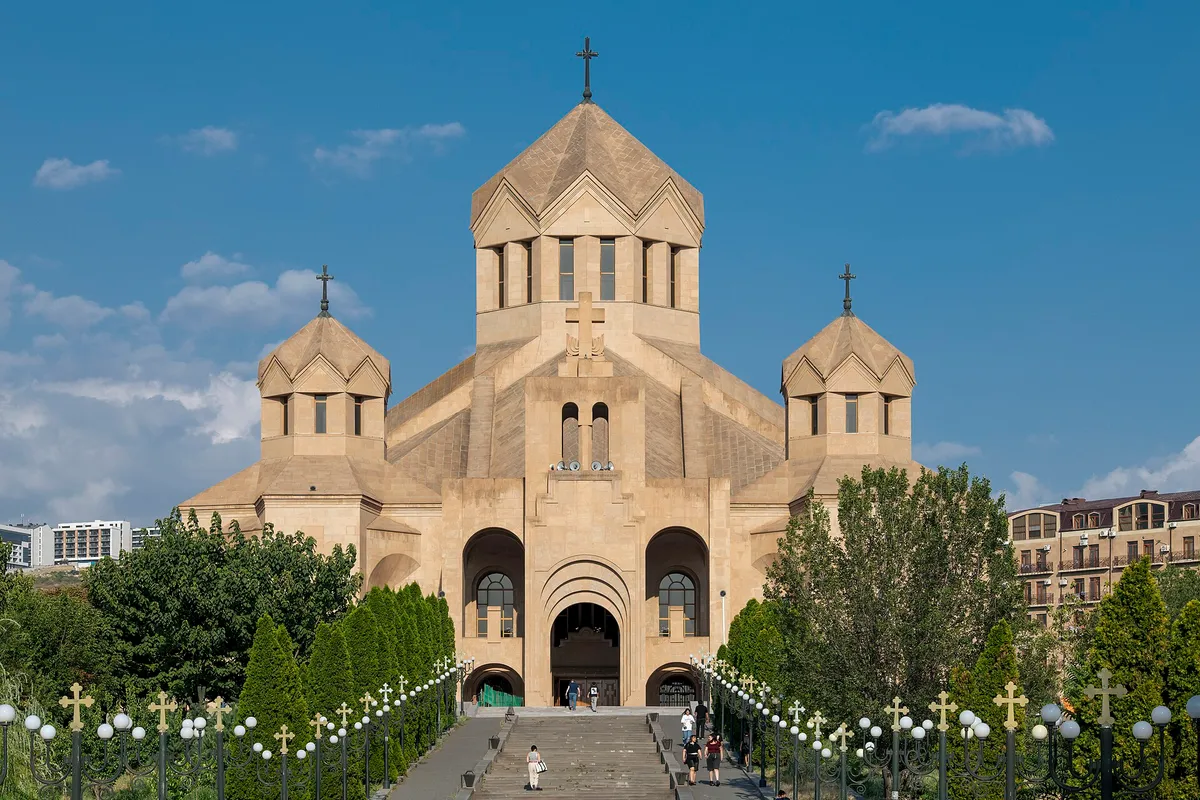
His holy remains, initially interred at Tordan, met a destiny that extended far beyond Armenian borders. While his Holy Right Hand—the sacred relic of the right arm—remains the centuries-old symbol of pontifical authority at the Holy See of Etchmiadzin and at the Great House of Cilicia, used for the blessing of the holy chrism every seven years, other fragments have been venerated across Europe. In the 8th century, nuns fleeing Iconoclasm brought his skull and his chains to Naples, founding the church of San Gregorio Armeno. In 1743, the Italian town of Nardò attributed its preservation from a destructive earthquake to him. In 2000, Pope John Paul II presented Catholicos Karekin II with relics preserved in Naples, now enshrined in Saint Gregory the Illuminator Cathedral in Yerevan. From the mosaic of Hagia Sophia to the chapel dedicated to him on Red Square in Moscow, the memory of the “Lusavorich” continues to embody the spiritual beacon of the Armenian nation.
Sources
- Grégoire Ier l'Illuminateur (Wikipedia fr)
- Gregory the Illuminator (Wikipedia en)
- Գրիգոր Լուսավորիչ (Wikipedia hy)
- Григорий Просветитель (Wikipedia ru)
Texts from Wikipedia (CC BY-SA 4.0) and Wikisource (CC BY-SA 3.0), used as sources.
Written with an AI tool from the sources cited and checked by our editors; translated automatically from the reviewed French text.
Read next
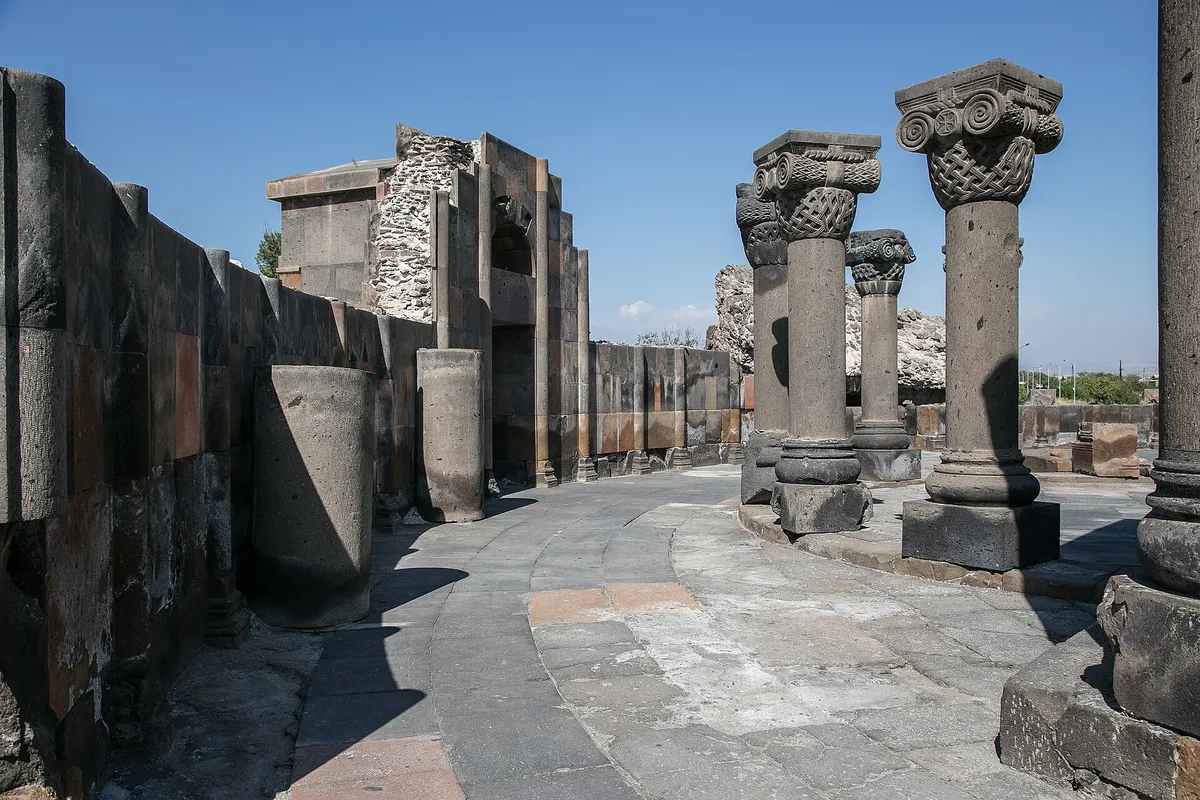 Zvartnots: The Shattered Masterpiece of Armenian ArchitectureBuilt in the 7th century by Catholicos Nerses III, the circular cathedral of Zvartnots remains an exceptional milestone of medieval Armenian art.
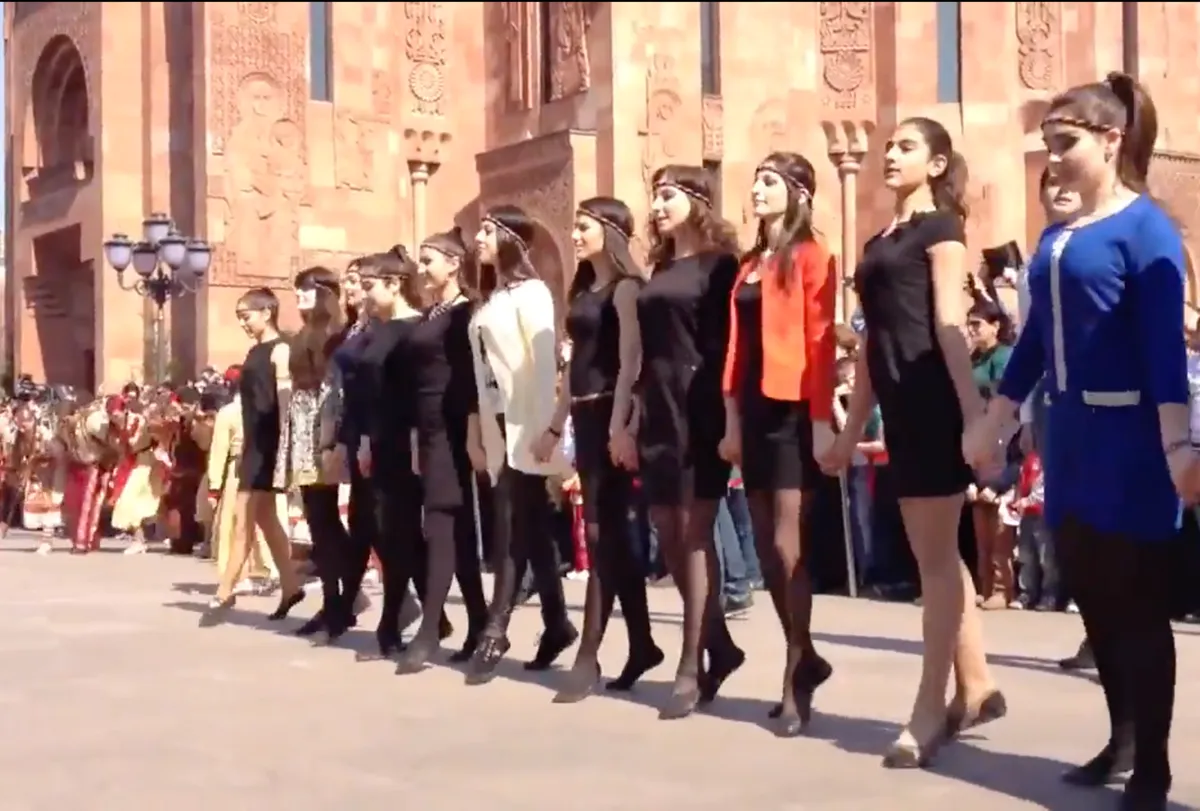 Kochari: History, Steps, and Memory of an Emblematic DanceDiscover Kochari, a circle dance born in the Armenian highlands, from its unique movements to its inscription on UNESCO's cultural heritage list.
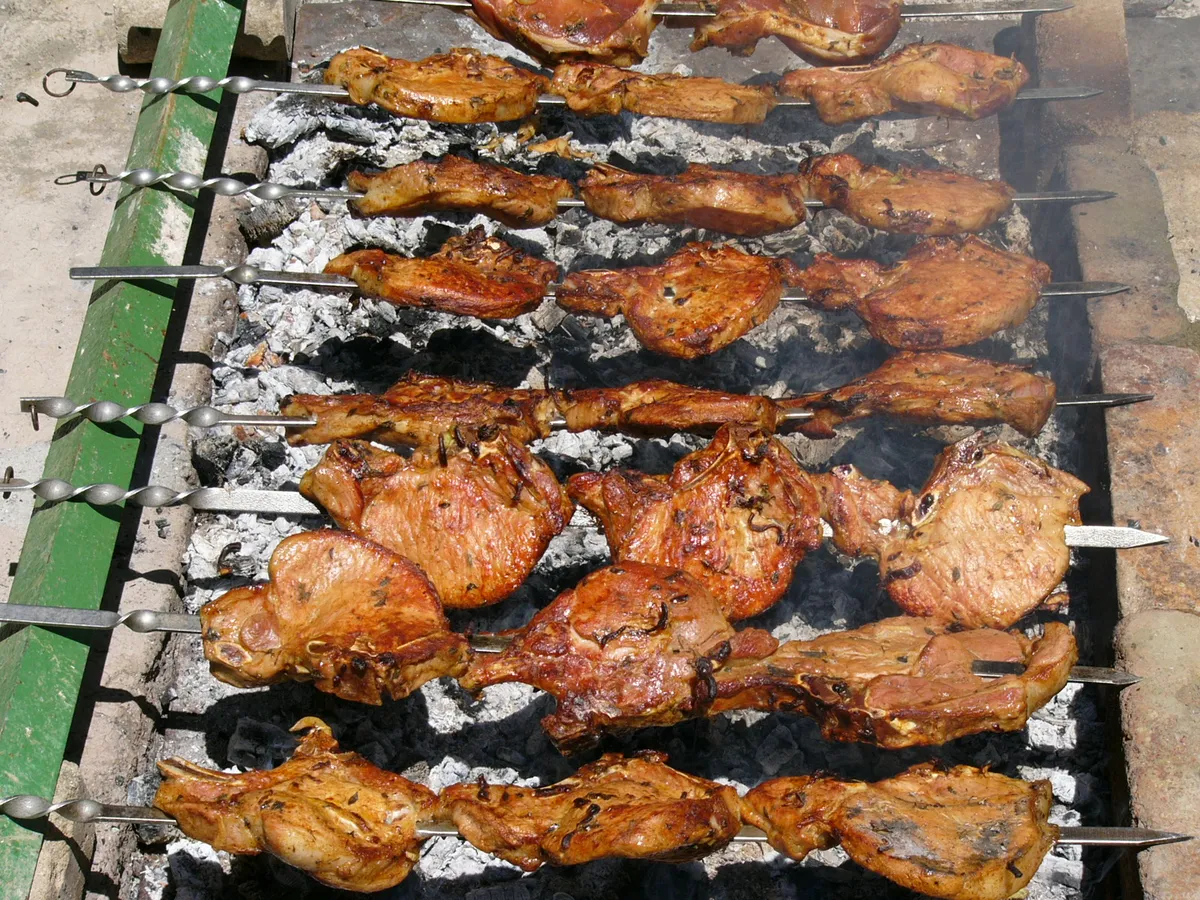 Khorovats, the Beating Heart of Armenian Tables and TraditionsAn iconic dish of Armenian festivities, khorovats embodies a centuries-old art of grilling, blending rituals, history, and conviviality.