Martiros Saryan, the Master Who Painted the Soul and Light of Armenia
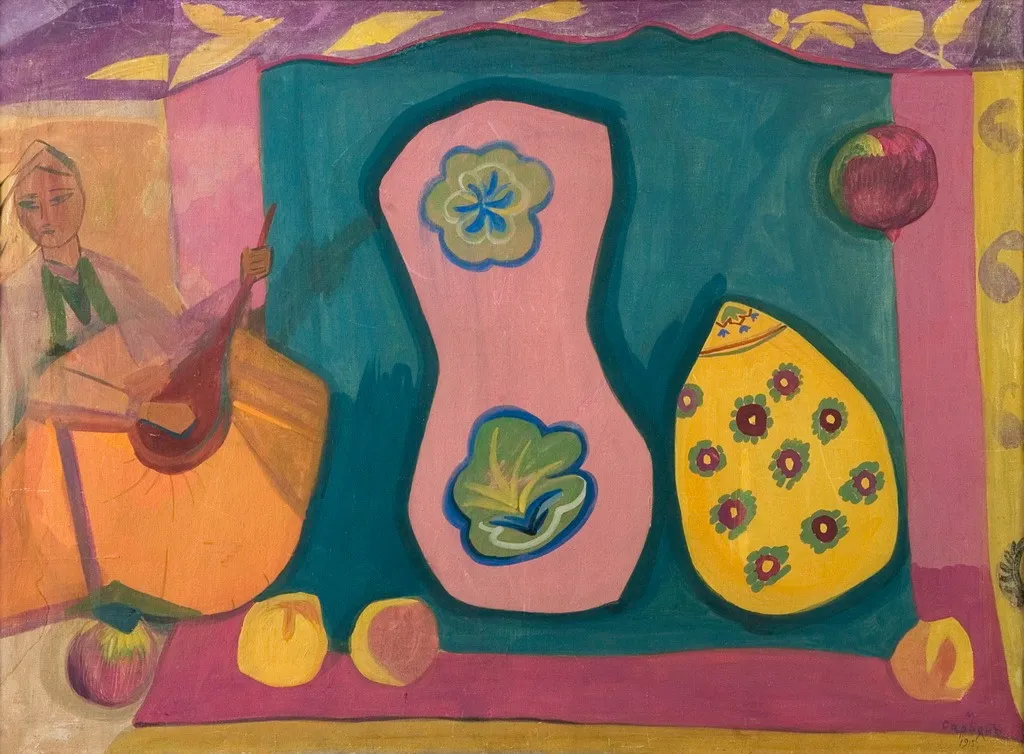
Born on February 28, 1880, in Nor Nakhichevan into a family whose ancestors had left the medieval city of Ani for Crimea before settling on the banks of the Don, Martiros Saryan established himself as the undisputed father of modern Armenian painting. The seventh of nine children born to Sargis Saryan and Ustian Chiligaryan, the young boy grew up in close contact with the steppe on his father's estate along the Sambek River. The early death of his father in 1891 led his elder brother Hovhannes to watch over him. After completing his studies at the local Russian-Armenian school in 1895, the future painter sketched portraits in a post office before receiving encouragement from the painter Hmayak Artsatbanyan, who directed him toward the Russian capital.
The Awakening of an Eye: From Moscow to Ancestral Landscapes
Admitted in 1897 to the Moscow School of Painting, Sculpture and Architecture, Saryan studied under renowned masters such as Valentin Serov and Konstantin Korovin, completing his training in 1903 with two silver medals. In Moscow, he immersed himself in the daring artistic trends of the era, rubbed shoulders with the avant-garde in exhibitions such as The Scarlet Rose and The Blue Rose, and discovered the works of Paul Gauguin and Henri Matisse. Yet the formative event of his journey remained his first trip to Armenia in 1901. Traveling through Lori, Shirak, Etchmiadzin, Haghpat, Sanahin, Yerevan, and Lake Sevan, followed by the ancient capital of Ani in 1902, the artist experienced a profound emotional revelation for his ancestral homeland.
This aesthetic shock gave rise to the symbolist and pantheistic cycle Fairy Tales and Dreams (1904–1908). Rejecting the gloom of academic conventions and the fleeting nature of Impressionism, Saryan organized nature, fauna, and human silhouettes into a harmonious order. “Nature creates man so that through his eyes it can see itself, marvel at its own beauty,” he explained at the time. His palette was further enriched during several journeys to the East: Constantinople in 1910, Egypt in 1911, and Persia in 1913. His canvases, in which broad planes of pure color engaged in dialogue with the lessons of medieval miniatures and Toros Roslin, captivated the Tretyakov Gallery, which began acquiring several of his works as early as 1910.
At His People's Bedside and Builder of Institutions
The year 1915 brought absolute devastation. In the face of the genocide perpetrated in the Ottoman Empire, Martiros Saryan traveled to Etchmiadzin with the Moscow Armenian Relief Committee to aid the vast crowds of refugees. Working alongside writer Hovhannes Tumanyan and G. Hovsepian under harrowing sanitary conditions, the artist suffered a severe psychological shock in the presence of the survivors' anguish; Tumanyan took the initiative to have him evacuated to a hospital in Tiflis.
In Tiflis, Saryan regained his footing. There he met Lusik Aghayan, the daughter of writer Ghazaros Aghayan, whom he married in April 1916. During this same period, he co-founded the Society of Armenian Artists alongside Vardges Sureniants and Panos Terlemezian, and illustrated the Anthology of Armenian Poetry compiled by Valery Bryusov. After a stay in Rostov where he contributed to the preservation of the Armenian church of Surb Khach and inaugurated a local museum, Saryan accepted an invitation from Aleksandr Myasnikyan and chose to settle permanently in Yerevan in 1921.
The painter then placed all his genius at the service of the new republic. Together with Hakob Kojoyan, he designed the coat of arms of Soviet Armenia, created the curtain for the First State Theater (later the Sundukyan State Academic Theatre), and took charge of the arts section of the State Museum. Although a proposed flag inspired by traditional carpet motifs was rejected, Saryan became an essential pillar of the emerging cultural scene.
Triumphant Color Through the Trials of History
Between 1926 and 1928, Saryan lived in Paris. There he painted dozens of canvases steeped in nostalgia for his homeland, exhibited in 1928 at the Gérard Gallery. Fate struck the artist on March 15, 1928, however: the ship Phrygie, transporting his paintings to Constantinople, caught fire. Thirty-five canvases were destroyed. Only a few works—including five entrusted to his friend Anna Budaghyan and those the painter carried with him by train—escaped the disaster.
Returning to Yerevan, where the authorities granted him a studio-house in 1932, Saryan lived through the dark 1930s. Criticized for his bright, decorative flat tints, he refused to paint an official portrait of Stalin. In 1937, the NKVD seized and burned eleven portraits of intellectuals painted by the master; only his famous Portrait of the Poet Yeghishe Charents was saved in extremis through the courage of museum employees who concealed it. At the same time, the artist distinguished himself in scenography, designing the sets and costumes for Alexander Spendiaryan’s opera Almast (1930, 1939), which won a State Prize, and later for Armen Tigranian’s Davit Bek.
For Saryan, painting could never be severed from its nourishing roots: “The earth is like a living being: it has a soul. Without close ties to the homeland, it is impossible to find oneself.” Louis Aragon summarized this communion in 1960: “The light of Armenia reaches us thanks to Martiros Saryan [...] painter of happiness,” placing him alongside Matisse and Cézanne.
An Immortal Master in the Pantheon of Giants
A guiding figure of Armenian art, Martiros Saryan offered generous encouragement to the younger generation, forming a profound spiritual dialogue with his pupil Minas Avetisyan. His commitment to his land never wavered: in 1966, alongside Paruyr Sevak, Yervand Kochar, and Hamo Sahyan, he signed a petition requesting the reunification of Nagorno-Karabakh with Soviet Armenia. Awarded the Order of Lenin three times and named a People's Artist of the USSR, he continued to draw and paint until his final days.
When he passed away in Yerevan on May 5, 1972, having enriched world art with nearly four thousand works, Martiros Saryan was laid to rest in the Komitas Pantheon, alongside the national composer. His house-museum in Yerevan, inaugurated in 1967, and his portrait engraved on the 20,000-dram banknote testify to the devotion of a people to the man who restored to his homeland all of its light.
Sources
- Martiros Sarian (Wikipedia fr)
- Martiros Saryan (Wikipedia en)
- Մարտիրոս Սարյան (Wikipedia hy)
- Сарьян, Мартирос Сергеевич (Wikipedia ru)
Texts from Wikipedia (CC BY-SA 4.0) and Wikisource (CC BY-SA 3.0), used as sources.
Written with an AI tool from the sources cited and checked by our editors; translated automatically from the reviewed French text.
Read next
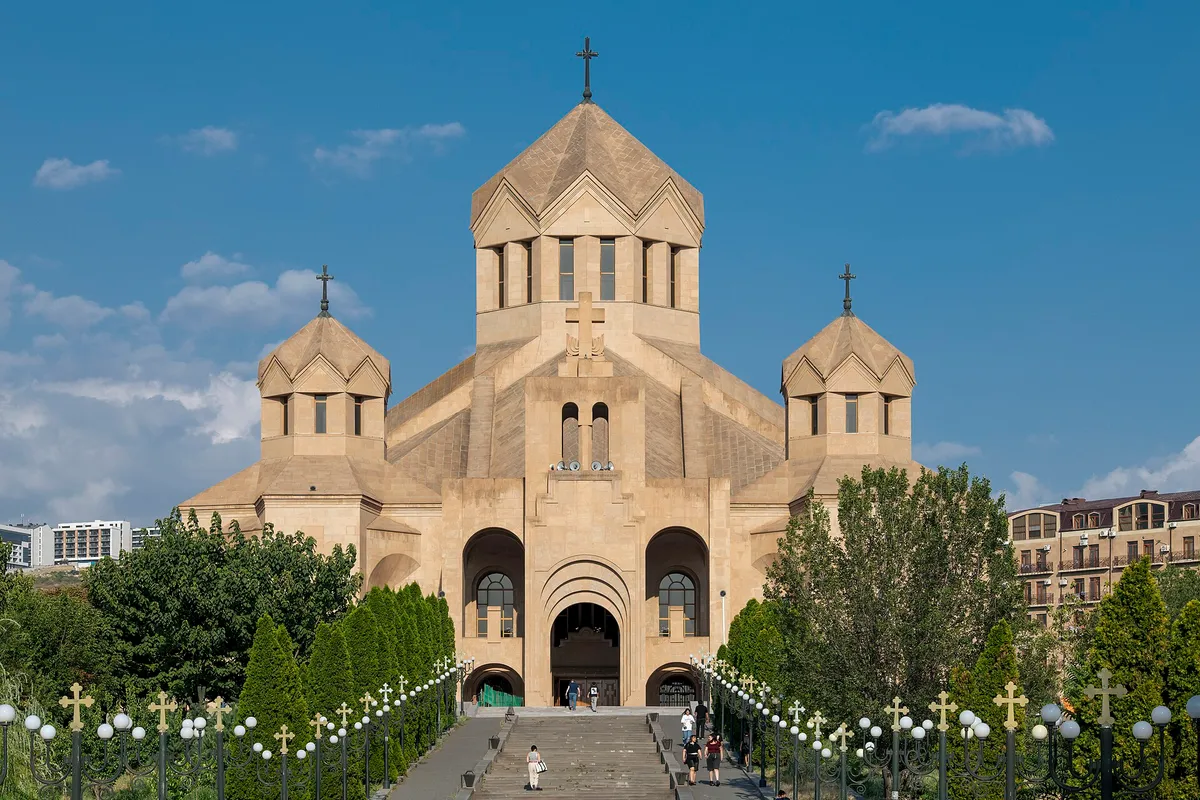 Gregory the Illuminator and the Christian Dawn of ArmeniaThe founding figure of the Armenian Church, Gregory the Illuminator led the nation to its baptism in 301. The chronicle of an unwavering faith.
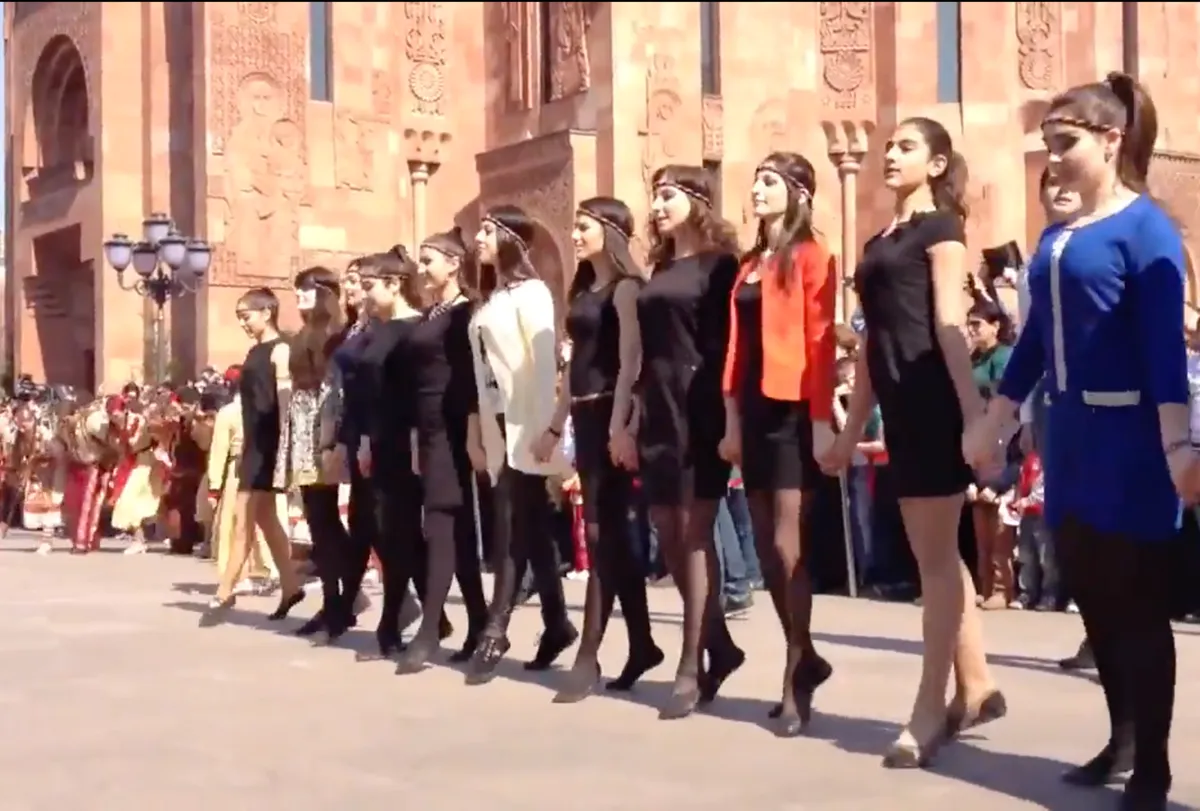 Kochari: History, Steps, and Memory of an Emblematic DanceDiscover Kochari, a circle dance born in the Armenian highlands, from its unique movements to its inscription on UNESCO's cultural heritage list.
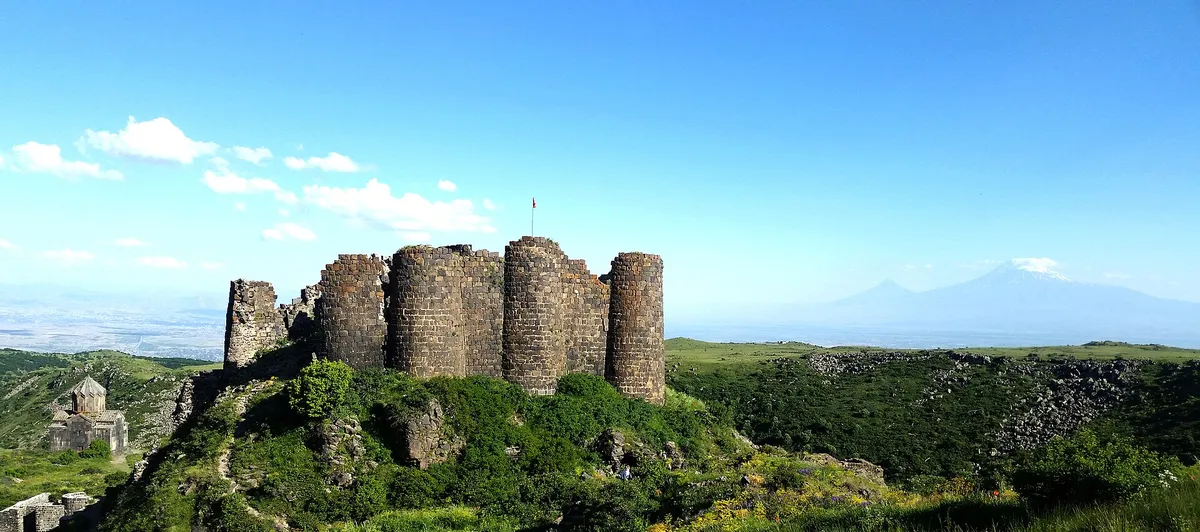 Amberd, the Millennial Sentinel Standing on the Slopes of Mount AragatsPerched at 2,300 meters, the medieval fortress of Amberd and its church bear witness to the military and architectural grandeur of ancient Armenia.