Tigranes the Great and the Golden Age of the Armenian Empire
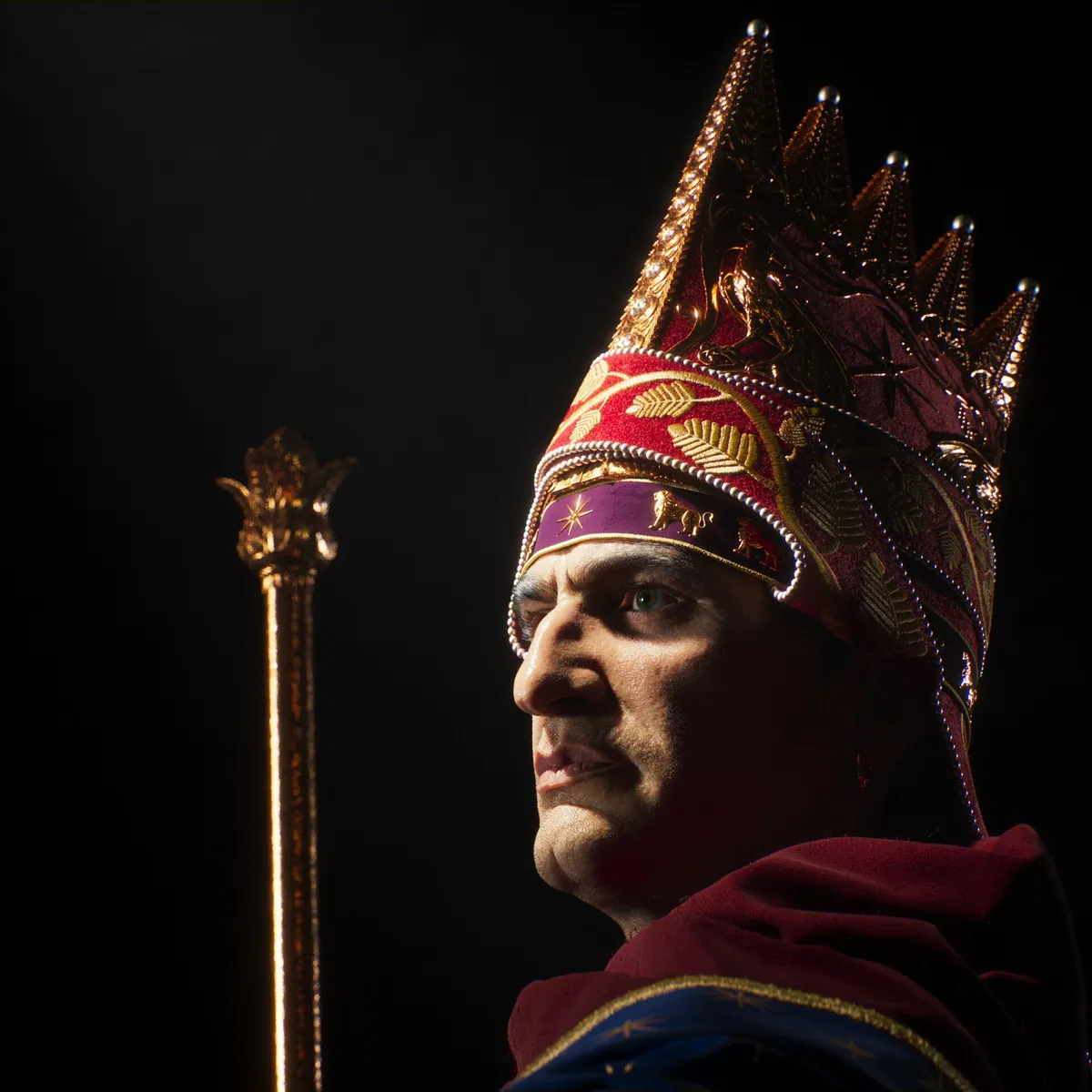
Tigranes II, known to posterity as Tigranes the Great (Tigran Mets), born around 140 BC and died in 55 BC, embodies a period of unprecedented brilliance in the history of the Armenian nation. A scion of the Artaxiad dynasty and grandson of the reformist monarch Artaxias I, he reigned from 95 to 55 BC. Under his rule, the Kingdom of Greater Armenia expanded far beyond its traditional borders to establish itself, for several decades, as the preeminent power east of the Roman world.
From the Shores of Exile to Royal Assertion
Before donning the crown, Prince Tigranes spent long years held hostage at the court of the Parthian king Mithridates II, following a military conflict unfavorable to the Armenians. Treated with the honors due to his rank, he learned there the diplomatic and military workings of Eastern courts. In 95 BC, upon the death of his father, King Tigranes I, he regained his freedom in exchange for ceding "seventy valleys" of fertile land located in Atropatene.
Crowned at the age of forty-five, Tigranes found a country structured by the legacy of his predecessors. However, the mountainous terrain naturally divided the land into provinces dominated by powerful feudal lords, the nakharark. Eager to build a centralized power, the sovereign consolidated royal authority. As early as 94 BC, he deposed Artanes, king of Sophene, permanently annexing this principality to the royal domain. That same year, Tigranes sealed a decisive alliance with the king of Pontus, Mithridates VI Eupator, marrying his daughter Cleopatra. The two monarchs defined their ambitions: Anatolia and the western shores for the Pontic kingdom, eastward expansion for Armenia. Their united armies intervened jointly in Cappadocia as early as 93 BC, driving out the client king backed by Rome, Ariobarzanes I.
The Building of an Empire "from Sea to Sea"
Upon the death of Mithridates II of Parthia in 88 BC, Tigranes seized the opportunity presented by internal divisions within his former overlord's realm. Casting off all vassalage, the Armenian army took back the seventy valleys, entered Upper Mesopotamia, and subjugated Atropatene, Adiabene, Gordyene, and Osroene. Pushing as far as Ecbatana, the summer residence of the Parthian kings, Tigranes captured the fortress of Adrabana. King Gotarzes I was forced to yield, and Tigranes assumed for himself the sovereign title of "King of Kings" (arkayits arka). To the north, the monarch extended his influence over the kingdoms of Iberia and Caucasian Albania.
In 83 BC, faced with the collapse of the Seleucid Empire torn by dynastic rivalries, the notables and Greek cities of Syria chose to offer the crown to Tigranes to restore harmony. Appointing Magadates as governor in Antioch, the King of Armenia took possession of Syria, Phoenicia, Cilicia, and Commagene, extending his outposts as far as the city of Ptolemais.
The empire thus reached its territorial zenith, covering an immense territory stretching from the Pontic Alps and the Caucasus to the Mesopotamian borders, and from the Caspian Sea to the Mediterranean Sea. This geopolitical reality gave rise to the popular phrase Armenia "from sea to sea" (tsovits tsov Hayastan). According to the historian Plutarch, Tigranes appeared in majesty escorted by four vassal kings. In Rome itself, Cicero spoke in his speeches of the threat posed by the power of the King of Armenia.
Tigranakert and Hellenistic Influence
In order to provide this vast multiethnic realm with a suitable administrative center, Tigranes founded a new metropolis around the 80s and 70s BC, Tigranakert (Tigranocerta), located in the province of Aghdznik on the western Tigris. Other cities bearing his name were also established, notably in Artsakh. To make his new capital flourish, the king relocated thousands of residents there from cities in Cappadocia and Cilicia.
Tigranakert adopted Greek-inspired urban planning, with a theater, imposing ramparts, and lavish palaces. Proclaimed a "philhellene," the king welcomed rhetoricians and philosophers to his court, including Metrodorus of Scepsis, author of a History of Tigranes. The administration adopted Greek alongside local traditions, while the Zoroastrian pantheon gradually merged with the Olympian deities.
This dynamism was reflected in the coinage minted in Antioch and Damascus. These silver tetradrachms, admired for the finesse of their engraving, depicted the king in profile, wearing the Armenian tiara adorned with a star between two birds of prey—symbols of Zoroastrian royal glory. Some scholars see in this star with a tail Halley's Comet, observed in 87 BC. On the reverse appeared the goddess Tyche of Antioch seated above the Orontes River.
The Clash of Legions and the Peace of Artaxata
The inevitable confrontation with Rome occurred when Mithridates VI, defeated by Lucullus in 72 BC, took refuge with Tigranes, who refused to hand over his ally and father-in-law. In 69 BC, Roman troops invaded Armenia and laid siege to Tigranakert. On October 6, 69 BC, following the battle and the betrayal of part of the guards who opened the gates, the capital fell to Lucullus, although Tigranes managed to rescue his family with a force of six thousand cavalrymen.
The following year, the allied Armenian and Pontic forces held off the legions before the ancient capital, Artaxata. Faced with difficult terrain and heavy casualties, the Roman soldiers mutinied, forcing Lucullus to retreat. Pompey was then tasked with ending the war in 66 BC. Confronted with the advance of fresh legions and the rebellion of his own son, Tigranes the Younger, the seventy-five-year-old monarch opted for diplomacy.
During his meeting with Pompey, Tigranes renounced his external conquests—Syria, Phoenicia, and Sophene—and paid an indemnity of six thousand talents of silver. Pompey raised him with deference and confirmed his authority over the Kingdom of Greater Armenia with the title of ally of Rome. Tigranes thus ruled peacefully over his ancestral lands until his death in 55 BC, at the age of eighty-five, leaving the throne to his son Artavasdes II. From the admiring pen of Movses Khorenatsi to the baroque operas composed in the 18th century by Antonio Vivaldi or Christoph Willibald Gluck, the epic of Tigranes remains one of the brightest milestones in Armenian national memory.
Sources
- Tigrane II d'Arménie (Wikipedia fr)
- Tigranes the Great (Wikipedia en)
- Տիգրան Մեծ (Wikipedia hy)
- Тигран II (Wikipedia ru)
Texts from Wikipedia (CC BY-SA 4.0) and Wikisource (CC BY-SA 3.0), used as sources.
Written with an AI tool from the sources cited and checked by our editors; translated automatically from the reviewed French text.
Read next
 The Epic of David of Sassoun: A Thousand Years of Oral MemoryFrom oral tradition to UNESCO inscription, the Armenian epic of four generations of Sassoun heroes continues to live on.
 Kochari: History, Steps, and Memory of an Emblematic DanceDiscover Kochari, a circle dance born in the Armenian highlands, from its unique movements to its inscription on UNESCO's cultural heritage list.
 The Matenadaran: Age-Old Guardian of the Armenian Word and MiniatureDiscover the history and illuminated treasures of Yerevan's Matenadaran, a priceless sanctuary of Armenian written memory inscribed on the UNESCO register.