The Temple of Garni: Hellenistic Splendor and Living Memory of Ancient Armenia
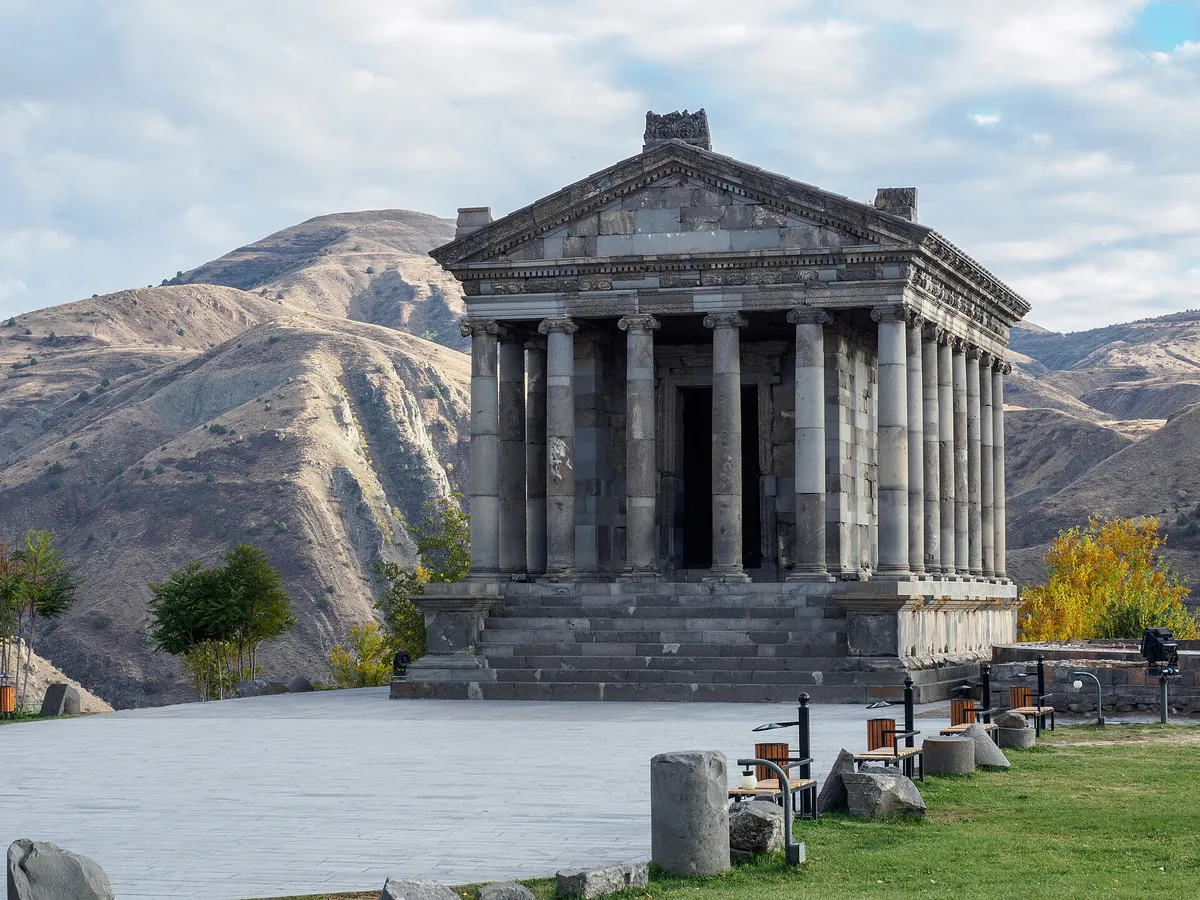
Majestically standing at the edge of a triangular promontory, the Temple of Garni is the most striking symbol of pre-Christian Armenia. Located about 28 to 30 kilometers east of Yerevan, in Kotayk Province, this Ionic structure rises at an altitude of 1,400 meters above the sheer gorge of the Azat River, facing the magnificent panorama of the Gegham Mountains. The only colonnaded Hellenistic monument preserved in Armenia and across the entire former Soviet Union, it embodies the virtuosity of ancient Armenian builders and the fruitful ties forged with the Greco-Roman world.
An Impregnable Fortress in the Heart of the Gegham Mountains
The sanctuary stands within the fortress of Garni, one of the country's oldest and most strategic strongholds, designed to protect the major cities of the Ararat Plain. As early as the first half of the 8th century BC, King Argishti I of Urartu seized the site—then recorded as Giarniani in a cuneiform inscription—before mobilizing the population to erect the fortress of Erebuni. The site also preserves a Bronze Age cyclopean wall, testifying to the great antiquity of its occupation.
The Roman historian Tacitus mentions this citadel as castellum Gorneas as early as the first half of the 1st century AD. Built beginning in the 2nd century BC and subsequently reinforced over the centuries, the ramparts of Garni span a perimeter of 314.28 meters, punctuated by fourteen rectangular towers. Where nature rendered the cliff inaccessible, the towers were spaced 25 to 32 meters apart, whereas along more vulnerable flanks, they were spaced more closely at intervals of 10 to 13.5 meters. Constructed from large blocks of local basalt joined without mortar but reinforced with iron and lead, the wall reached a thickness of 2.07 to 2.12 meters and a height of 6 to 7 meters, protected by a single entrance reserved for chariots.
The Vow of Tiridates and the Solar Cult
The fate of the temple is intimately linked to the Arsacid dynasty. Following the Treaty of Rhandeia, King Tiridates I of Armenia traveled to Rome in AD 65 with an entourage of 3,000 horsemen to receive his crown from the hands of Emperor Nero. To compensate for the destruction of the capital Artaxata by General Corbulo, Nero provided Tiridates with substantial subsidies—50 million drachmas—along with Roman craftsmen. Upon returning to his homeland, Tiridates I undertook extensive reconstruction projects.
In 1945, the painter Martiros Saryan discovered a basalt block at Garni bearing a Greek inscription. Translated notably by Ashot G. Abrahamian and James R. Russell, this dedication attributes the foundation of the site to the Armenian ruler:
> “Helios! Trdat the Great, sovereign of the Kingdom of Armenia, when he built […] this impregnable fortress in the eleventh year of his reign…”
This reference dates the construction to AD 76 or 77. In Armenian religious tradition imbued with Zoroastrian influences, the temple was dedicated to the solar deity Mihr, equivalent to Mithra and protector of the royal line. While some historians, such as Richard D. Wilkinson or James R. Russell, view it instead as a 2nd-century princely mausoleum inspired by Asia Minor monuments, the attribution to Tiridates I remains the prevailing thesis.
An Architectural Masterpiece Crafted in Basalt
The Temple of Garni is a classical peripteros resting on a high podium measuring 15.7 meters by 11.5 meters, rising up to 3 meters above the ground. Its colonnade comprises twenty-four Ionic columns 6.54 meters high, arranged with six columns on the north and south facades and eight along the sides. The building reaches a height of 10.7 meters.
Its main facade faces north, accessed by a monumental staircase of nine steep steps, each 30 centimeters high. Two pedestals flank these steps, sculpted with depictions of the kneeling titan Atlas, his hands raised to support the altars. Carved from dense, dark basalt, the temple transcends Greco-Roman uniformity thanks to the genius of Armenian stonemasons. In the continuous acanthus frieze and the cornices decorated with lion heads, the sculptors introduced traditional motifs: pomegranates, bunches of grapes, flowers, and hazel leaves. The naos, a sacred chamber of modest dimensions (7.98 meters by 5.05 meters), housed the statue of the deity and opened at the top through an overhead skylight.
Princely Preservation and Rebirth Through Anastylosis
At the beginning of the 4th century, when Armenia's conversion to Christianity under Tiridates III led to the destruction of pagan places of worship, the temple escaped the pickaxes of the destroyers. The historian Moses of Chorene recounts that it was converted into a pleasant summer residence—a “house of coolness” (tun hovanots)—for Khosrovidukht, the king's sister. Known thereafter by chroniclers as the “Throne of Trdat” (Trdata t'akht), the site was embellished with Roman baths featuring mosaic floors and, in the 7th century, the round church of Saint Sion.
On June 4, 1679, a devastating earthquake struck the Garni gorge and caused the complete collapse of the colonnades, which had previously been weakened by the removal of iron clamps during the wars of Shah Abbas. For centuries, the carved drums and capitals lay scattered across the promontory. In 1880, a plan by Tsarist authorities to transport the ruins to Tiflis fortunately failed due to technical constraints.
Systematic excavations were conducted in the 20th century under the impetus of Nicholas Marr, Nikolai Buniatian, and later Babken Arakelyan. Between 1969 and 1975, architect Alexander Sahinian completed the full reconstruction of the monument using the principle of anastylosis. Each original element was returned to its precise location, with missing sections filled using neutral stone from local quarries. Awarded the UNESCO Melina Mercouri International Prize in 2011 for the safeguarding of its cultural landscape, the Temple of Garni perpetuates the enduring grandeur of Armenian art through the ages.
Sources
- Temple de Garni (Wikipedia fr)
- Garni Temple (Wikipedia en)
- Գառնու հեթանոսական տաճար (Wikipedia hy)
- Гарни (храм) (Wikipedia ru)
Texts from Wikipedia (CC BY-SA 4.0) and Wikisource (CC BY-SA 3.0), used as sources.
Written with an AI tool from the sources cited and checked by our editors; translated automatically from the reviewed French text.
Read next
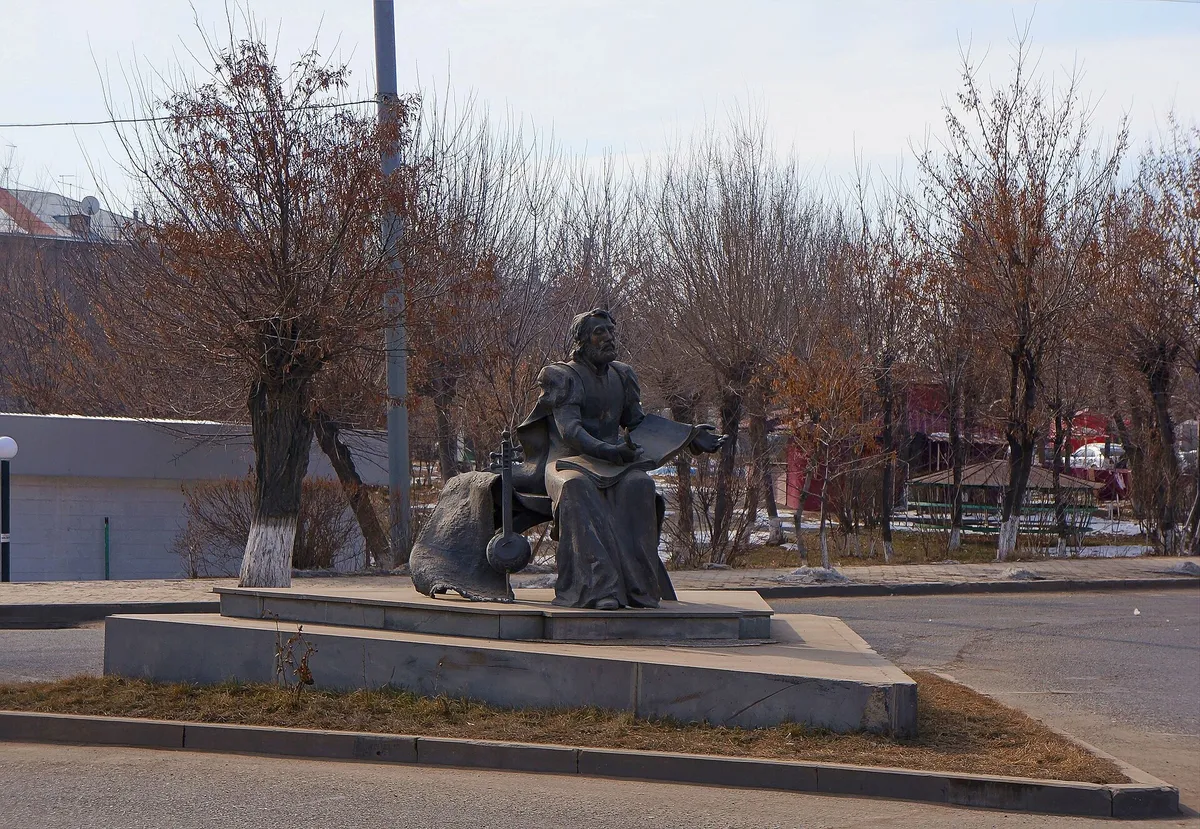 Sayat-Nova and the Art of the Ashughs: The Eternal Voice of Armenian TroubadoursDiscover the life and work of Sayat-Nova, undisputed master of Armenian ashughs, kamancheh virtuoso, and royal poet at the Georgian court.
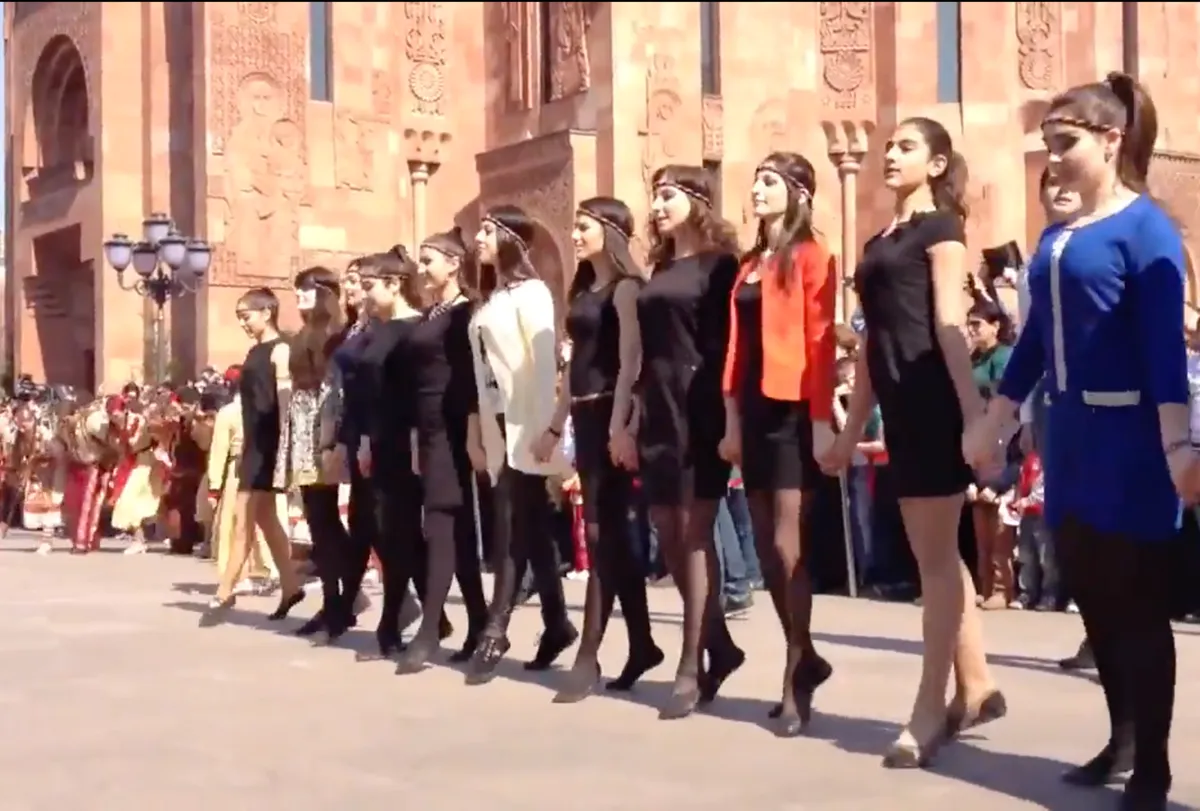 Kochari: History, Steps, and Memory of an Emblematic DanceDiscover Kochari, a circle dance born in the Armenian highlands, from its unique movements to its inscription on UNESCO's cultural heritage list.
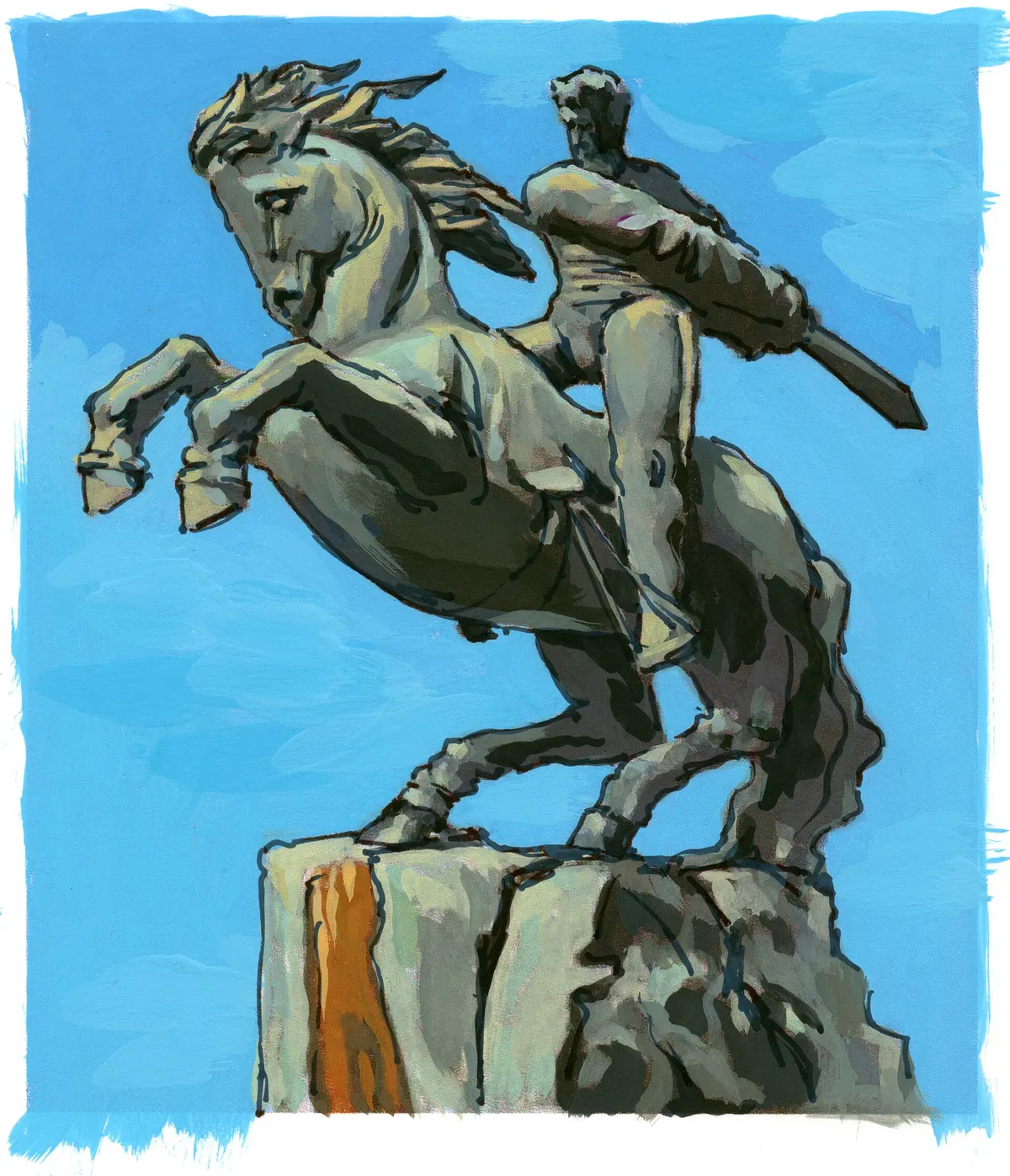 The Epic of David of Sassoun: A Thousand Years of Oral MemoryFrom oral tradition to UNESCO inscription, the Armenian epic of four generations of Sassoun heroes continues to live on.