Zvartnots: The Shattered Masterpiece of Armenian Architecture
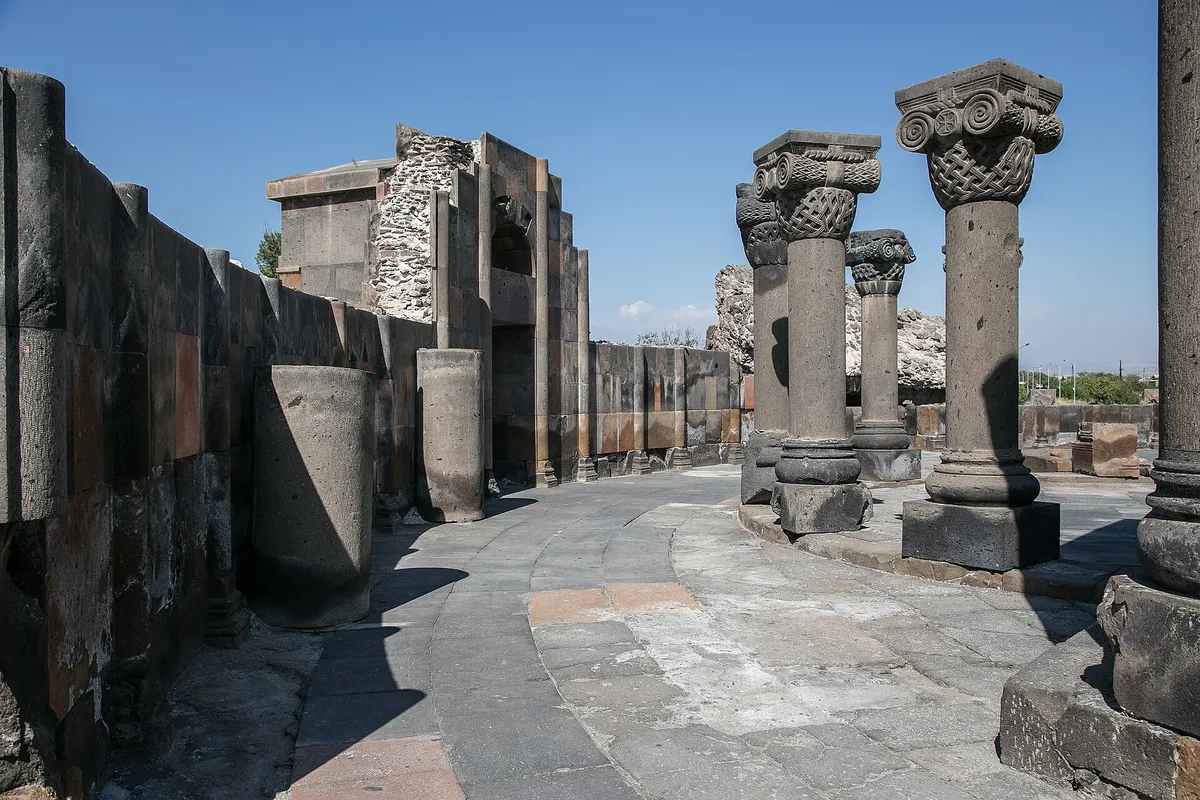
A short distance from Yerevan and Vagharshapat, in the Armavir Province, rise the majestic ruins of Zvartnots, whose surroundings now border the international airport of the same name. Inscribed on the UNESCO World Heritage List since 2000 alongside the religious sites of Echmiadzin, this major archaeological site illustrates the technical audacity and spiritual refinement of 7th-century Armenia. Dedicated to Saint Gregory the Illuminator, this exceptional cathedral was erected during a troubled era marked by the first Arab-Muslim incursions against the Byzantine and Sasanian Empires.
Origins of the Sanctuary of the Watchers
The construction of this grandiose monument was initiated by Catholicos Nerses III, nicknamed "the Builder" (Shinogh or Tayetsi), a native of Ishkhan in Tayk. Work began between 641 and 643. According to the medieval historian Movses Kaghankatvatsi, the cathedral was consecrated in 652 during a solemn ceremony in the presence of the Byzantine Emperor Constans II. Between 653 and 659, while Nerses stayed in Tayk, work continued under the direction of Anastas Akoratsi. Faced with the devastation following the capture of Dvin and military clashes, Nerses chose to transfer the patriarchal see from Dvin to Zvartnots, incorporating a large catholicosal palace into the complex.
The choice of site lay at the heart of the country's sacred memory. According to the historian Sebeos, it was precisely at this location that King Tiridates III and Saint Gregory the Illuminator allegedly met in 301. Excavations at the site have attested to a much earlier occupation, uncovering 4th- and 5th-century pagan structures, possibly dedicated to the god Tir, as well as an Urartian stele adorned with a cuneiform inscription of King Rusa II measuring 0.63 meters by 2.7 meters.
Sebeos was the very first chronicler to give the edifice the name Zvartnots, in reference to the multitude of celestial soldiers or watchers who appeared in a vision to Saint Gregory. As Kamsar Avetissian points out, the word zvartun meant "angel" in Old Armenian, giving the monument the meaning of "abode of the angels," although historical tradition also called it the Church of Saint Gregory of Vagharshapat. On one of the walls, Nerses left a Greek inscription reading "Nerses built it, remember him," while a relief has preserved the name Yohan, most likely designating the sanctuary's architect.
An Unrivaled Architectural Feat
Zvartnots is distinguished by a layout that overturned the canons of its time. At the center, a tetraconch forming a Greek cross is encircled by an ambulatory. Viewed from the exterior, the building rested on a seven-stepped plinth and presented a thirty-two-sided polygon that, from a distance, appeared perfectly circular, with a base diameter of 35.75 meters. This structure rose in three harmoniously stepped cylindrical tiers crowned by a majestic dome supported by four massive pillars connected by arches and pendentives.
For the masonry, the builders combined tuffs of various shades with pumice, lime mortar, and obsidian. The cathedral had five entrance portals. The façade of the first tier was girded with a carved frieze of grapevine scrolls and pomegranate branches, surmounted by arcading that accommodated thirty-two high reliefs of secular and religious dignitaries, nine of which still survive. Inside, the basket capitals displayed Ionic volutes and eagles with spread wings, recalling Syrian and Mesopotamian inspirations akin to the church at Apamea. Mosaics, frescoes, and a sculpted sundial enriched this decorative program. Southwest of the church, excavations also uncovered the catholicos's apartments, monastic cells, baths, and a large wine press.
Ruin, Rediscovery, and Archaeological Debates
After three hundred and twenty years of existence, the cathedral collapsed in the 10th century. The most widely accepted cause remains a violent earthquake that broke the structural support of the second tier, although the hypothesis of damage resulting from Arab raids has also been raised. By the 11th century, when the historian Stepanos Taronetsi mentioned it, it was already nothing more than a heap of rubble.
The sanctuary remained buried until the early 20th century. Between 1901 and 1907, extensive excavation campaigns undertaken by Khachik Vardapet Dadyan brought the foundations of the complex to light. From 1904, the architect Toros Toramanian took over scientific leadership and, in 1905, drew up a famous three-tiered reconstruction based on the original elements. While this reconstruction became a benchmark, it sparked controversy: scholars such as Stepan Mnatsakanian and A. Kuznetsov questioned its technical feasibility for the era, putting forward alternative proposals. Today, visitors can contemplate the consolidated remains of the first tier, which convey the scale of the colonnade.
The Living Memory of an Architectural Model
The fame of Zvartnots profoundly shaped subsequent centuries. Around the year 1000, during the reign of King Gagik I Bagratuni, the architect Trdat faithfully reproduced the plan of Zvartnots to build the Gagkashen church (Saint Gregory) in Ani. The imprint of this circular tetraconch model is also found in the contemporary churches of Ishkhan and Bana founded by Nerses III, at Lekit in Aghvank, as well as in the architecture of the monuments of Aruch, Talin, Yeghvard, and the monasteries of Marmashen and Khtzkonk.
This renown even fueled far-reaching hypotheses: some believed they recognized the silhouette of Zvartnots surmounting Noah's Ark on two bas-reliefs of the Sainte-Chapelle in Paris, a comparison dismissed by historian Jean-Michel Thierry given the commonplace nature of such medieval motifs. In Armenia, an illustration of the cathedral adorned the first issue of 100-dram banknotes, and a scale model takes pride of place in the History Museum of Armenia in Yerevan. Its architectural legacy even inspired the Holy Trinity Church built in 2003 by Baghdasar Arzoumanian in the Malatia-Sebastia district of Yerevan. Zvartnots thus preserves its resonance intact, as the poet Osip Mandelstam summarized before its sundial, seeing in these stones the testimony of a people living to the deep rhythm of the sun.
Sources
- Zvartnots (Wikipedia fr)
- Zvartnots Cathedral (Wikipedia en)
- Զվարթնոցի տաճար (Wikipedia hy)
- Звартноц (Wikipedia ru)
Texts from Wikipedia (CC BY-SA 4.0) and Wikisource (CC BY-SA 3.0), used as sources.
Written with an AI tool from the sources cited and checked by our editors; translated automatically from the reviewed French text.
Read next
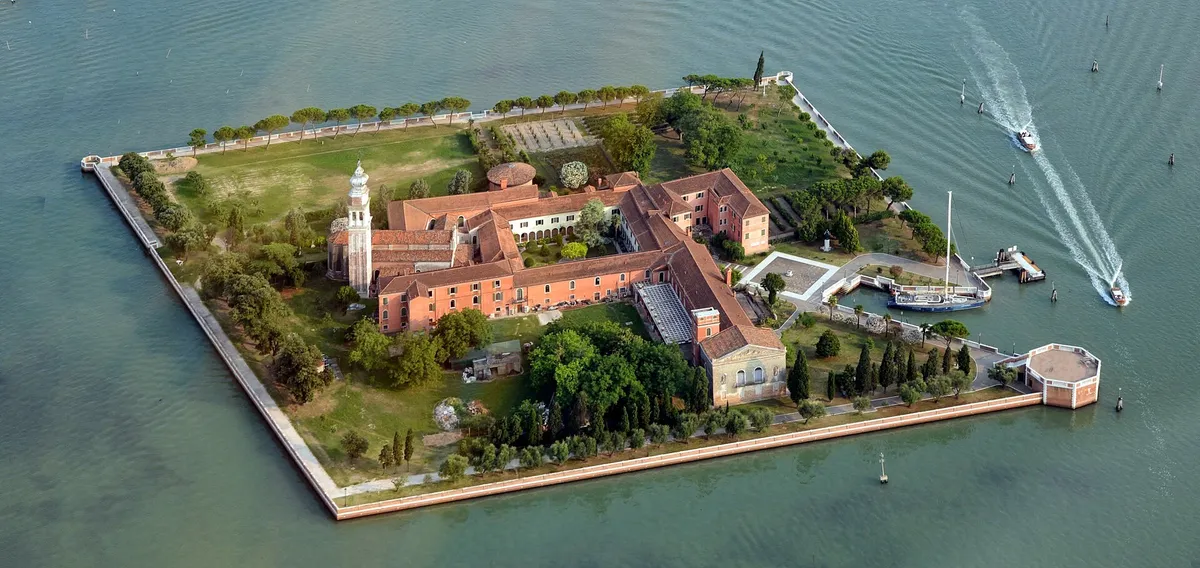 The Mechitharist Fathers of Venice and Vienna: Three Centuries in the Service of Armenian LettersDiscover the history and cultural influence of the Mechitharist Fathers, guardians of the Armenian language from Venice to Vienna.
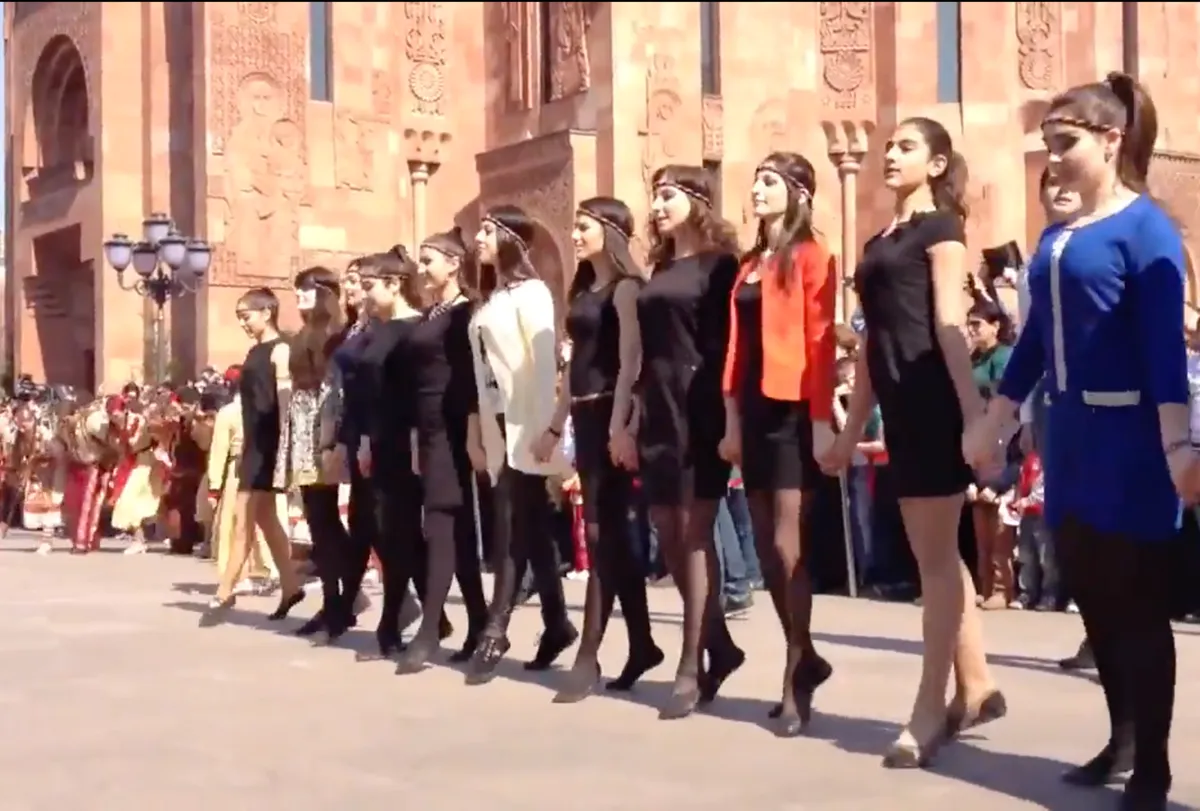 Kochari: History, Steps, and Memory of an Emblematic DanceDiscover Kochari, a circle dance born in the Armenian highlands, from its unique movements to its inscription on UNESCO's cultural heritage list.
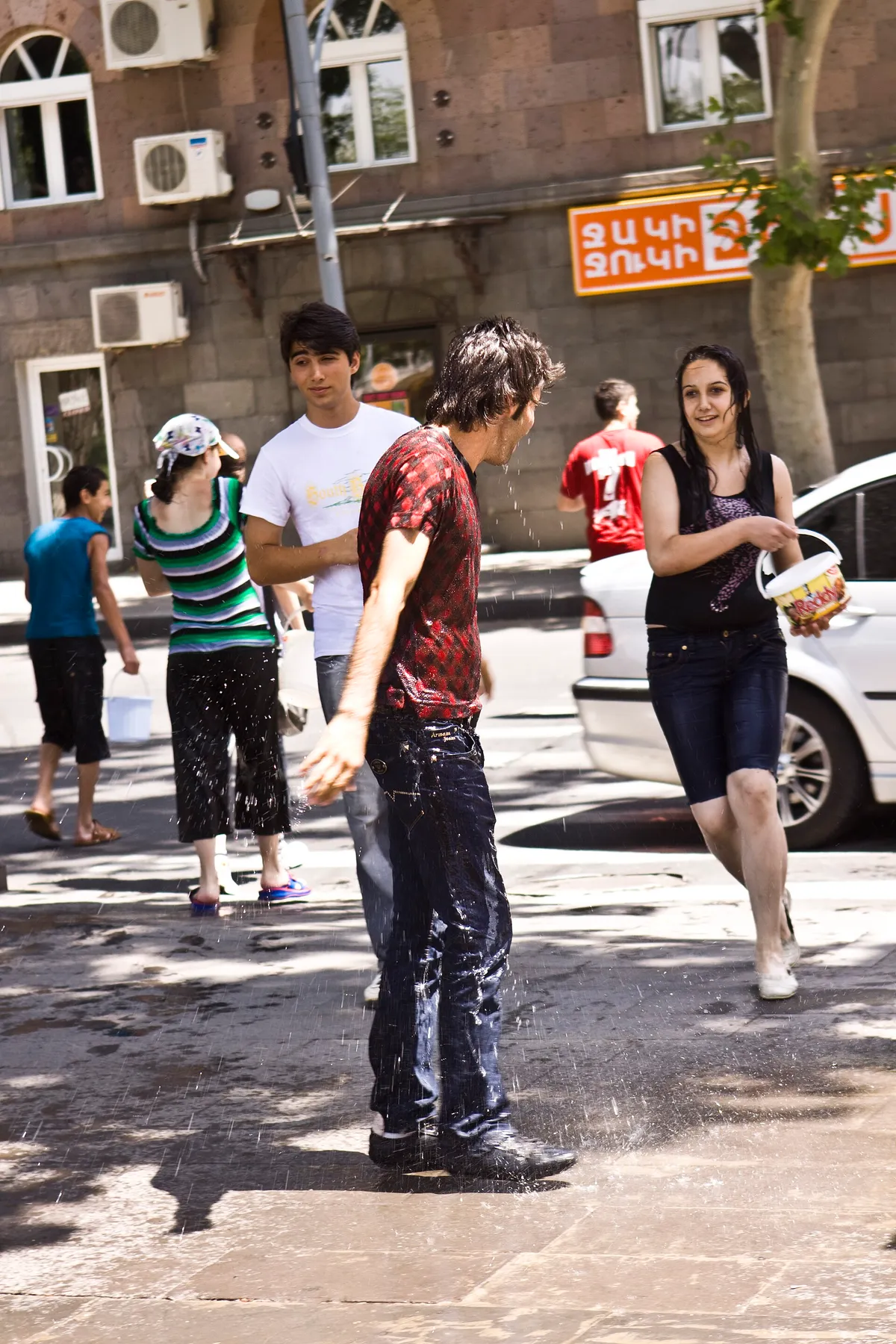 Vardavar: The Great Armenian Festival of Waters and LightDiscover the history and rituals of Vardavar, an iconic Armenian festival blending pagan traditions, water worship, and the Feast of the Transfiguration.