Amberd, the Millennial Sentinel Standing on the Slopes of Mount Aragats
A Fortress Suspended Above the Clouds
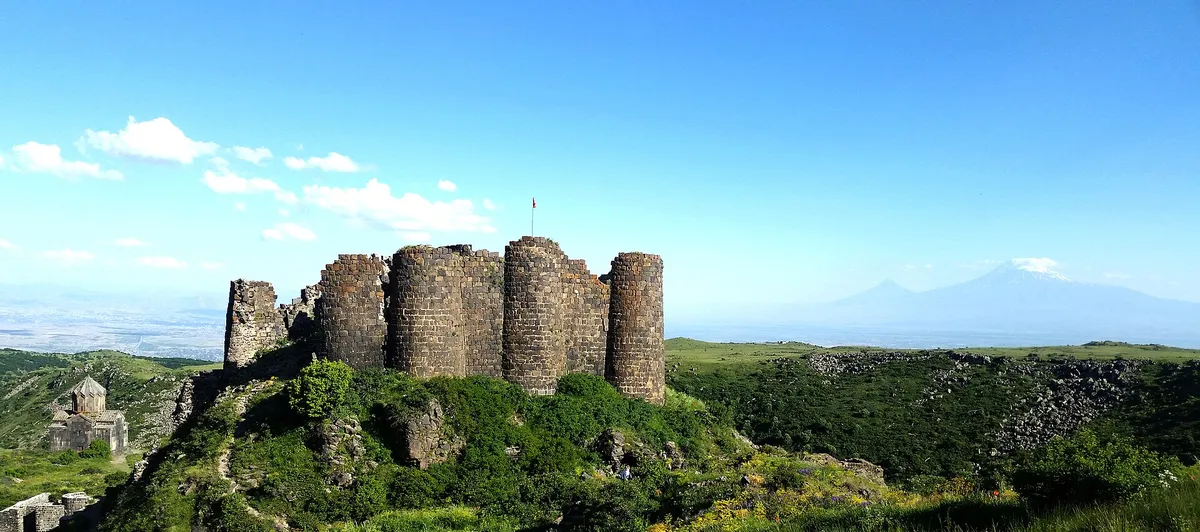
On the southern slope of Mount Aragats, at an altitude of 2,300 meters, stands the imposing medieval complex of Amberd. Located in the Aragatsotn province, approximately 55 kilometers north of Yerevan and about seven kilometers northwest of the village of Byurakan, this fortified site occupies a five-hectare triangular promontory at the confluence of the Arkashen and Amberd rivers. Surrounded on three sides by deep gorges that afford it a naturally impregnable position, the site once controlled the access routes to the Ararat plain.
The very toponym Amberd—formerly spelled Anberd, and sometimes called Ampir, Hamberd, or Hanberd—has its roots in the Armenian language: the combination of amp (cloud) and berd (fortress) literally makes it the "fortress of the clouds," a stronghold often enveloped in high-altitude mists. The variant Anberd also carries the meaning of an inaccessible or impregnable citadel.
The Strata of an Eventful Feudal History
Occupation of this promontory dates back to prehistoric times. From the Stone Age, and later during the Bronze and Iron Ages, settlements and cyclopean structures were established here. Fish-shaped stone steles known as vishaps, dedicated to pre-Christian water cults, were found nearby before being carved with crosses during the Christian era. The site, identified with the É.GAL type of fortress mentioned in Urartian cuneiform inscriptions, is also attested in the Hellenistic period.
The construction of the first curtain walls and the keep dates back to the 7th century, under the aegis of the princely house of Kamsarakan. In the 8th century, the estate passed into the hands of the Bagratunis and established itself as a strategic stronghold defending the approaches to the capital, Ani. In the 10th century, the Bagratid kings entrusted Amberd to the Pahlavuni princes. In 1026, the prince and sparapet Vahram Pahlavuni had the church of Vahramashen built there, along with the complex's baths. Although Vahram Pahlavuni won a victory beneath the walls of Ani against Byzantine and Seljuk forces in 1042, the Byzantines captured Amberd in 1047, before the Seljuks seized control of it in the 1070s.
The liberation of the site occurred in 1196 thanks to the brothers Zakare and Ivane Zakarian, who repelled the Emirate of Gandzak and erected a commemorative khachkar. This victory marked the starting point of a wave of reconquests, leading to the recapture of Ani in 1198–1199, Bjni in 1201, and Dvin in 1203. Entrusted to the noble Vache I Vachutian, who acquired it in 1215 to make it his administrative seat, the stronghold underwent renewed restorations. The Vachutians and Princess Mamakhatun carried out major building projects there, while supporting the construction of the neighboring monasteries of Tegher, Saghmosavank, and Hovhannavank. Despite these defenses, Mongol armies besieged and destroyed the fortress in 1236, when it was under the command of Vache's son, Khurd Vachutian. The site, rebuilt at the end of the 13th century, was definitively abandoned following the incursions of Tamerlane in the 1380s.
A Manorial Palace with Ingenious Features
The lordly castle, erected at the highest point of the site over an area of approximately 1,500 square meters, features walls built of roughly cut basalt blocks bonded with mortar. The towers adopt a battered profile designed to facilitate fire against attackers. The keep comprised three levels separated by wooden floors nailed to beams. The ground floor, devoid of windows for defensive purposes, had only a narrow entrance secured by a bolted stone door. The first and second floors each contained five communicating rooms, while the third level housed the reception halls and private quarters.
To meet the needs of the garrison and of the artisans manufacturing military equipment, an extensive hydraulic system collected water from springs and melting snow. An underground aqueduct made of terracotta pipes conveyed water from reservoirs located 4 to 5 kilometers away. In the event of a siege, secret passages carved into the rock—about 1.8 meters high and 1.5 meters wide—descended to the Arkashen River and the Amberdadzor gorge to secure the water supply. The site also possessed an oil press.
South of the castle, the baths built in the 10th and 11th centuries by the Pahlavunis preserve a vaulted ashlar structure comprising a dressing room and a double-domed bathing room. This building utilized a hypocaust system: smoke from the furnaces circulated beneath the floor and inside wall flues to distribute heat, while metal pipes supplied hot water. A small 10th-century chapel stands roughly ten meters from these thermal baths.
The Church of Vahramashen
At the heart of the enclosure, in the lower part of the complex, stands the church of Vahramashen, dedicated to the Holy Mother of God (Surb Astvatsatsin). Erected in 1026 in volcanic tuff at the initiative of Vahram Pahlavuni, it features an externally rectangular and internally cruciform plan, surmounted by a central dome. Its design displays clear architectural affinities with the monastery of Marmashen.
The building stands out as one of the earliest examples of Armenian churches featuring two-story corner annexes (avandatun) in the four angles of the cross arms. The twelve-sided drum, topped by an umbrella conical roof, rests on arches supported by the corners of the chapels. In order to lighten the roof masonry, the builders embedded fired clay jars into the vault rubble. The exterior facades exhibit great restraint, punctuated by two vertical niches on the eastern apse and an arched southern portal framed by clustered colonnettes. An inscription carved into the interior north wall commemorates its foundation.
Heritage, Excavations, and Preservation
The first archaeological excavations at Amberd were carried out in 1936 by Academician Hovsep Orbeli, under the joint auspices of the Hermitage Museum and the Institute of History of the Armenian SSR. Research was resumed in 1963 by Nikolai Tokarsky, and subsequently by Suren Harutyunyan. These investigations brought to light artifacts of great value: weapons, gold, silver, and copper coins, precious jewelry, bronze candelabra, ceramics, and glassware. Fragments of fabrics and rugs discovered during the work indicate that the walls of the princely chambers were adorned with silk draperies, brocades, and carpets.
Restoration campaigns consolidated the church and the baths between 1949 and 1972 according to plans by architect Yu. Tamanyan, based on surveys by K. Ghafadaryan, A. Zhamharyan, V. Harutyunyan, S. Kyurkchyan, and A. Mirijanyan, prior to further improvements carried out between 2005 and 2007. In 2024, the pan-European organization Europa Nostra listed the medieval fortress of Amberd among the seven most endangered heritage sites in Europe, raising alarm over the threats posed by time, erosion, seismic activity, and the need for sustainable funding for its structural consolidation.
Watch the video
Sources
- Amberd (Wikipedia fr)
- Amberd (Wikipedia en)
- Ամբերդ (ամրոց) (Wikipedia hy)
- Амберд (Wikipedia ru)
Texts from Wikipedia (CC BY-SA 4.0) and Wikisource (CC BY-SA 3.0), used as sources.
Written with an AI tool from the sources cited and checked by our editors; translated automatically from the reviewed French text.
Read next
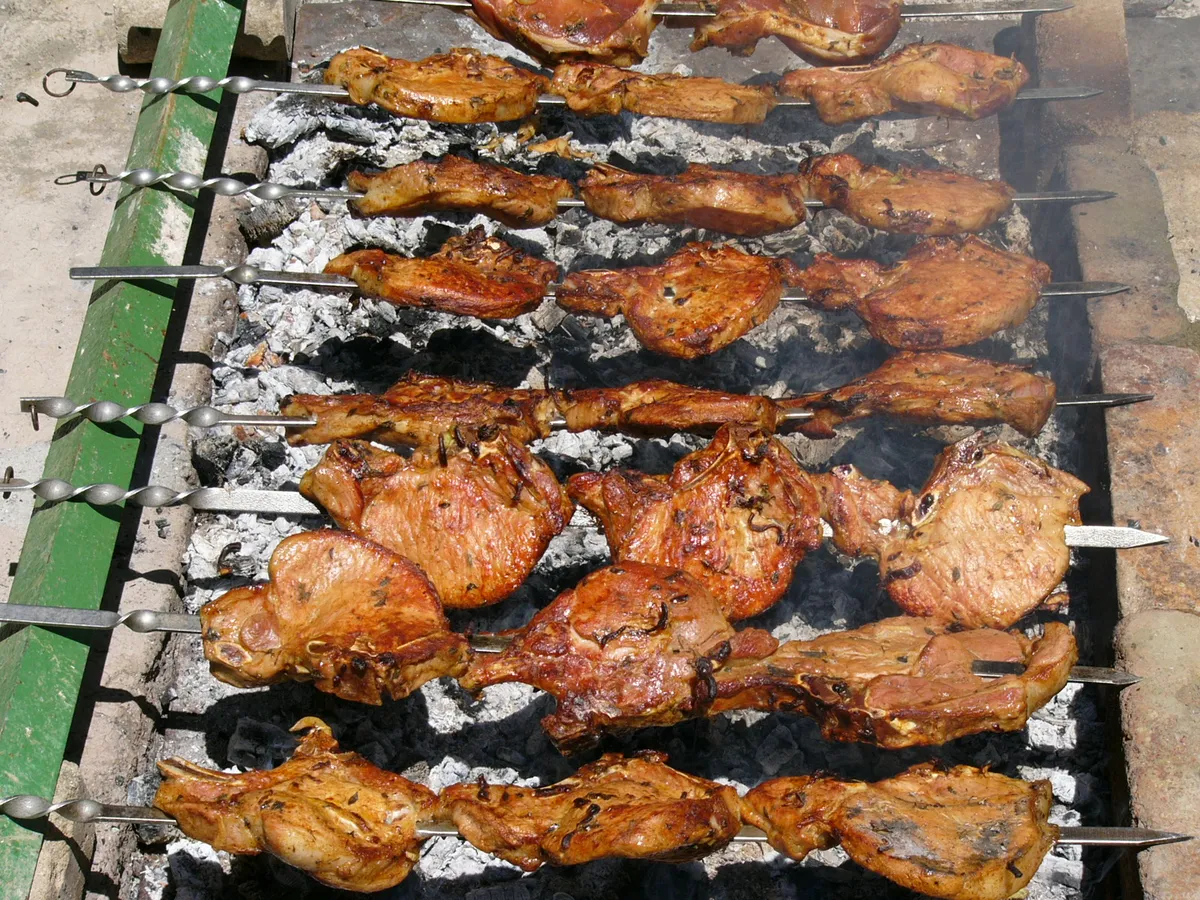 Khorovats, the Beating Heart of Armenian Tables and TraditionsAn iconic dish of Armenian festivities, khorovats embodies a centuries-old art of grilling, blending rituals, history, and conviviality.
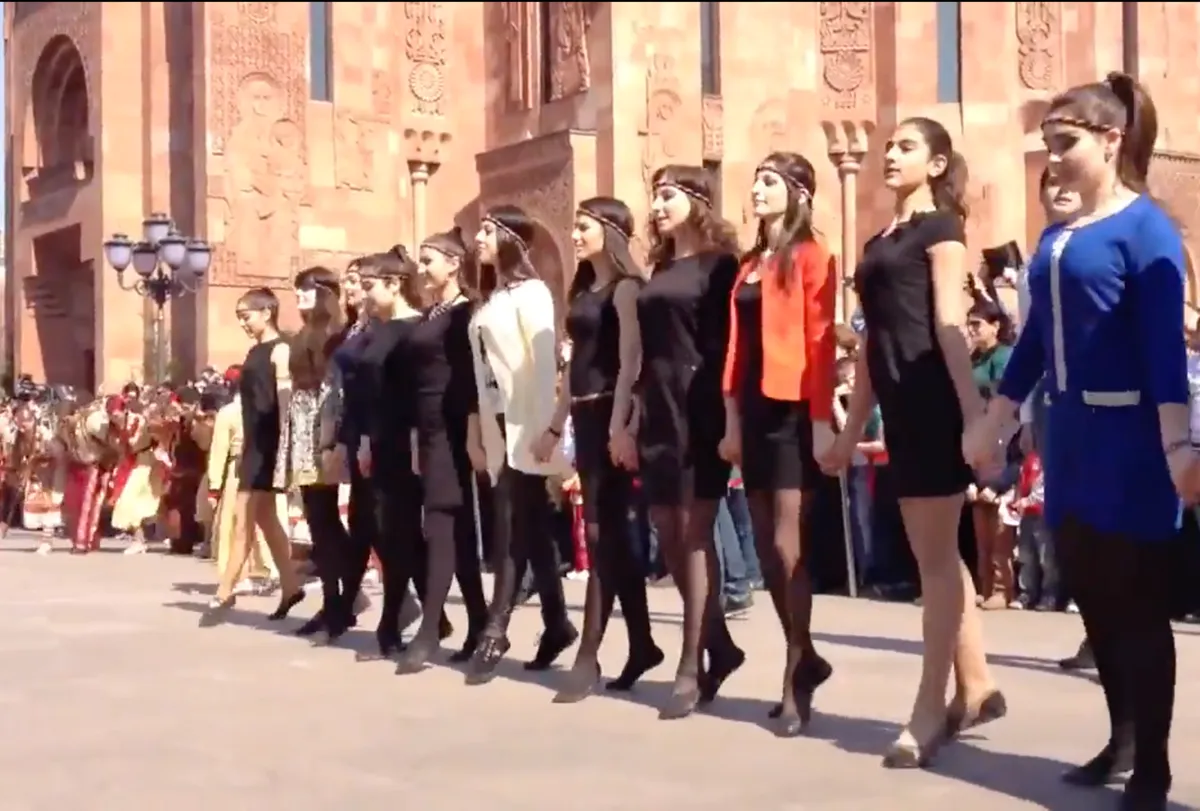 Kochari: History, Steps, and Memory of an Emblematic DanceDiscover Kochari, a circle dance born in the Armenian highlands, from its unique movements to its inscription on UNESCO's cultural heritage list.
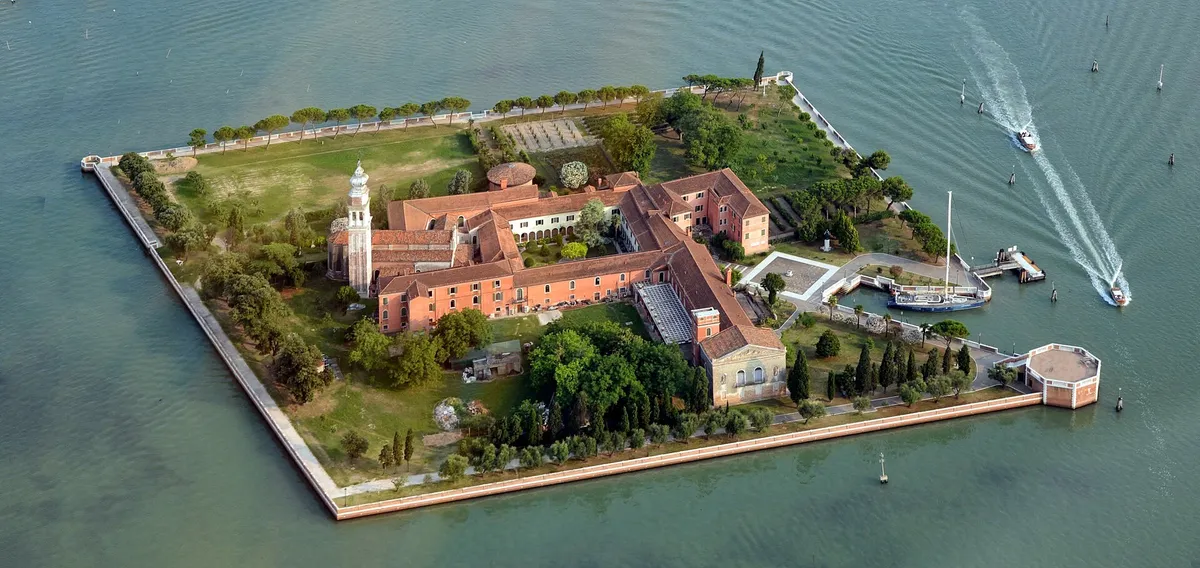 The Mechitharist Fathers of Venice and Vienna: Three Centuries in the Service of Armenian LettersDiscover the history and cultural influence of the Mechitharist Fathers, guardians of the Armenian language from Venice to Vienna.