William Saroyan, the Warm and Universal Voice of Armenian Memory
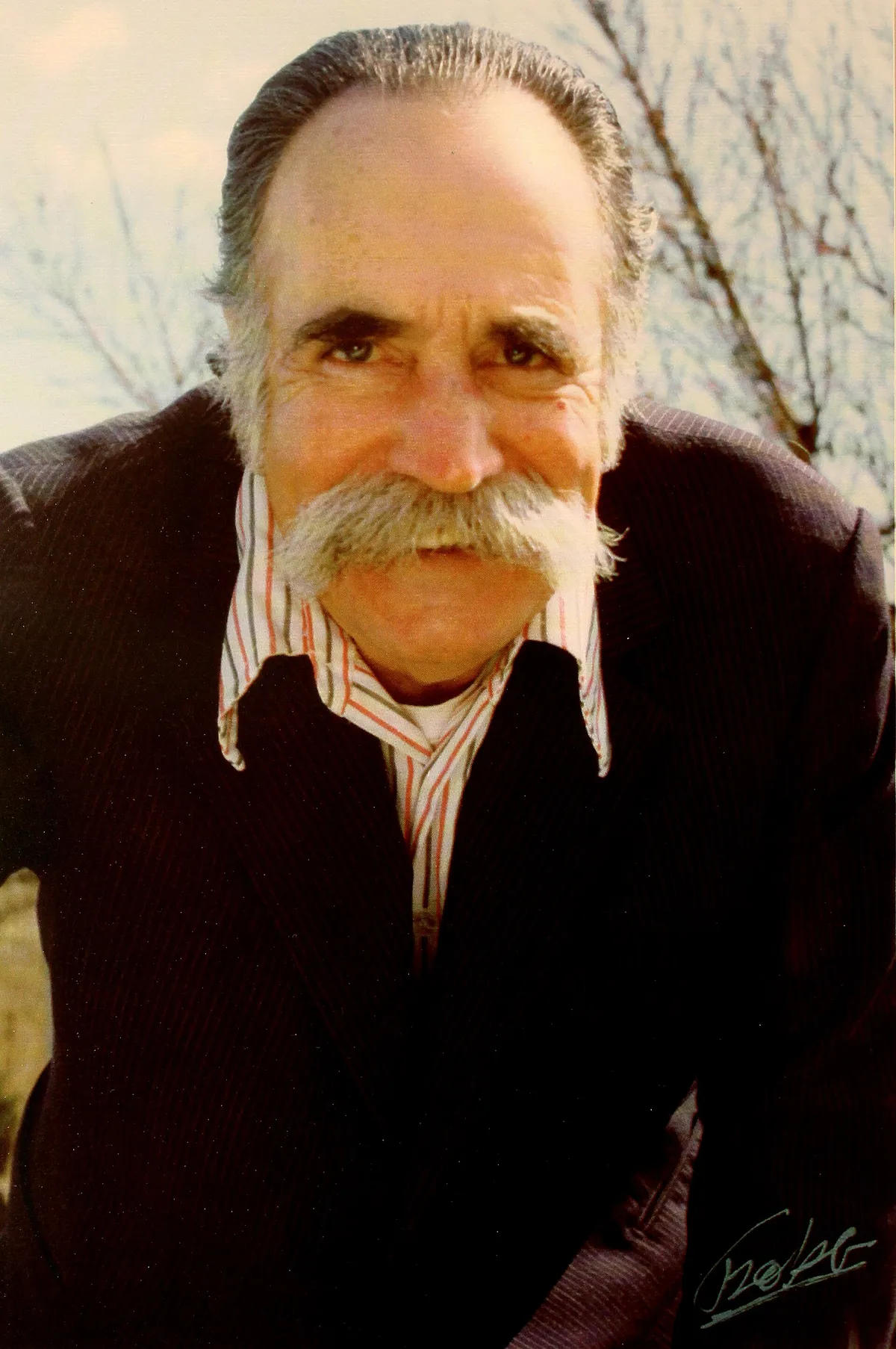
Born on August 31, 1908, in Fresno, in the heart of California, William Saroyan became one of the most singular voices of 20th-century literature. The son of Armenian immigrants from Bitlis—where his father observed that life had become impossible for Armenians—he drew from the history of his community and the landscapes of the San Joaquin Valley the lifeblood of a vibrant, generous writing imbued with a deep sense of human brotherhood.
From the Trials of Childhood to Literary Awakening
William Saroyan's life began under the sign of uprooting and hardship. His father, Armenak Saroyan, a poet and former candidate for the Presbyterian ministry who became a farm laborer in the United States, died prematurely in 1911. At just three years old, the young boy was placed with his brother Henry and his sisters Zabel and Cosette in an orphanage in Oakland and Alameda. His mother Takoohi gave him a doll named Coon Jiger, a modest yet unforgettable object that would later embody, in his stories, comfort and maternal presence.
Five years passed before the family could finally reunite in Fresno, where his mother found a job in a cannery. Saroyan left school at fifteen after learning typing at a technical school. But the turning point came one day in 1922: his mother handed him manuscripts and notebooks written in Armenian by his late father. Discovering that Armenak wrote verses in the language of their ancestral homeland, the young man decided to pursue a literary calling of his own. Working as a messenger or clerk for the San Francisco Telegraph Company, then as a seasonal worker in orchards and vineyards, he educated himself as a tireless autodidact.
First Stories and American Acclaim
His first publications appeared in the Armenian press. In 1933, the Boston magazine Hairenik published his short story "The Broken Wheel" under the pseudonym Sirak Goryan. The following year, William Saroyan made a sensational breakthrough on the American national stage with "The Daring Young Man on the Flying Trapeze," published in Story magazine. This story portrays a young writer, starved and destitute in the face of the Great Depression's adversity, yet never giving in to bitterness.
Saroyan quickly established himself as a prolific author, honored six times with the O. Henry Award between 1934 and 1963. In 1940, his collection My Name Is Aram achieved immense international success: through the eyes of a child, he depicted the colorful spirit, pride, and picturesque customs of Fresno's Armenian community.
In the theater, his originality upended traditional dramatic conventions. In 1939, his play My Heart's in the Highlands triumphed on Broadway. That same year, he wrote The Time of Your Life in just six days, which earned him the prestigious Pulitzer Prize for Drama in 1940. True to his independent spirit, the author rejected the award, pointedly asserting that commerce had no business judging or patronizing the arts. Later, his writing captivated Hollywood: his screenplay for The Human Comedy, which he adapted into a novel in 1943, earned him the Academy Award for Best Story.
An Unwavering Attachment to Ancestral Roots
Although drafted into the U.S. Army in 1942 and stationed in London, where his pacifist novel The Adventures of Wesley Jackson nearly brought him before a court-martial, Saroyan never lost the intimate bond linking him to his heritage. With his cousin Ross Bagdasarian, he drew inspiration from a traditional Armenian song to write the hit song "Come On-a My House," immortalized in 1951 by Rosemary Clooney. A multifaceted artist, he also created abstract expressionist paintings that were exhibited in New York.
Armenia remained the enduring beacon of his sensibility. William Saroyan visited Soviet Armenia four times starting in 1935. In 1964, he undertook a memorable pilgrimage to Bitlis, the land of his ancestors, a journey that inspired his 1975 play of the same name. Even when he settled in Paris beginning in 1958, in his apartment at 74 rue Taitbout where he would write his memoirs Letters from 74 rue Taitbout, the writer maintained this warm devotion to his people and his contemporaries, mingling with figures such as Charlie Chaplin, George Bernard Shaw, and Yeghishe Charents.
The Living Memory of a Great Creator
William Saroyan passed away on May 18, 1981, in Fresno at the age of 72. In accordance with his wishes, his ashes were divided between his two homelands: half rests in California at Ararat Cemetery in Fresno, and the other half in Armenia at the Komitas Pantheon in Yerevan, alongside illustrious figures such as composer Aram Khachaturian, painter Martiros Saryan, and filmmaker Sergei Parajanov.
The playwright's mark remains alive everywhere. In 2008, an imposing statue created by David Yerevantsi alongside architects Ruben Asratyan and Levon Igityan was erected on Mashtots Avenue in Yerevan. On August 31, 2018, his final home in Fresno, located at 2729 W. Griffith Way, officially opened its doors as a museum dedicated to his daily life and manuscripts.
To carry forward this passion for artistic dialogue and theatrical expression that so animated William Saroyan, lovers of culture and drama are invited to Beirut on November 27, 2026, to attend the event "Avetis Khachatrian - Theatre of Emotions".
Don’t miss : Avetis Khachatrian - Theatre of Emotions — Friday, November 27, 2026, Beyrouth
Sources
- William Saroyan (Wikipedia fr)
- William Saroyan (Wikipedia en)
- Վիլյամ Սարոյան (Wikipedia hy)
- Сароян, Уильям (Wikipedia ru)
Texts from Wikipedia (CC BY-SA 4.0) and Wikisource (CC BY-SA 3.0), used as sources.
Written with an AI tool from the sources cited and checked by our editors; translated automatically from the reviewed French text.
Read next
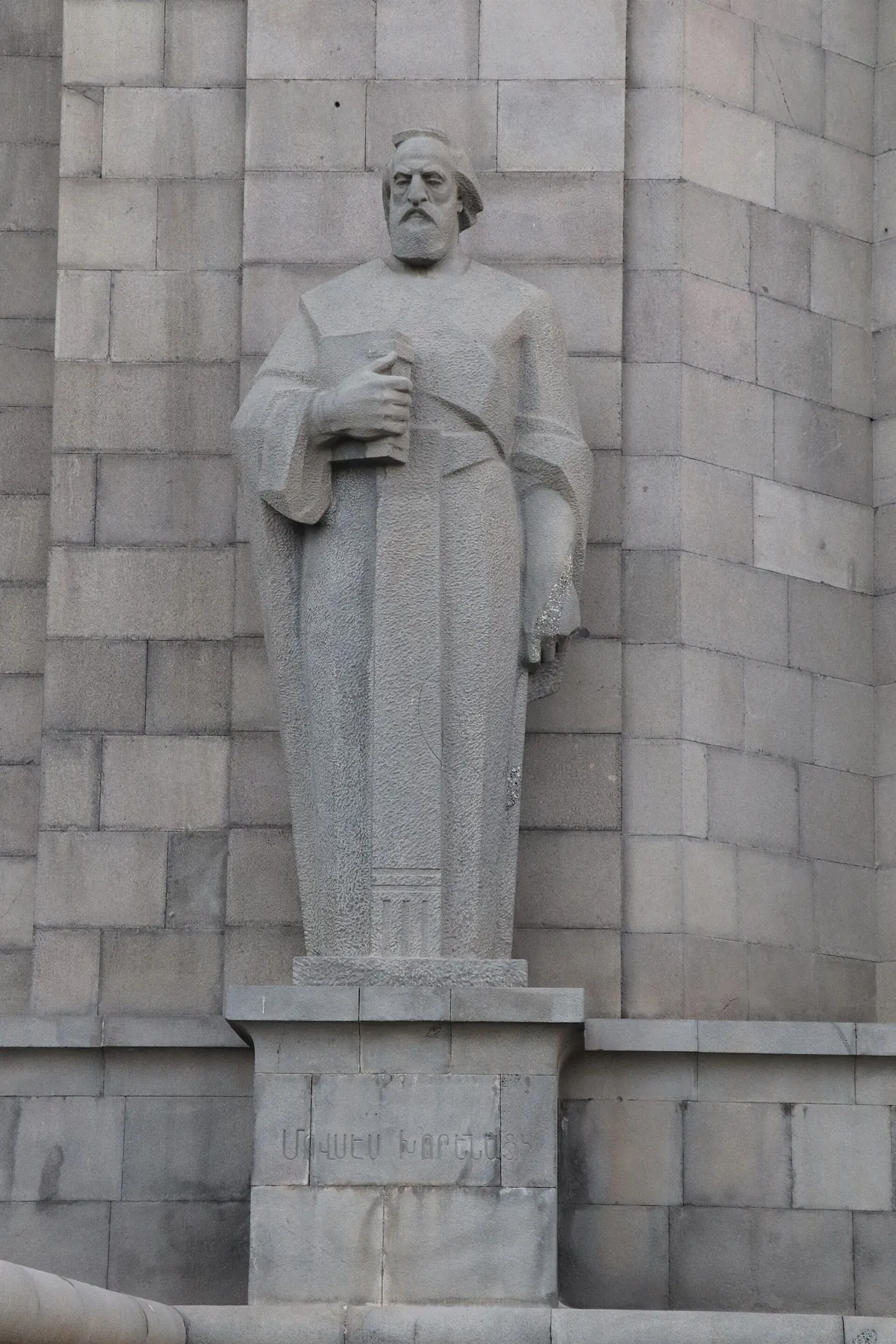 Moses of Chorene: The Founding Father of Armenian HistoriographyDiscover Moses of Chorene, the 5th-century Patmahayr whose History of Armenia immortalized the origins and memory of the Armenian people.
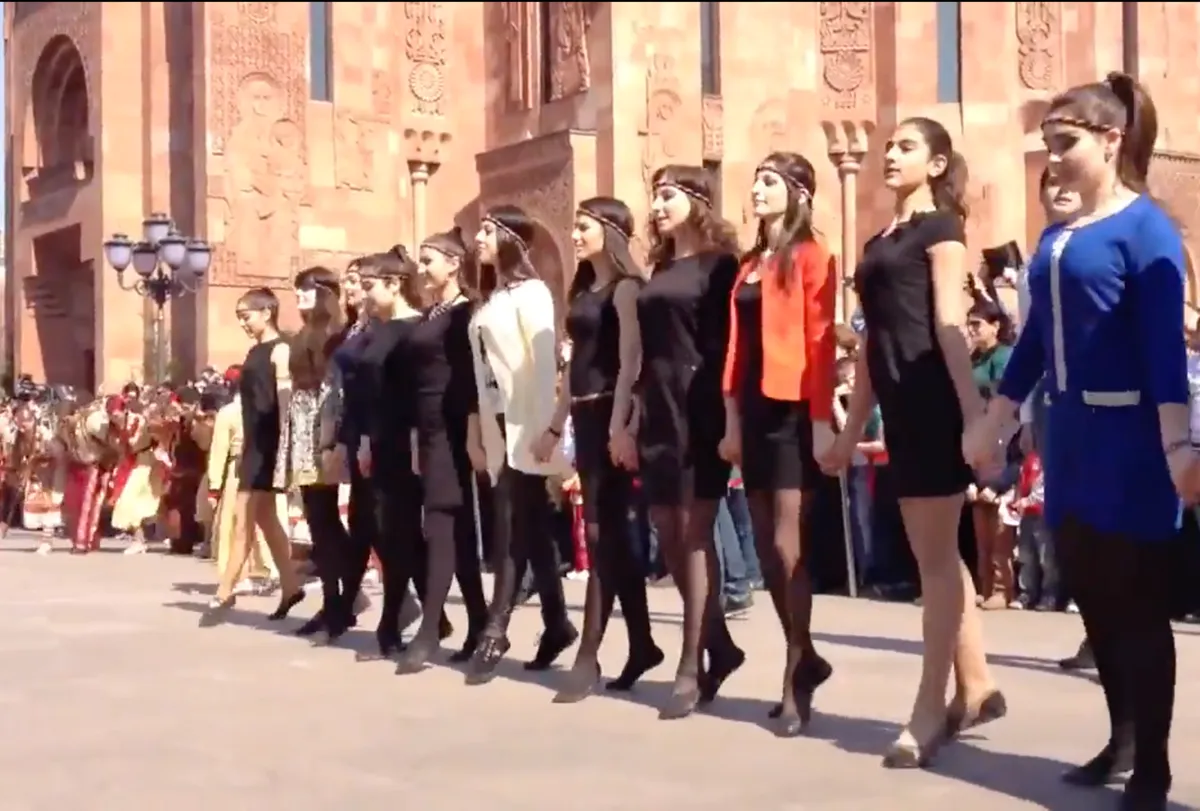 Kochari: History, Steps, and Memory of an Emblematic DanceDiscover Kochari, a circle dance born in the Armenian highlands, from its unique movements to its inscription on UNESCO's cultural heritage list.
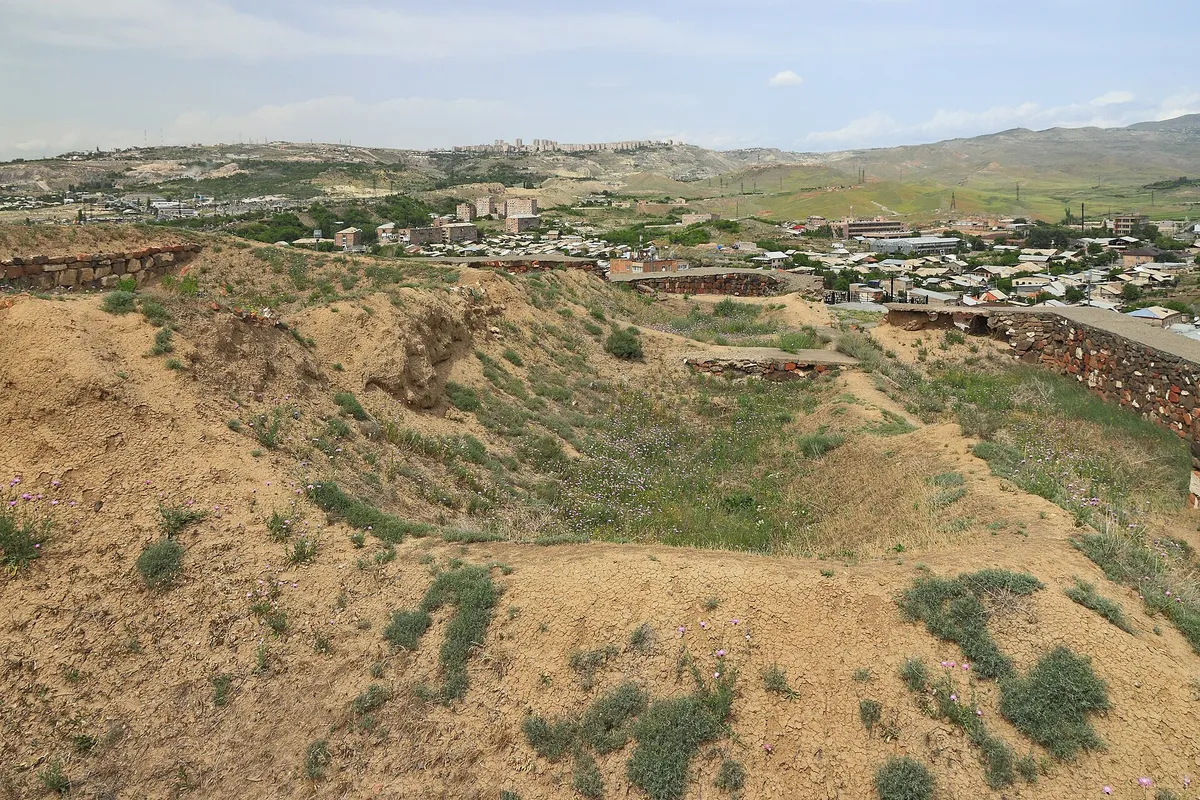 Erebuni Fortress and the Dawn of YerevanFounded in 782 BC by King Argishti I on Arin Berd hill, the Urartian fortress of Erebuni is the historical birthplace of Yerevan.