Erebuni Fortress and the Dawn of Yerevan
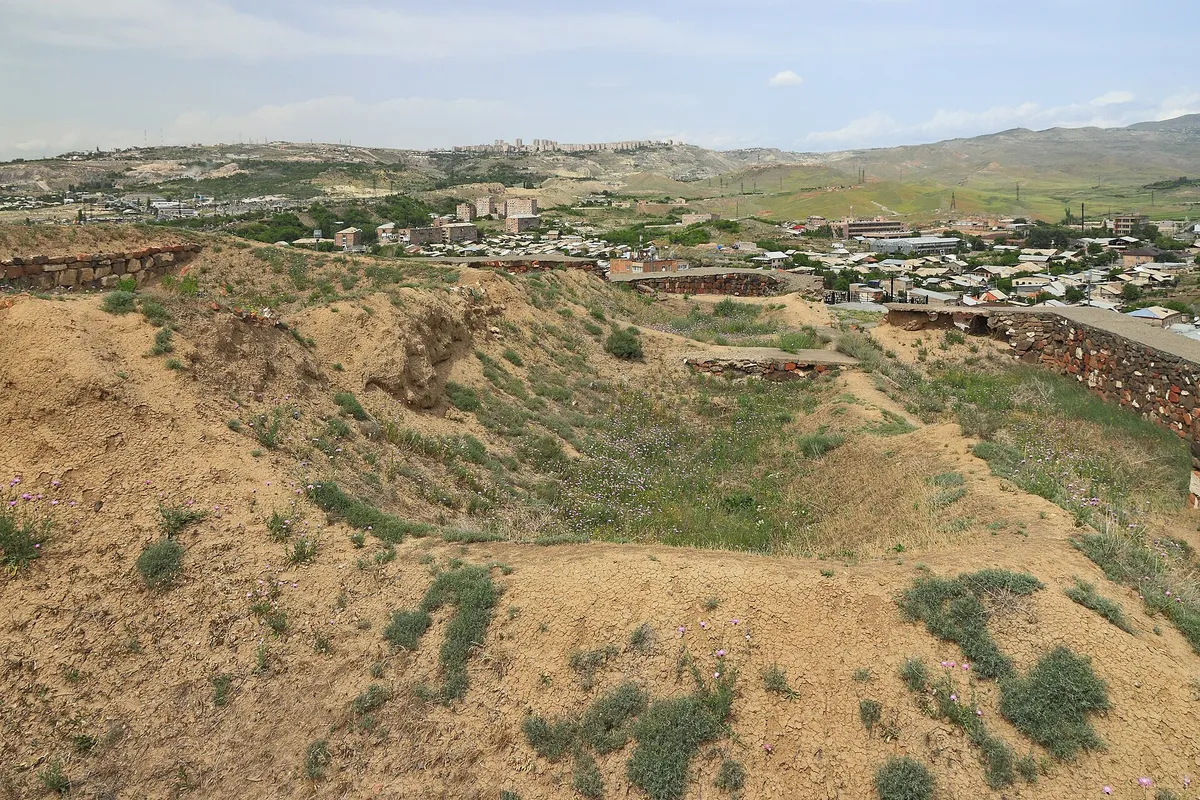
Perched at an altitude of 1,017 meters atop Arin Berd hill in the suburbs of Yerevan, Erebuni Fortress stands as a striking testament to the grandeur of the Urartian civilization. Recognized by Forbes magazine as one of the nine oldest fortresses in the world, this fortified city overlooks the Ararat plain and the Arax Valley. It bears the roots of the Armenian capital, which derives its name from this ancient stronghold.
The Birth Certificate Carved in Basalt
In 782 BC, the King of Urartu, Argishti I, son of Menua, ordered the construction of Erebuni. At that time, the kingdom of Biainili (Urartu) was at its height and had established itself as a major power in the Near East. Anxious to secure his northern border and consolidate the Urartian presence against resistance from the land of Aza, the monarch transformed this arid land into a prominent administrative, military, and religious center.
The annals of Argishti, recorded at Tushpa (modern-day Van), as well as several basalt slabs discovered at the Arin Berd site, provide the details of this foundation. To build and populate the fortress, the king settled 6,600 captives from the regions of Khate and Tsupani there. The cuneiform text solemnly declares that this mighty citadel was proclaimed Erebuni "for the glory of Biainili and to instill fear in the king's enemies." Linguists link the Urartian term erebu-ni to the concept of conquest or victory, thus sealing the etymological origin that would lead to the name Yerevan, a connection highlighted by philologist Grigor Ghapantsyan.
A Rigorous Urban and Military Design
Spanning an overall area of two hundred hectares, the ancient settlement combined residential quarters spread out at the foot of the hill with an imposing eight-hectare triangular citadel at its 65-meter-high summit. Urartian engineering is particularly evident in the water supply system: an underground network of interlocking stone pipes, with an outer diameter of forty centimeters, channeled water from the springs of the Garni Mountains, located seven kilometers away. Meanwhile, a paved drainage system carried away rainwater.
To construct the walls, the top of the hill was artificially leveled. The ramparts, supported every eight meters by five-meter-wide buttresses, reached heights of up to twelve meters in places. They rested on a two-meter socle of large basalt and tuff blocks, surmounted by an elevation of adobe bricks made with chopped straw in two specific sizes (notably 32.3 × 47.4 × 12.5 cm and 47.4 × 47.4 × 12.5 cm). An external paved walkway ran along the wall, facilitating patrols for the garrison and reinforcing the base.
Palaces, Sanctuaries, and Vibrant Frescoes
The interior of the citadel was organized around a large palace complex and sacred spaces. To the left of the main entrance lay the royal palace, arranged around a colonnaded courtyard, featuring a throne room preceded by three vestibules, as well as vast storerooms. Erebuni housed spectacular storage reserves. Several cuneiform inscriptions, including those left by King Sarduri II, son of Argishti, commemorate the creation of granaries holding more than 24,100 kapis of grain, while dozens of giant jars (karases) stored wine and barley beer.
The spiritual dimension held a central role, marked by two major edifices: The Temple of the God Khaldi: the largest partially preserved Urartian sanctuary, featuring a tower resembling a small ziggurat, a peristyle courtyard lined with twelve columns, and a floor paved with wooden planks. The Temple of Susi: a forty-square-meter rectangular sanctuary dedicated to the deity Ivarsha, bearing inscriptions of Argishti I and associated with the resettled populations.
Excavations uncovered magnificent wall paintings on a blue background, miraculously preserved. These monumental frescoes depict processions of deities, trees of life, sacred animals, as well as the god Khaldi standing on a lion, alongside scenes of agriculture and hunting.
From Urartian Retreat to Archaeological Resurrection
Following the defeat of Sarduri II by the Assyrian king Tiglath-Pileser III in 735 BC and subsequent Cimmerian incursions, Urartu weakened. In the mid-6th century BC, the Urartians peacefully evacuated Erebuni to transfer their wealth to the neighboring site of Teishebaini. This absence of violent destruction allowed for the exceptional preservation of the structures. During the Achaemenid era, the site became a stronghold of the satrapy of Armenia: the Temple of Khaldi was converted into an apadana, the Temple of Susi into a fire temple, and two coins minted in Miletus along with splendid silver rhytons were uncovered there.
The modern history of the site began in 1894 with the purchase by researcher Alexei Ivanovsky of a cuneiform stone found in 1879 by local resident Papak Ter-Avetisov, a text published by Mikhail Nikolsky. Surveys by Boris Piotrovsky in 1947 led to systematic excavation campaigns starting in 1950 under the direction of Konstantine Hovhannisyan. On October 25, 1950, the unearthing of the foundation inscriptions confirmed the location of the ancient city, a certainty definitively sealed in 1958 by the discovery of an intact inscription within the original wall.
In September 1968, celebrations marking the 2,750th anniversary of Erebuni formalized the commemoration of Yerevan's venerable age, materialized by the opening of the Erebuni Museum at the foot of Arin Berd hill.
Sources
- Erebouni (Wikipedia fr)
- Erebuni Fortress (Wikipedia en)
- Էրեբունի ամրոց (Wikipedia hy)
- Эребуни (Wikipedia ru)
Texts from Wikipedia (CC BY-SA 4.0) and Wikisource (CC BY-SA 3.0), used as sources.
Written with an AI tool from the sources cited and checked by our editors; translated automatically from the reviewed French text.
Read next
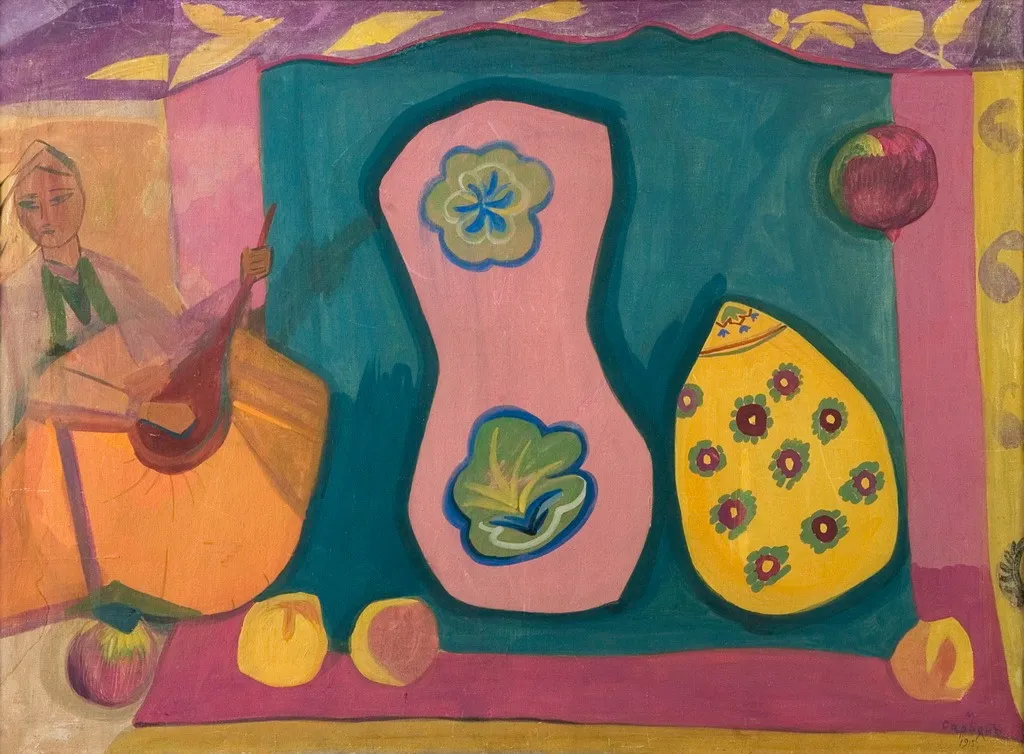 Martiros Saryan, the Master Who Painted the Soul and Light of ArmeniaA founding figure of modern Armenian painting, Martiros Saryan devoted his life to capturing the light of his homeland and building its cultural rebirth.
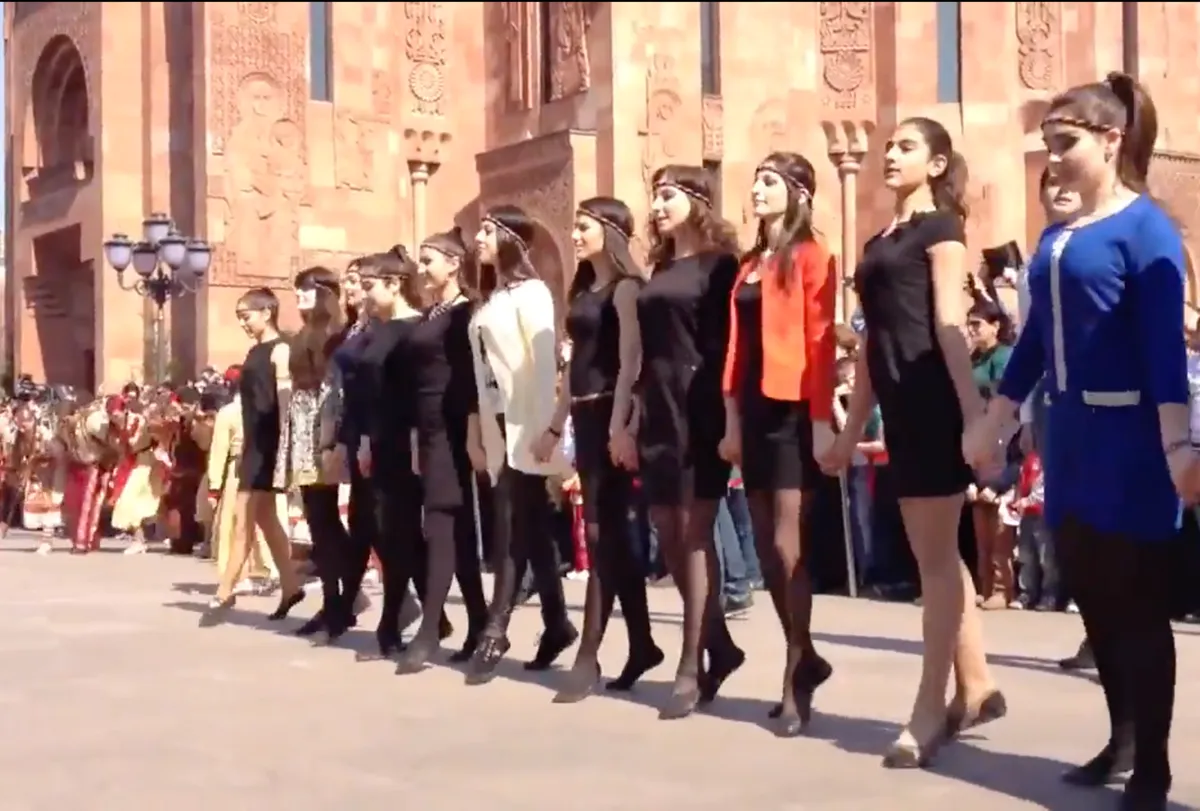 Kochari: History, Steps, and Memory of an Emblematic DanceDiscover Kochari, a circle dance born in the Armenian highlands, from its unique movements to its inscription on UNESCO's cultural heritage list.
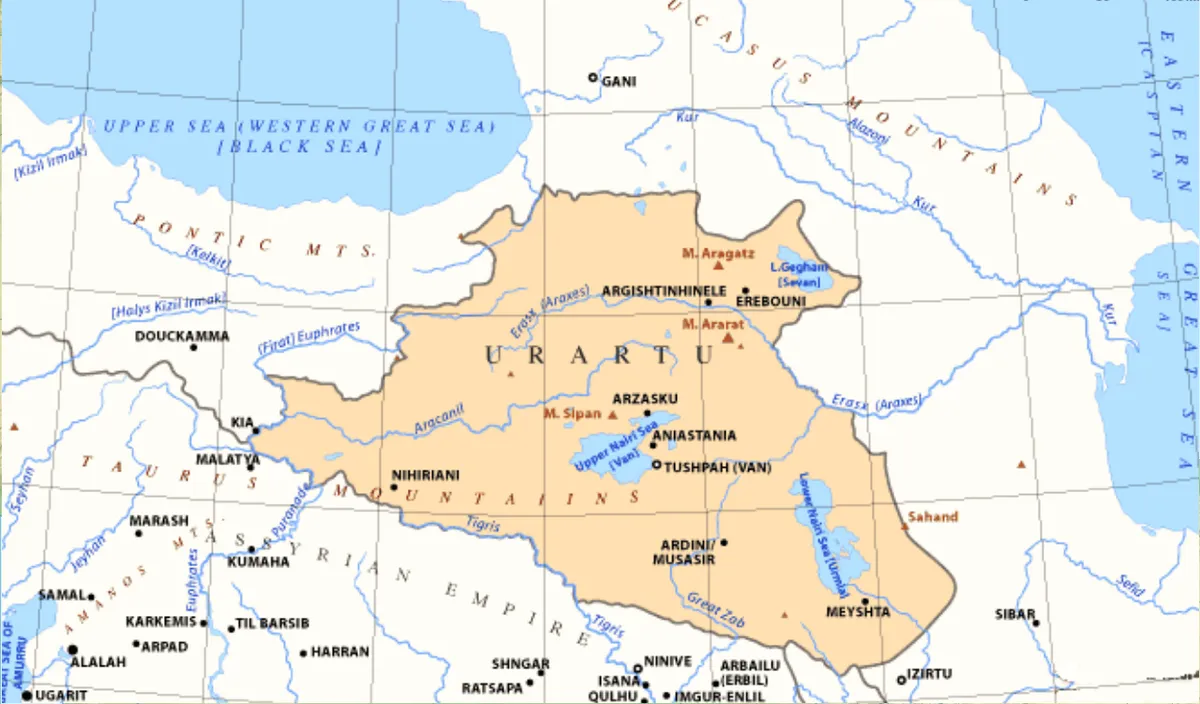 Urartu, Sovereign Power and Cradle of the Armenian HighlandsHistory, architecture, and influence of the Kingdom of Urartu, or Biaineli, a major Iron Age power centered around Lakes Van, Sevan, and Urmia.