Toros Roslin and the Apogee of Cilician Illumination
In the 13th century, the Armenian Kingdom of Cilicia experienced an unprecedented cultural flourishing. At the heart of this effervescence, the fortress of Hromgla, which became the seat of the Armenian Patriarchate in 1151, housed a particularly renowned scriptorium. It was in this scriptorium, under the patronage of Catholicos Constantine I Bardzrberdtsi (who held office from 1221 to 1267), that Toros Roslin (c. 1210 – c. 1270) distinguished himself. Recognized as the most prominent representative of classical medieval Armenian miniature painting, this master of color and line elevated the Cilician art of the book to unmatched technical and spiritual virtuosity.
A Master at the Crossroads of Traditions and Royal Power
Although Toros Roslin's life remains shrouded in obscurity, the colophons he scattered throughout his manuscripts offer precious insights into his journey and the history of his time. Likely trained at Hromgla under renowned predecessors such as Kirakos or Hovhannes, Roslin later directed the patriarchal scriptorium. In his earliest surviving book, the Zeytun Gospels completed in 1256, he signed "Toros, called Roslin." The origin of this surname, unusual in Armenian society at the time, has sparked various hypotheses. Professor Levon Chookaszian has suggested a connection with Henry de Saint-Clair, Baron of Roslin, who took part in the First Crusade in 1096 alongside Godfrey of Bouillon and may have married an Armenian woman. Others trace the name to the Middle High German roeslin, meaning "little rose."
In his writings, Toros asks that his teachers be remembered in prayer and also mentions his brother, Anton. In 1260, he mentions his son—an indication that leads historians to believe he was a priest, as monks did not start families and laymen rarely practiced this profession. Working at the pinnacle of the social and religious hierarchy, Roslin worked directly for the kingdom's great patrons: Constantine I, King Hethum I, Queen Zabel, and Prince Levon. He painted the latter's portrait as early as 1250, when Levon was an adolescent, and again in 1262 on the occasion of his marriage to Keran of Lampron, thus contributing to the rise of Cilician royal portraiture.
The Seven Signed Manuscripts, Treasures Scattered Across the World
Seven manuscripts signed by Toros Roslin between 1256 and 1268 have survived to this day. Five of them were both calligraphed and illuminated by his hand:
- The Zeytun Gospels (1256, Ms. 10450): produced for Constantine I, it is preserved at the Matenadaran in Yerevan, with its first seven folios held at the J. Paul Getty Museum in Los Angeles. - The Gospels of 1260 (Ms. 251): executed at Hromgla for the same Catholicos, it belongs to the Armenian Patriarchate of Jerusalem. - The Sebastia Gospels (1262, Ms. 539): preserved at the Walters Art Museum in Baltimore, this uncial manuscript, commissioned by the priest Toros (nephew of the Catholicos), features exceptionally rich ornamentation with fifteen miniatures and dozens of marginal illustrations. - The Gospels of 1262 (Ms. 2660): commissioned by Prince Levon, copied in Sis by the scribe Avetis, painted by Toros at Hromgla, and bound by Arakel Hnazandents. It is kept in Jerusalem. - The Gospels of 1265 (Ms. 1965): intended for Keran, daughter of Constantine of Lampron, who withdrew from the world following the death of her husband, the lord of Servandakar. It is also in Jerusalem. - The Mashtots Ritual (1266, Ms. 2027): commissioned by Bishop Vardan of Hromgla, copied in Sis by Avetis, and painted at Hromgla by Roslin. It remains at the Patriarchate of Jerusalem. - The Malatia Gospels (1268, Ms. 10675): created for Prince Hethum, this treasure, now in the Matenadaran, was presented by Patriarch Yeghishe Derderian to Catholicos Vazgen I. In it, Toros solemnly reflects on the sack of Antioch by the Mamluk sultan Baybars.
To this definitive corpus are added attributed works, such as manuscript Ms. 8321 in Yerevan depicting Prince Levon beneath the liturgical fans of angels draped in pink and light blue, manuscript Ms. 5458 saved in Vaspurakan by the priest Hovhannes, and Ms. 32.18 at the Freer Gallery of Art in Washington, produced for Prince Vassak to commemorate the release of hostages brought back from Cairo in 1268 following the Battle of Mari.
An Iconographic and Formal Renewal
The art of Toros Roslin transcends the conventions of his time by introducing a keen sense of human observation and a pictorial language of astonishing freedom. Without renouncing the heritage of his predecessors, he enriched Armenian religious iconography with novel themes, such as the Incredulity of Saint Thomas or the Crossing of the Red Sea. In the Nativity scene of the 1260 Gospels, he pairs the enthroned Virgin with Saint Matthew positioned at the bottom of the page, while depicting the guards of the Magi with the features and attire of Mongols, then allies of King Hethum I.
Regarding the canon tables, Roslin innovated by incorporating busts of prophets—such as David, Moses, or Saint John the Baptist—and church figures like Eusebius and Carpianus, weaving a direct prophetic link with the Gospels. His graphic universe also unfolds a teeming bestiary: fantastical creatures, dog-headed or goat-headed men holding flowering branches, appearing alongside peacocks and parrots to form the vegetal or zoomorphic initials of the pericopes.
His palette is distinguished by a subtle application of tones, chromatic harmony enhanced with gold, and nuanced gradations that create a spatial depth unprecedented for the 13th century. The faces and postures of his figures are animated by a rare psychological truth, where sacred drama is expressed with noble restraint.
The Legacy and Posterity of a Medieval Master
Following the cessation of activities at the Hromgla scriptorium in the 1270s, Toros Roslin's name did not reappear in sources until the late 17th century, when a scribe named Mikayel copied an evangeliary of the "celebrated scribe Roslin" in Sebastia.
In the 20th century, his genius was brought back to light by art historians, foremost among them Sirarpie Der Nersessian, who devoted a monumental chapter to his work in her study on Cilician illumination, highlighting the expressive accuracy of his figures. Contemporary painters drew constant inspiration from his creations. In 1944, the Armenian-born artist Arshile Gorky wrote to his sister of his boundless admiration, describing him as a seminal figure comparable to the Renaissance in his sense of dimension and intensity.
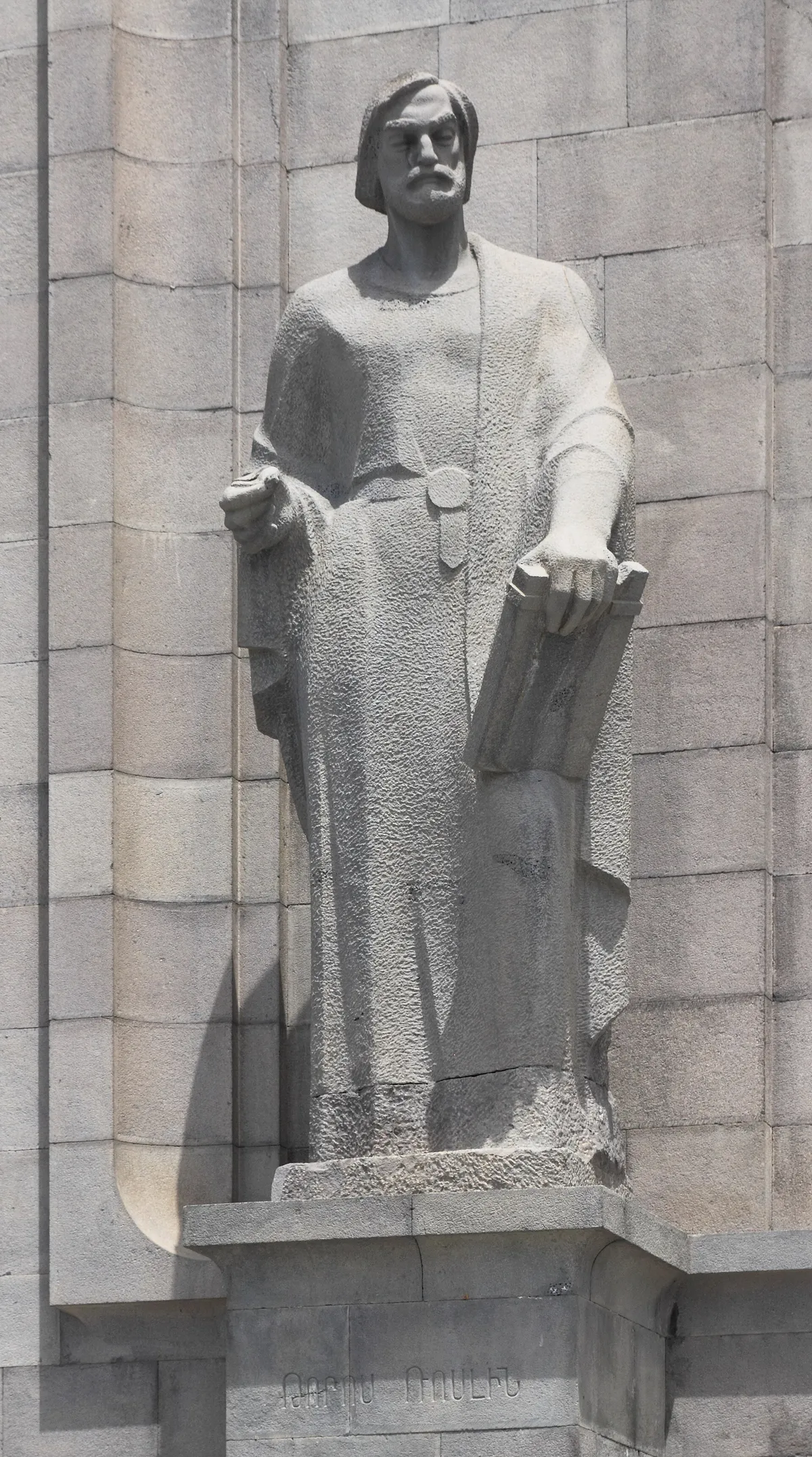
The memory of Toros Roslin remains alive: since 1967, a 3.4-meter-tall basalt statue sculpted by Arsham Shahinyan according to plans by architect Mark Grigoryan has stood guard at the entrance to the Matenadaran in Yerevan. In 1981, the Hamazkayin Armenian Educational and Cultural Society named its academy of fine arts in Beirut in his honor, thus perpetuating the memory of the Cilician master within the national consciousness.
Sources
- Toros Roslin (Wikipedia fr)
- Toros Roslin (Wikipedia en)
- Թորոս Ռոսլին (Wikipedia hy)
- Торос Рослин (Wikipedia ru)
- ՀՍՀ/ԹՈՐՈՍ ՌՈՍԼԻՆ (ՀՍՀ, Wikisource)
- Digitized Gospel by Toros Roslin (1262 AD) (PeopleOfAr)
Texts from Wikipedia (CC BY-SA 4.0) and Wikisource (CC BY-SA 3.0), used as sources.
Written with an AI tool from the sources cited and checked by our editors; translated automatically from the reviewed French text.
Read next
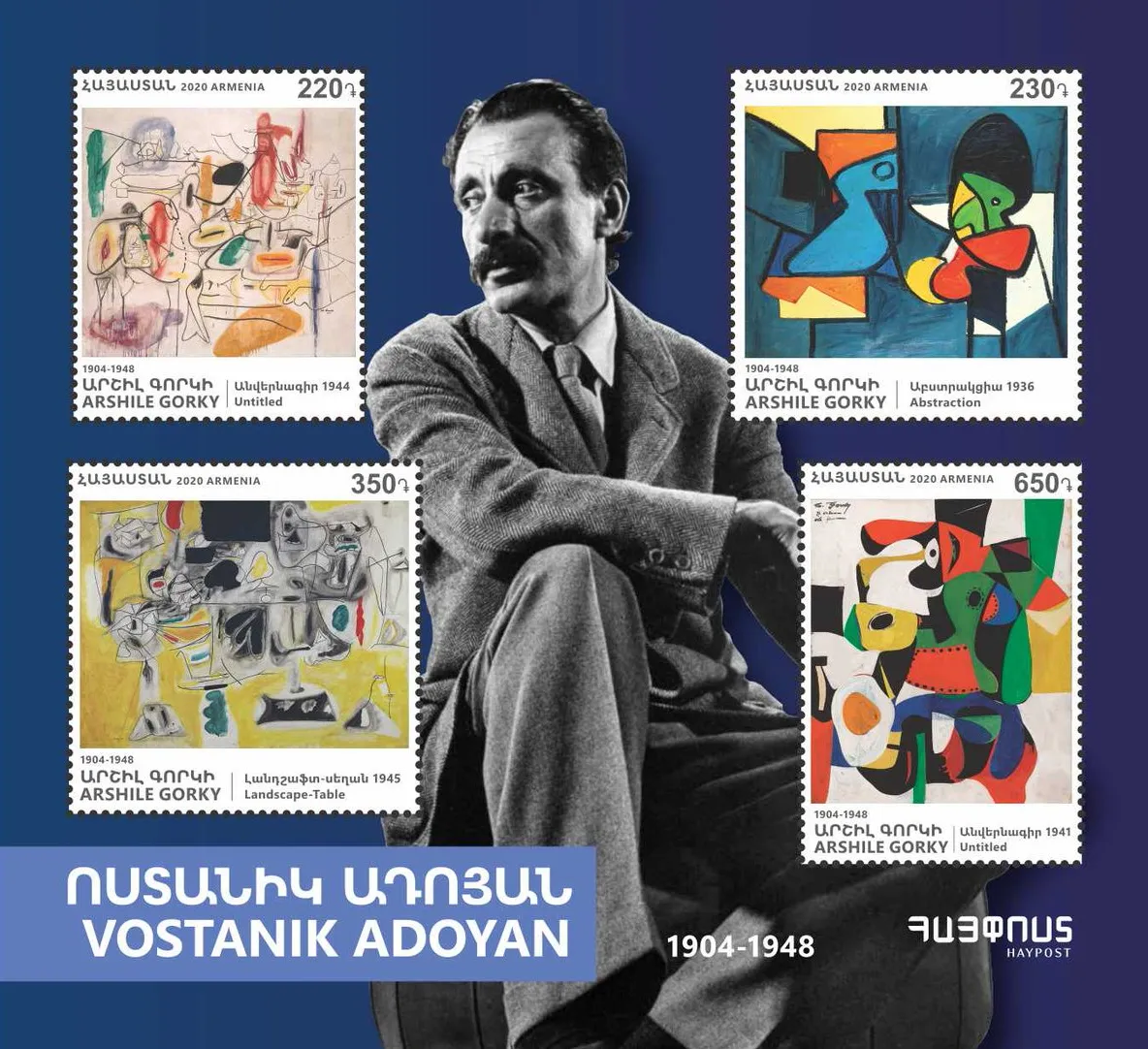 Arshile Gorky: From the Land of Van to the Heights of Modern ArtA look back at the trajectory of Arshile Gorky, an Armenian-American pioneer of Abstract Expressionism, between intimate memory and painterly revolution.
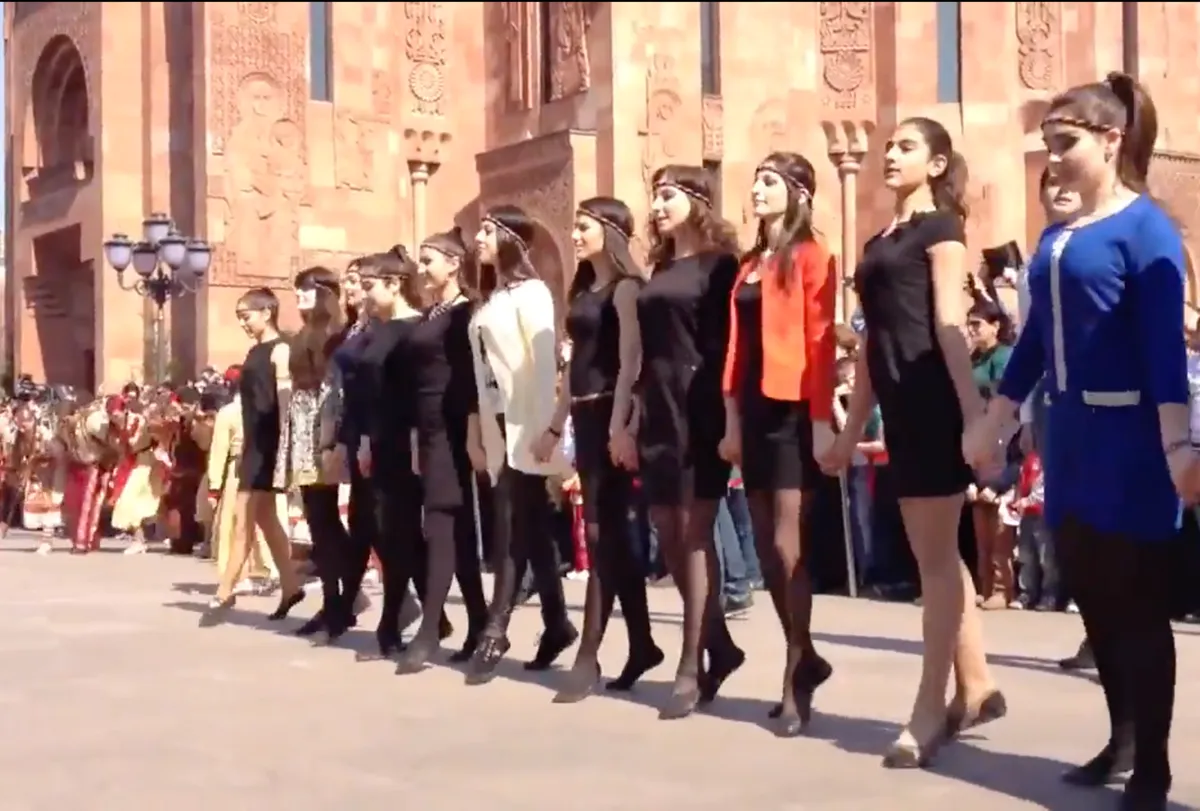 Kochari: History, Steps, and Memory of an Emblematic DanceDiscover Kochari, a circle dance born in the Armenian highlands, from its unique movements to its inscription on UNESCO's cultural heritage list.
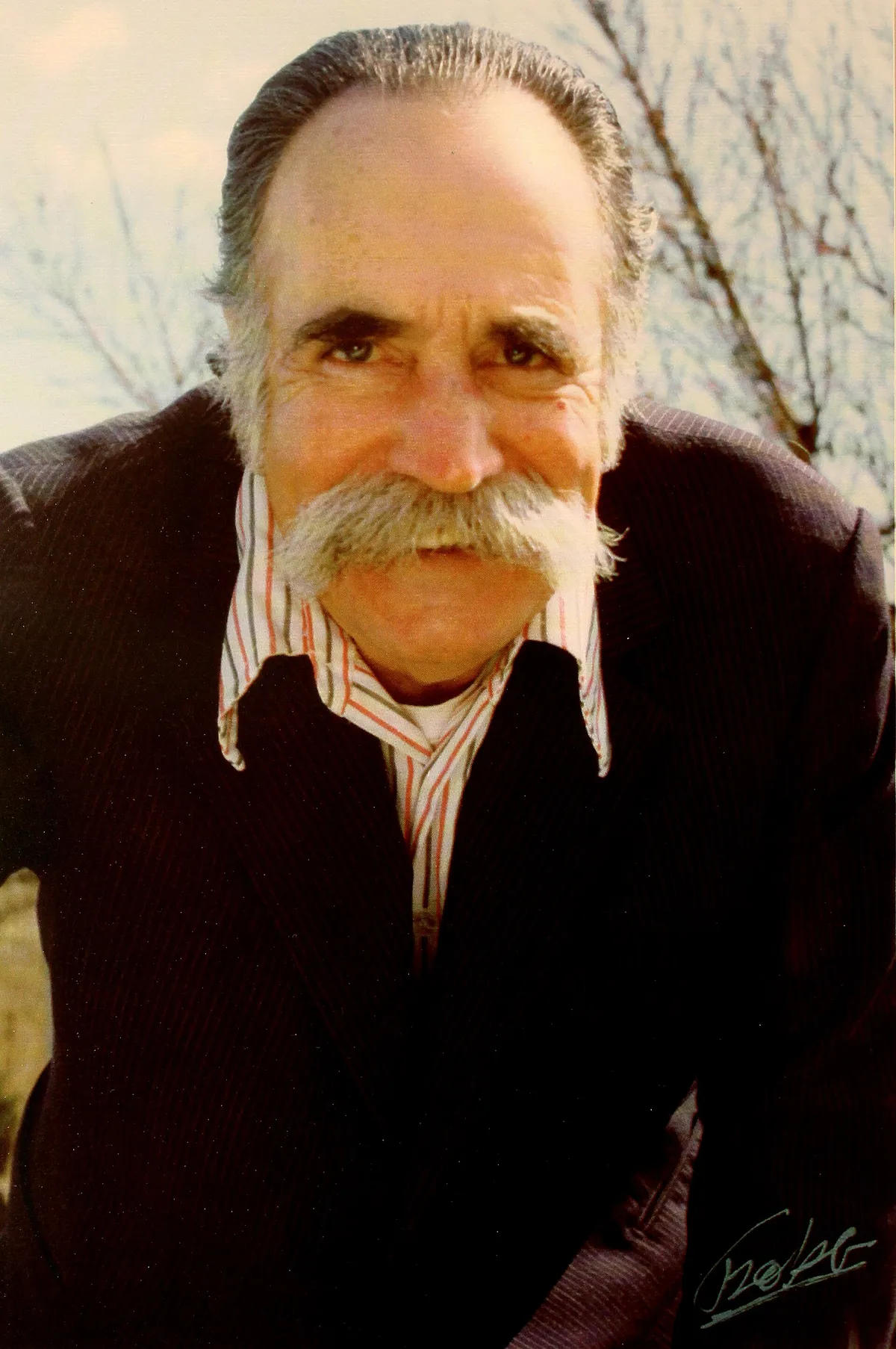 William Saroyan, the Warm and Universal Voice of Armenian MemoryFrom the San Joaquin Valley to Broadway stages, William Saroyan built a body of literary work deeply rooted in his heritage and the Armenian soul.