Arshile Gorky: From the Land of Van to the Heights of Modern Art
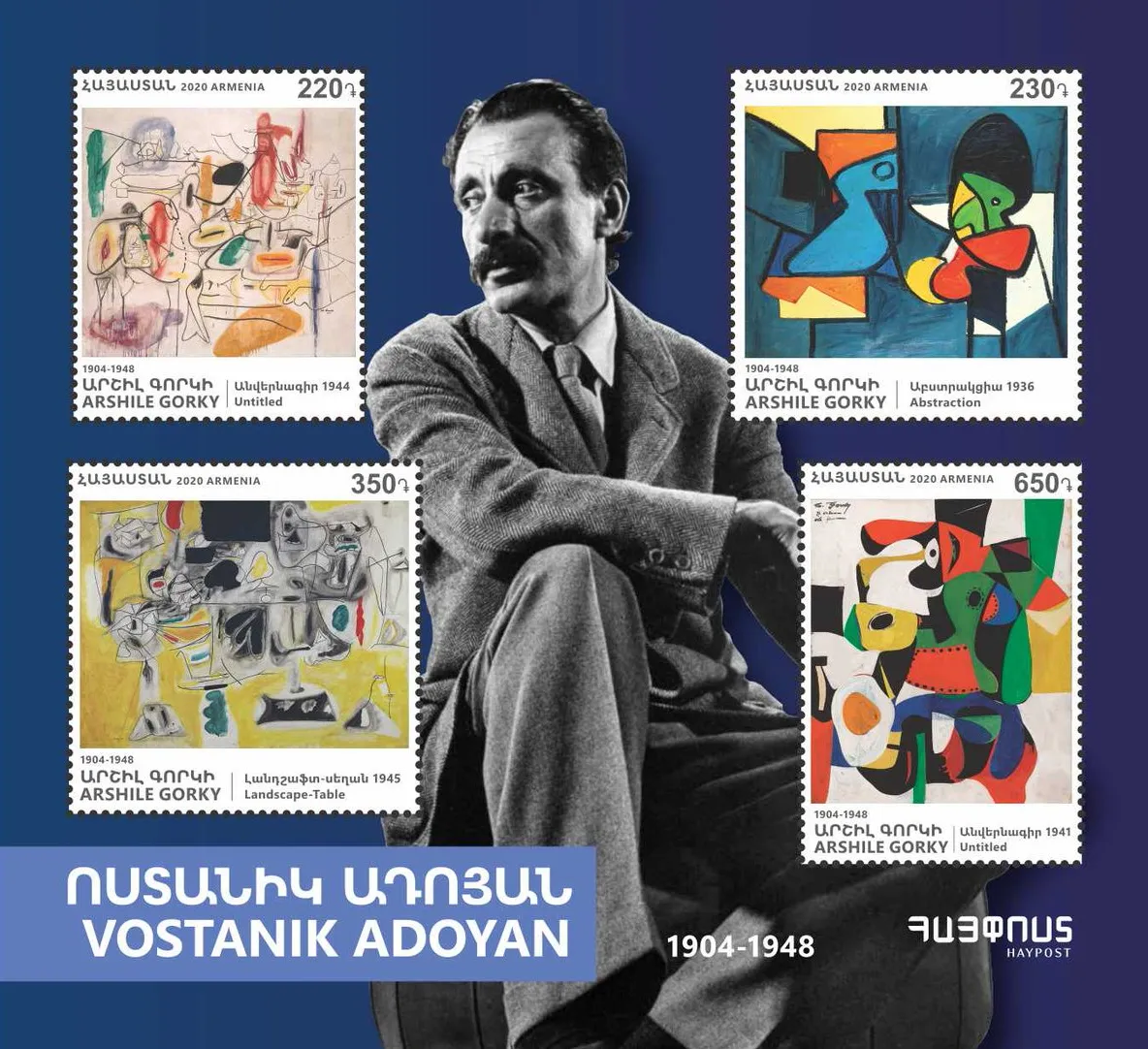
Recognized by international critics as a major figure in 20th-century art, Arshile Gorky left a profound mark on the history of painting. Alongside artists such as Willem de Kooning, Jackson Pollock, and Mark Rothko, he established himself as one of the essential initiators of Abstract Expressionism and lyrical abstraction. Yet, his innovative visual language was rooted in the landscapes of his childhood and the trials of Armenian exile.
From Khorkom to America: Shattered Childhood and Exile
Arshile Gorky was born Vosdanik Manoug Adoian on April 15, 1904, in the village of Khorkom, located on the shores of Lake Van in the Ottoman Empire. Very early on, the household was marked by departures: in 1908, his father left the region for the United States to escape military conscription. Vosdanik received his early education in the schools of Khorkom and Van.
In 1915, in the face of the Armenian Genocide, he was forced to flee with his mother, Shushanik Ter-Martirosyan, and his sisters. The group found refuge in Russian-controlled Transcaucasia, passing through Etchmiadzin before settling in Yerevan. There, the young boy attended the diocesan school, where he studied drawing and wood engraving. These were tragic times: during the harsh winter of 1918–1919, his mother died of starvation and deprivation in Yerevan. Left to fend for himself with one of his sisters, he traveled through Tiflis and Batum before embarking for the New World in 1920. Arriving at the age of sixteen, he was reunited with his father in Boston, though the two men never managed to develop any real closeness.
The New York Forge and the Quest for a Style
First settling in Providence, Vosdanik enrolled at the Rhode Island School of Design, then at the New England School of Art in Boston. In 1924–1925, he moved to New York. It was during this period that he reinvented his public identity by adopting the pseudonym Arshile Gorky. He attended the Grand Central School of Art, where he taught drawing and painting from 1926 to 1931. Revington Arthur was among his students, and he forged strong friendships with other painters, notably Willem de Kooning and Stuart Davis, as well as Ethel Schwabacher, who would later become his first biographer.
Throughout the 1920s and early 1930s, his art assimilated the contributions of the European avant-garde. Gorky methodically studied Impressionism, Post-Impressionism, and then the work of Paul Cézanne and Pablo Picasso, before turning to Cubism and Surrealist automatism. In the mid-1930s, during the Great Depression, he benefited from New Deal government programs, notably the Federal Art Project, which commissioned him to create a series of murals for Newark Airport.
Armenian Memory at the Heart of Modernity
His firsthand experience of the genocide and reminiscences of his homeland formed a decisive element of his sensibility. From 1926 to 1936, he worked patiently on two versions of The Artist and His Mother, a double portrait inspired by a childhood photograph taken in Van, marked by the simplicity of its lines and the melancholy of a suspended dialogue.
Gradually, beginning in the 1940s, Gorky developed his singular style. His brushwork loosened to invent biomorphic forms, where sharp black lines intertwined with luminous washes of fluid color. This maturity found expression in famous works such as Garden in Sochi (initially conceived under the title Garden in Khorkom), Waterfall (1943), and How My Mother's Embroidered Apron Unfolds in My Life (1944). In 1944, Surrealist writer André Breton discovered his paintings in New York; captivated by The Liver is the Cock's Comb (1944), he called this monumental composition a landmark masterpiece of painting created in America and hailed the Armenian artist as a true Surrealist.
Final Trials and the Legacy of a Pioneer
Married in 1941 to Agnes Magruder, whom he affectionately nicknamed "Mougouch" and with whom he had two daughters, Maro and Natasha, Gorky saw the end of his life darkened by a succession of tragedies. In 1946, a devastating fire destroyed his studio, consuming his library and dozens of paintings. That same year, he underwent major surgery for cancer. In 1948, a car accident broke his neck and temporarily paralyzed his right arm, the very tool of his craft. Separated from his wife, and emotionally and physically exhausted, the artist took his own life by hanging on July 21, 1948, in Sherman, Connecticut, at the age of forty-four.
His contribution remains immense. By paving the way for two generations of New York School artists, Gorky enriched universal modern art while preserving, at the core of his abstraction, the indelible echo of his native land. Today, his works are preserved in the world's greatest museums, from the National Gallery of Art in Washington and the Centre Pompidou in Paris to Tate in London and the National Gallery of Armenia.
To further explore the vitality of journeys born of exile and examine together the transmission of our heritage, the community is invited to take part in the gathering "Diáspora en movimiento: una invitación a debatir el futuro de nuestra comunidad," which will take place on November 30, 2026, in Argentina.
Don’t miss : Diáspora en movimiento: una invitación a debatir el futuro de nuestra comunidad — Monday, November 30, 2026, Argentine
Sources
- Arshile Gorky (Wikipedia fr)
- Arshile Gorky (Wikipedia en)
- Արշիլ Գորկի (Wikipedia hy)
- Аршил Горки (Wikipedia ru)
Texts from Wikipedia (CC BY-SA 4.0) and Wikisource (CC BY-SA 3.0), used as sources.
Written with an AI tool from the sources cited and checked by our editors; translated automatically from the reviewed French text.
Read next
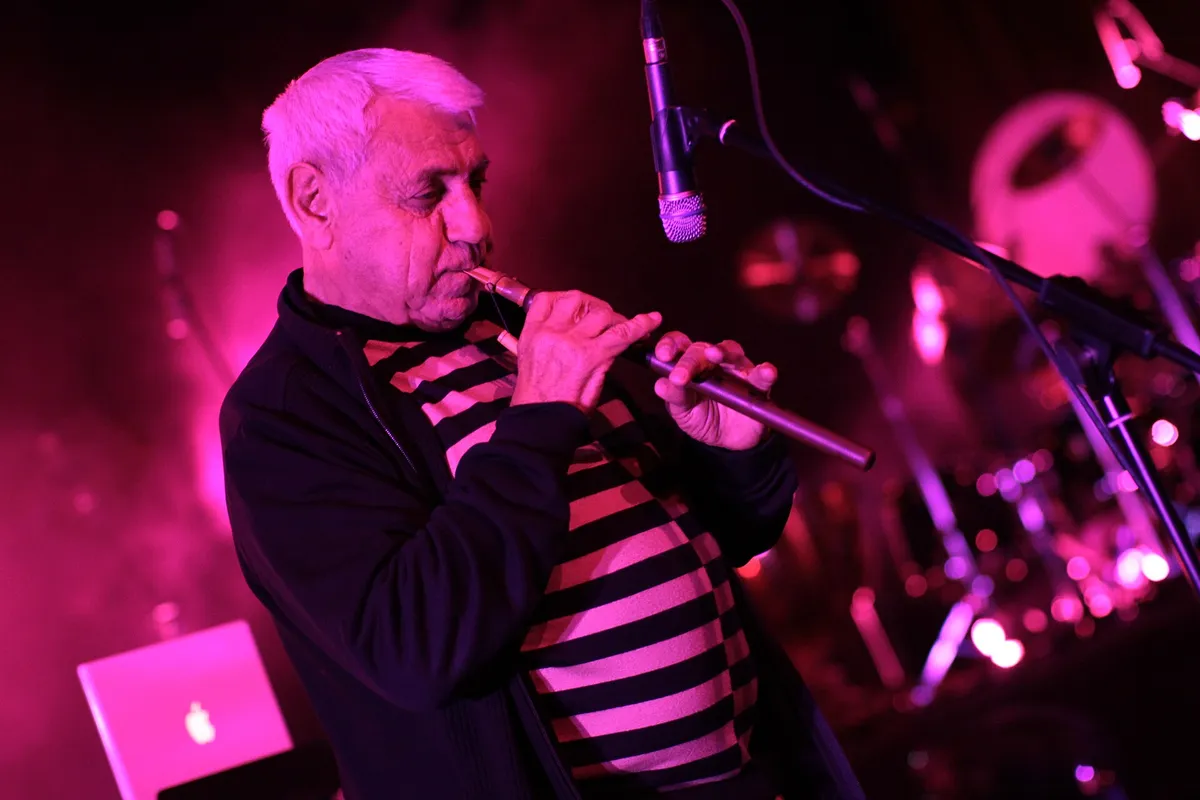 Djivan Gasparyan and the Universal Breath of the Armenian DudukA look back at the life and career of Djivan Gasparyan, the duduk master who brought Armenian music to major world stages and international cinema.
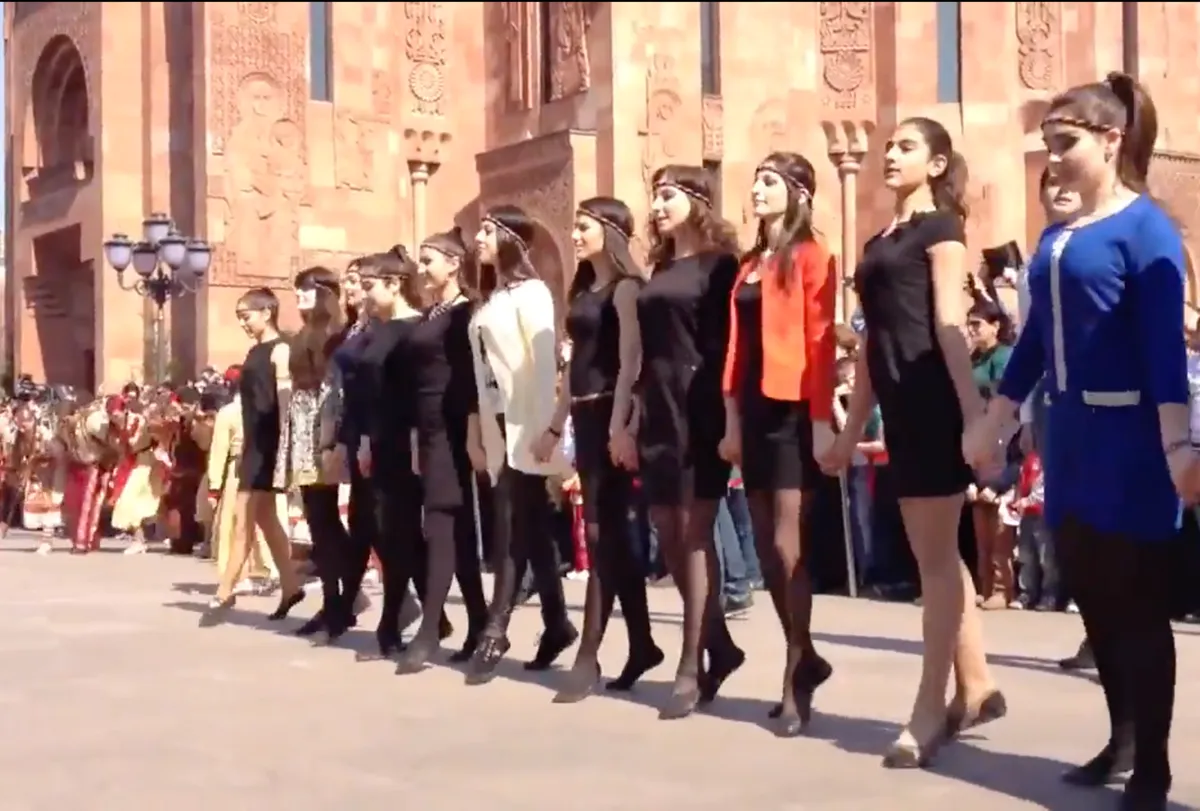 Kochari: History, Steps, and Memory of an Emblematic DanceDiscover Kochari, a circle dance born in the Armenian highlands, from its unique movements to its inscription on UNESCO's cultural heritage list.
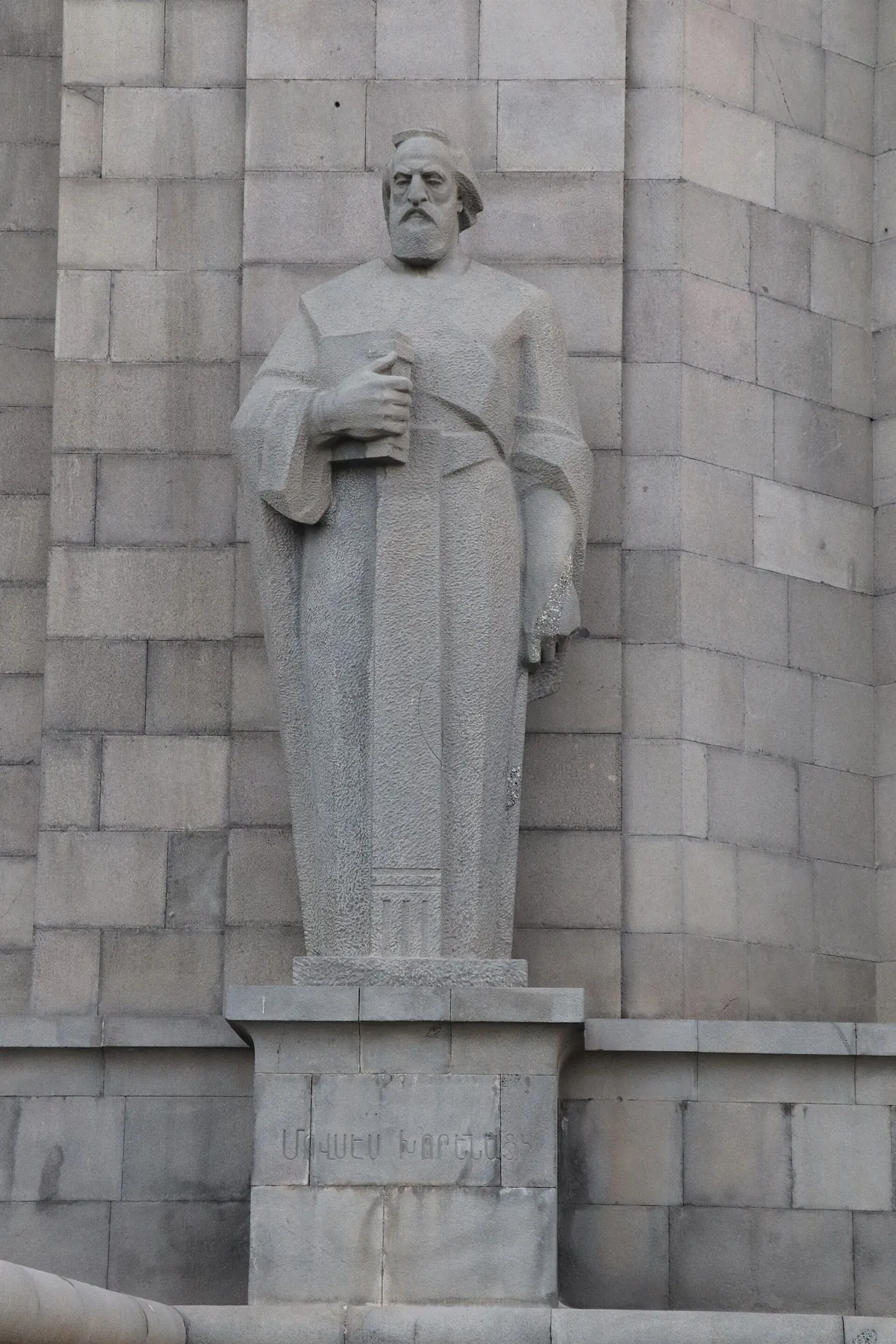 Moses of Chorene: The Founding Father of Armenian HistoriographyDiscover Moses of Chorene, the 5th-century Patmahayr whose History of Armenia immortalized the origins and memory of the Armenian people.